Over 40,000 Units to Be Ready for Move-In in Seoul Metro Area by Q1 Next Year
Government: "Seoul home price gains slow, supply base expands"
More than 40,000 units expected to be ready for occupancy in the Seoul metropolitan area over the next four months
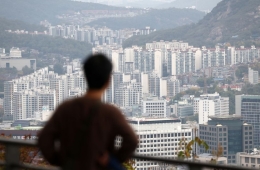
The government expects more than 40,000 apartments to be completed for occupancy in the Seoul metropolitan area, including Seoul, by the end of the first quarter of next year. It said that indicators pointing to a slowdown in the housing market are becoming more widespread: price growth in Seoul, which had been steady, is easing, while the number of homes listed for sale is increasing.
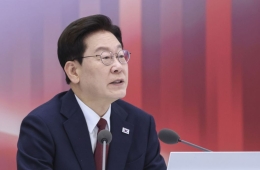
On November 13, the government held its third regular briefing on housing supply, outlining recent market trends and projected occupancy and sales figures. Kim Jin, head of economic coordination at the Office for Government Policy Coordination, said, "The pace of home price increases in Seoul has slowed since this summer. Prices in Gangnam-gu and Seocho-gu have fallen for 14 consecutive weeks, and prices in Seongdong-gu and Gangdong-gu also declined this week. The number of apartment transactions in Seoul, which had been higher than the average for this time of year, has also been falling since May. September's transaction volume was below the average."

Kim Jin, head of the Economic Coordination Office at the Office for Government Policy Coordination, gives the third regular briefing on housing supply at the Government Complex Seoul in Jongno-gu, Seoul, on the 13th. Yonhap News Agency.
View original imageKim also pointed to an increase in homes listed for sale and improvements in supply indicators. According to data compiled by real estate information provider Asil, more than 80,000 apartments were listed for sale in Seoul as of November 11, an increase of more than 40% from the beginning of this year. Compared with three weeks earlier, listings for jeonse and monthly rentals rose by about 5% and 11%, respectively. The government also noted that the supply base was expanding, with housing permits and construction starts in Seoul up 33% and 36%, respectively.
The government expects 16,000 homes to be completed for occupancy in the Seoul metropolitan area during the remainder of this year, and about 28,000 in the first quarter of next year. The number of homes completed for occupancy is an indicator that can make housing supply more tangible to the public. In Seoul, more than 6,000 homes are expected to be completed for occupancy in the first quarter of next year, including about 4,000 in relatively popular areas such as Mapo, Seocho and Yongsan. About 11,000 homes remain to be offered for sale by the end of this year. Sales are planned mainly in third-phase new towns, including Goyang Changneung (1,100 homes), Namyangju Wangsuk (400 homes) and Bucheon Daejang (500 homes).
Korea Land and Housing Corporation (LH) plans to invite proposals in the second half of this year for privately participating in public housing projects across 10 blocks. On November 13, it opened a call for proposals covering six blocks, including Namyangju Wangsuk 2 and Goyang Changneung, with a total of 5,782 homes. The project is valued at KRW 1.6 trillion, and the government aims to select a developer by the end of this year, with construction scheduled to begin next year. By next month, it will also invite proposals for projects worth KRW 900 billion, covering 3,000 homes across four blocks, including Wirye Business District.

The government also said it had completed 65 of the 145 institutional improvement measures included in its August 13 housing fast-track supply package. It selected 11 new candidate sites in Seoul for urban public-complex development and plans to offer a new type of public housing next month that reduces the initial financial burden on homebuyers. It also developed a model to start construction on public housing sites in the shortest possible time, raising the relocation rate in priority districts of third-phase new towns from 53% in July last year to 91% in October this year, and the demolition rate from 34% to 70% over the same period. These figures are averages.
Hot Picks Today
 "Two Spend 500,000 Won in a Flash, Yet Wait Two Hours?" ... 'Dreamland' Shunned by Kids and Foreign Tourists
- The Era of Getting 200 Million Won After 30 Years Is Over... A Japanese Bank's "Perpetual Department Head" Who Just Clocked In Cries Out
- Spain Hit by Its Worst Tragedy... Lee Kangin, Moreno and Real Madrid Join Soccer World in Mourning
- They Said, “Make It Your Home for Life” - Then Suddenly Kicked 200 Passengers Off... What Happened to the Around-the-World Cruise?
- "130 Rice Bowls Sold Out in a Day"... 'Unfiltered Face' Adds 8 Million Won to Night Market Sales: China's Bungeunwoo
In the financial sector, the government completed 19 institutional improvement measures. A distressed project site in Sinchon had been stalled, but it was acquired through a Korea Asset Management Corporation (KAMCO) fund and its business structure was reorganized. Construction of 435 homes is scheduled to begin in September next year. The government is also working to revise the relevant enforcement decree to include dormitories among the projects eligible for project financing (PF) guarantees from the Korea Housing Finance Corporation.

Kim said, "We will closely manage the schedules of key projects to ensure that housing supply plans lead to actual permits, construction starts, sales and occupancy. By the end of December, we will launch a digital housing supply dashboard so the public can easily find information. We will also use the integrated housing supply support center, which begins full operations next month, to quickly address difficulties in the field and actively resolve factors delaying projects."
© The Asia Business Daily. All rights reserved. Unauthorized AI training and use prohibited.