[Energy Odyssey] (20) Denmark's Orsted Lesson: Can 'Dinosaur' State-Owned Power Generators Pull Off a Green Transition?
IV. Energy Sovereignty: How Can It Be Protected?
Orsted reverses fossil fuel-to-renewables ratio in 10 years
Economies of scale address high offshore wind costs
Concerns outweigh hopes for merger of five power generators
"Impossible with a single nationwide price"
Orsted, headquartered in Denmark and the world's largest offshore wind developer and operator, was originally called DONG Energy, short for Danish Oil and Natural Gas. DONG Energy was established in 1973 as Denmark's state-owned oil and gas company through the merger of five energy companies. Through DONG Energy, the Danish government sought to develop oil and natural gas in the North Sea and reduce the country's dependence on imported crude oil. Its portfolio also included Vindeby, the world's first offshore wind farm, built in 1991. The project consisted of 11 wind turbines and was closer to a demonstration site.
In the 2000s, the energy market began to change, and countries, including those in the European Union (EU), began setting carbon-reduction and renewable energy targets. Public opposition to Orsted also grew. Until 2008, Orsted generated heat and electricity mainly from fossil fuels (85%), with renewables accounting for just 15%. Orsted set an ambitious goal of reversing these proportions and achieved it within 10 years.

Yaksu Offshore Wind Power in Yeonggwang, South Jeolla. The 4.3-MW pilot project is located offshore, about 2.5 km from Baksu-eup, Yeonggwang County. It was the first such project undertaken by a local public corporation, Jeonnam Development Corporation. Photo by Kang Jinhyeong
View original imageOrsted attributed the high cost of offshore wind at the time to a lack of infrastructure and the failure to achieve economies of scale. In response, in 2009, Orsted made the bold decision to order 500 wind turbines, each with a capacity of 3.6 MW. That was more turbines than were operating in offshore wind farms around the world at the time.
The company set out to lower the cost of offshore wind power through economies of scale. It installed larger wind turbines and developed large-scale wind farms, optimizing costs across the entire process, from construction to operations, maintenance and repair (MRO).
In 2012, after falling gas prices brought the company to the brink of bankruptcy, it decided to expand its renewable energy business and completely exit the fossil fuel business.
In 2016, Orsted became the first company to make offshore wind cost-competitive with coal- and gas-fired power. The cost per MWh of electricity from new offshore wind farms fell below that of new coal- and gas-fired power plants. An Orsted Korea official said, "That same year, Orsted was listed on the stock market, and its initial public offering (IPO) was the second-largest in the world that year."
Orsted's "green transition" was made possible by consistent policy support from the Danish government. The construction of Vindeby, installed in 1991, was also driven by government policy. The Vindeby wind farm was developed after a center-right government mandated the installation of 100 MW of wind power capacity in Denmark. The Nysted offshore wind farm, pursued in 1996, was later part of an action plan led by the center-left government at the time.
When Orsted entered the offshore wind industry, the sector showed considerable growth potential, but its technology was not yet mature. However, consistent government policy support helped make offshore wind technically and economically viable. Subsidy programs played an important role in this process, while the establishment of a regulatory and institutional framework helped mature the offshore wind supply chain. Denmark sought to streamline the process by consolidating complex offshore wind permitting procedures under the Danish Energy Agency (DEA). In South Korea, obtaining permits for construction takes an average of 2 years and 10 months, while developing a wind farm, including onshore projects, takes about 6 years on average.
However, since 2023, Orsted has also undergone a severe restructuring amid high interest rates, inflation and policy risks.
One reason for Orsted's rapid growth was its "farm-down" model. Under this model, a company develops and builds an offshore wind farm, then recoups capital by selling a portion of its stake (50%) to institutional investors around the time the project is completed. This enabled Orsted to earn a premium in return for taking on the high risks of the initial development phase, then reinvest the recovered funds in new projects and expand its business. However, global interest rates rose sharply after 2023, pushing up institutional investors' required returns and making it harder for Orsted to sell stakes at a high price and make a profit.
In addition, manufacturing costs for turbines, substructures and installation vessels surged, while power purchase agreements signed at low prices in the past also became a burden. Orsted also entered the United States to develop new markets, but after the Trump Administration took office, freezes on offshore wind permits and orders to halt construction forced the company to significantly scale back new development in the country.

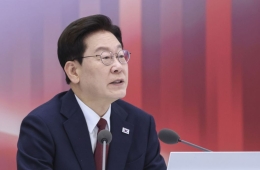
◆Five power companies combined after Orsted's example... Can economies of scale be achieved?= The Lee Jae-myung administration is pursuing a major transformation by consolidating the five power generation subsidiaries of Korea Electric Power Corporation and expanding renewable energy generation capacity. The aim is to integrate renewable energy projects that the five companies have invested in separately, reduce inefficiencies and achieve economies of scale.
As the Orsted case shows, a merger alone is not enough. It must be backed by a governance structure that allows the company to make independent decisions based on business considerations, free from political interference, as well as consistent policy support. A physical combination that merely creates a larger entity cannot replicate Orsted's success. As a company grows in size, it becomes more difficult to restructure its portfolio through bold asset sales, as Orsted did.
Energy consumption also differs considerably between South Korea and Denmark, so the potential downsides of shifting to a renewables-only portfolio must be considered. According to an integrated information platform operated by the Korea Energy Agency, industry accounted for the largest share of final energy consumption in 2025, at 61.7%. Transportation accounted for 16.5%, and households and commercial buildings for 10.3%. By contrast, industry accounted for just 23.2% of Denmark's final energy consumption. Buildings (households and commercial buildings) made up the largest share, at 46.4%, followed by transportation at 30.4%.
There are also concerns that a single, large state-owned company could undermine fair competition in the power generation market. Denmark has state-owned developers such as Orsted, but also private developers such as Copenhagen Infrastructure Partners (CIP). In South Korea, where the wind power market is not yet mature, a state-owned developer could gain a monopoly position, entrenching inefficiencies as it relies on public-sector contracts rather than price competition. Korea Electric Power Corporation already monopolizes power transmission, distribution and sales in the domestic electricity market. If the state-owned power generators are also consolidated into one company, it could come to account for an overwhelming share of energy production.
Hot Picks Today
 "Two Spend 500,000 Won in a Flash, Yet Wait Two Hours?" ... 'Dreamland' Shunned by Kids and Foreign Tourists
- The Era of Getting 200 Million Won After 30 Years Is Over... A Japanese Bank's "Perpetual Department Head" Who Just Clocked In Cries Out
- Spain Hit by Its Worst Tragedy... Lee Kangin, Moreno and Real Madrid Join Soccer World in Mourning
- They Said, “Make It Your Home for Life” - Then Suddenly Kicked 200 Passengers Off... What Happened to the Around-the-World Cruise?
- "130 Rice Bowls Sold Out in a Day"... 'Unfiltered Face' Adds 8 Million Won to Night Market Sales: China's Bungeunwoo
Lee Min-ho, a U.S. attorney and head of the power consulting firm Cheoncheonhi Areumdaun Saenggak, said, "Japan and China, which have a high share of state-owned enterprises, are also moving in the opposite direction from us. Their approaches may differ, but they share the goal of creating a competitive market where flexible resources can earn money." He added, "Price signals are essentially the business model, and following them is the most accurate way to know when and where flexible resources are needed." Lee said, "Signals exist only when prices are formed without distortion by time and region. That would be impossible if power generation companies were consolidated in a way that locks 60% of generation—the current combined market share of the five power generation companies—into costs, and if the country had a single nationwide price." He added, "We need to move toward a competitive wholesale market based on price bidding. If a consolidated company is created, it will become a bidder capable of distorting prices at all times, and it will be managed under a system where bidding is strictly controlled and regulated based on costs, rather than allowing free price bidding."
© The Asia Business Daily. All rights reserved. Unauthorized AI training and use prohibited.