Jensen Huang Leaves NVIDIA... AI Investment and Financing Programs Put to the Test
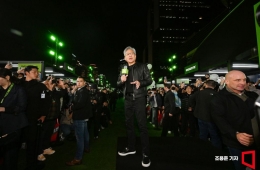
Jensen Huang, the Nvidia founder who rose to prominence as an “icon of the artificial intelligence (AI) era,” has stepped down as CEO amid an infidelity scandal, casting a shadow over the company’s overall management. Uncertainty has grown particularly around large-scale AI investment and financing initiatives that Huang personally spearheaded. Through these initiatives, Nvidia invested in AI companies and semiconductor customers and provided financial guarantees. The fallout from Huang’s absence is expected to have a direct impact on the AI industry as a whole.

◆ Huang steps down as CEO... Who are the candidates to succeed him?= On November 12 (local time), Nvidia’s board of directors said in a statement that Huang would immediately step down as president, CEO and a member of the board. The board used the word “resign.” However, foreign media outlets, including Bloomberg and The Wall Street Journal (WSJ), reported that he had been “ousted,” emphasizing that controversy over his private life had forced him out.
The board appointed Colette Kress, chief financial officer (CFO) and executive vice president, as interim CEO. Kress joined Nvidia in September 2013 and had led its finance division for 13 years. She worked closely with Huang, overseeing investment, fundraising and financial strategy. She also played a key role in communicating with Wall Street investors.

Kress’s first challenge as interim CEO is expected to be Nvidia’s earnings announcement on November 17. It will be the company’s first such event since Huang stepped down, and there is intense interest in what business strategies and investment plans the interim CEO and other executives will lay out.
Nvidia must also select a successor to Huang. The board plans to consider both internal and external candidates. Foreign media have cited Kress and Ian Buck, Nvidia’s vice president in charge of its data center business, as leading internal candidates. Madison Huang, Huang’s daughter and a senior director of product marketing for Nvidia’s physical AI products, has also been mentioned as a possible candidate. She has long been considered a potential successor to the company’s leadership.
External candidates reportedly include Arm CEO Rene Haas and AMD CEO Lisa Su. U.S. President Donald Trump said on November 12 on Truth Social, his social media platform, “Since Jensen Huang, who has done a great job, has stepped down, there is only one person who can take his place: Apple’s Tim Cook.” He added, “One legend replaces another.” However, the Financial Times (FT) noted that although Cook has experience balancing corporate management with political interests, he is considered unlikely to become Nvidia’s next CEO.

◆ What lies ahead for the investment and financing initiatives Huang spearheaded?= The market is focused on how Nvidia will continue the large-scale investment and financing initiatives Huang had led. Since the person who directly oversaw major investments and contracts and drove the expansion of these initiatives has stepped down unexpectedly, the key question is whether the existing investment strategy will remain in place. The FT reported that Huang positioned Nvidia as the AI industry’s lender of last resort and personally led major investments. According to founders of companies that received investment from Nvidia, Huang was personally involved in many of the investment deals worth billions of dollars, despite having dozens of direct reports.
Particular attention is focused on whether Nvidia will proceed with a $500 billion AI chip financing initiative it is pursuing with major Wall Street financial firms. In August 2026, Nvidia announced plans to jointly raise funds for investment in AI computing infrastructure with six Wall Street financial institutions, including Apollo, Goldman Sachs, BlackRock, Blackstone, Brookfield and KKR. However, reportedly, not a single deal had been completed in the months since the initiative was launched.
According to Bloomberg, over the past month, some customers and Wall Street partners have asked Nvidia to increase the size of its guarantees. The report said that Nvidia’s guarantee covering up to 25% of the residual value is lower than Broadcom’s, making it difficult to close deals. If Nvidia increases the guarantee percentage, it would reduce the lending risk for financial firms. But it would also increase the financial risk Nvidia must bear directly.
The FT, citing people familiar with the matter, reported that several deals are currently being pursued. Bloomberg, citing a person familiar with the matter, reported that the first deal announcement may not come until January 2027 at the earliest. However, it said this would be contingent on Huang’s departure not derailing the deal or the initiative as a whole.
Nvidia has also made aggressive investments in numerous startups. According to market research firm PitchBook, Nvidia and its venture investment arm have made more than 120 investments so far in 2026, averaging one every 2.5 days. As its investments expanded, Nvidia’s equity investments reached $124 billion as of the end of July, including amounts it had committed to invest in the future. Nvidia also made at least 15 investments this year in AI infrastructure companies, including neocloud providers. The companies raised a total of $24 billion in funding rounds involving Nvidia.
Hot Picks Today
 "Two Spend 500,000 Won in a Flash, Yet Wait Two Hours?" ... 'Dreamland' Shunned by Kids and Foreign Tourists
- The Era of Getting 200 Million Won After 30 Years Is Over... A Japanese Bank's "Perpetual Department Head" Who Just Clocked In Cries Out
- Spain Hit by Its Worst Tragedy... Lee Kangin, Moreno and Real Madrid Join Soccer World in Mourning
- They Said, “Make It Your Home for Life” - Then Suddenly Kicked 200 Passengers Off... What Happened to the Around-the-World Cruise?
- "130 Rice Bowls Sold Out in a Day"... 'Unfiltered Face' Adds 8 Million Won to Night Market Sales: China's Bungeunwoo
Some have warned that Nvidia’s investment activity could slow following Huang’s departure. An executive at a cloud computing company told the FT that they expected most Nvidia investment deals to be put on hold until the controversy surrounding Huang subsides. Bloomberg commented, “Next time, the impetus for inspiring confidence in the market will have to come from somewhere other than Huang.”
© The Asia Business Daily. All rights reserved. Unauthorized AI training and use prohibited.