"Even if It Sells for 15 Billion Won, Take-Home Profit..." Kim Donghyun's Apgujeong Apartment: A Complex Calculation
Kim Donghyun Buys Apgujeong's Shin Hyundai 12th for 10 Billion Won
Additional Contributions and Reconstruction Levy Could Bring Total Cost to 12 Billion Won
First 17.9-Billion-Won Reconstruction Levy Notice in Gangnam... Debate Over Whether to Keep System Reignites
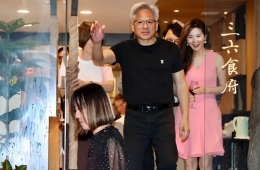
An analysis has found that even if the Apgujeong-dong Hyundai Apartment in Seoul's Gangnam District, which broadcaster Kim Donghyun recently bought for 10 billion won, rises to 15 billion won after redevelopment, his net profit may be limited.
According to Kim Gu-ra's YouTube channel "GriGura" on November 13, Kim Inman, director of the Real Estate Economy Research Institute, discussed the redevelopment feasibility of Apgujeong Hyundai Apartment and Kim Donghyun's purchase in a video released on November 11.
Kim Donghyun's 10-Billion-Won Apartment... "Even at 15 Billion Won, Little Would Be Left"

Kim Inman, head of the Real Estate Economy Research Institute, appeared on the YouTube channel “Geuri Gura” on the 11th, discussing the redevelopment prospects of the Apgujeong Hyundai Apartments and Kim Donghyun’s purchase. YouTube
View original imageIn September, Kim Donghyun bought a 182-square-meter unit (about 55 pyeong) at Shin Hyundai 12th in Apgujeong-dong for 10 billion won, and completed registration of the transfer of ownership on October 21. An estimated 5 billion won, about half the purchase price, was arranged through "seller financing," or a loan from the previous owner. The unit set a record price of 11.25 billion won in July, while other units have traded for 8.8 billion won and 9.2 billion won.
Kim's reason for concluding that little would be left even if the apartment sold for 15 billion won is the cost of redevelopment. To move into a new apartment, association members must pay additional contributions toward construction costs and a separate levy under the Reconstruction Excess Profit Recovery System. The system collects part of the excess profit as a levy, calculated by subtracting normal price increases and development costs from the increase in home prices resulting from redevelopment. Kim estimated, "Given that the projected additional contribution for a 34-pyeong unit at Gangnam's Eunma Apartment is about 460 million won, the additional contribution for a 55-pyeong unit at Shin Hyundai 12th would be 1 billion won at current prices and could rise to 1.5 billion to 2 billion won by the time construction begins in 10 years." Adding the levy under the system, which is currently estimated at about 1 billion won, would bring the total investment cost, including the purchase price, to more than 12 billion won.

Taxes and interest are also a burden. Kim said, "A 52-pyeong unit with a Han River view at Raemian One Bailey in Seocho District has traded for 12 billion won, so if a Han River view is secured, the property could eventually reach 14 billion to 15 billion won." However, he added, "As of 2028, annual property holding taxes alone on a home worth more than 10 billion won will amount to about 50 million won. Once interest on the seller-financed loan and capital gains tax are also factored in, little profit would be left even if it sold for 15 billion won."
When host Kim Gu-ra asked, "Wouldn't paying 10 billion won to buy in mean expecting it to be worth 20 billion won in 10 years?" Kim replied, "Given that it is in one of South Korea's most affluent neighborhoods, there is no need to overreact to short-term declines if you are taking a long-term view of holding it for more than 10 years," adding, "In practical terms, buyers should approach it with a price of around 15 billion won in mind." Kim Gu-ra forecast, "There may be short-term fluctuations, but prices will trend upward because of its scarcity."
First Reconstruction Excess-Profit Levy Notice in Gangnam: 17.9 Billion Won... Debate Over Abolition Rekindled

A rendering of Apgujeong District 2 after reconstruction. Seoul Metropolitan Government
View original imageMeanwhile, collection procedures for the reconstruction excess-profit levy have begun in the Gangnam area. On November 9, Seocho District in Seoul notified the redevelopment association of Banpo Hyundai, now Banpo Centerville Asterium, the first target in the Gangnam area, that its estimated levy would be 17.9 billion won. The average per household is about 220 million won. Eunma Apartment in Daechi-dong, Gangnam District, was also recently notified of an estimated levy of about 460 million won, according to reports. Association members at Eunma who are assigned a unit of the same size as their existing 84-square-meter (34-pyeong) unit must pay an additional contribution of about 430 million won on top of that.
Hot Picks Today
 "Two Spend 500,000 Won in a Flash, Yet Wait Two Hours?" ... 'Dreamland' Shunned by Kids and Foreign Tourists
- The Era of Getting 200 Million Won After 30 Years Is Over... A Japanese Bank's "Perpetual Department Head" Who Just Clocked In Cries Out
- Spain Hit by Its Worst Tragedy... Lee Kangin, Moreno and Real Madrid Join Soccer World in Mourning
- They Said, “Make It Your Home for Life” - Then Suddenly Kicked 200 Passengers Off... What Happened to the Around-the-World Cruise?
- "130 Rice Bowls Sold Out in a Day"... 'Unfiltered Face' Adds 8 Million Won to Night Market Sales: China's Bungeunwoo
Opinions are divided on whether the system should remain in place. On November 11, Minister of Land, Infrastructure and Transport Hong Jisun said, "The system is intended to stabilize housing prices, but some argue that it excessively infringes on property rights." She added, "The Constitutional Court has ruled that it is not unconstitutional, and a bill to abolish it is pending in the National Assembly, so we will review the issue from various angles." On the same day, Ahn Cheol-soo, a lawmaker from the People Power Party, called for the system's abolition in a post on social media, saying, "As of August, a total of 5.3 trillion won in reconstruction excess-profit levies had been notified to 79 redevelopment projects nationwide." The Democratic Party of Korea said during the last presidential election that it would maintain the system in its current form, while a bill to abolish it, proposed by the People Power Party, has been pending in the National Assembly for a second year.
© The Asia Business Daily. All rights reserved. Unauthorized AI training and use prohibited.