[Capital Market Policy Meeting] "Phase In Mandatory Tender Offers... Impose Tax Surcharge for Deliberate Share Price Suppression"
Lee Hyo-seop, Research Fellow at the Korea Capital Market Institute
Selective Taxation Needed for Share-Price Suppression, Not Automatic Linkage
100% Raises Acquisition Costs; 50% Plus One Share Creates Transaction Uncertainty
Need to
A proposal has been made to take a phased approach to the shareholding threshold (50% plus one share versus 100%) that an acquirer seeking to become the largest shareholder of a listed company must purchase under a mandatory tender offer.
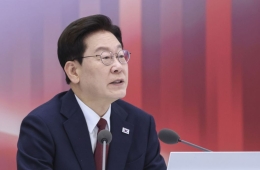
Lee Hyoseop, a research fellow at the Korea Capital Market Institute, presented on “Expanding Shareholder-Centered Management and Enhancing Corporate Value” at a capital market policy meeting chaired by President Lee Jae-myung in Yeouido, Seoul, on November 13. He emphasized, “A phased approach is needed, taking into account both the need to protect shareholders and concerns that mergers and acquisitions (M&A) activity could be curtailed. Taxation of companies that deliberately suppress their share prices is also necessary, supported by tax reforms such as amendments to the Inheritance and Gift Tax Act.”

An amendment to the Capital Markets Act incorporating a mandatory tender offer system passed the National Assembly’s Legislation and Judiciary Committee on September 28. Under the amendment, if an acquirer secures a stake of at least 25% and becomes the largest shareholder, it must purchase 50% plus one share at the same price. Under the current system, controlling shareholders monopolize the control premium. Lee identified the purchase ratio as a key issue. A 100% purchase requirement would strengthen shareholder protection but could make acquisitions more expensive and raise concerns about dampening M&A activity. A pro rata allocation under the 50%-plus-one-share approach could make deals harder to complete because of uncertainty over the transactions.
For companies subject to taxation for suppressing their share prices, he proposed a surcharge of at least 30%, with a surcharge of at least 40% as an alternative for consideration. The existing 20% surcharge for largest shareholders would apply separately. He noted that uniformly linking the tax to the price-to-book ratio (PBR) would place an excessive burden on well-intentioned companies and fail to reflect differences among industries. For long-term low-PBR companies (those in the bottom 25% of their industry’s PBR in at least 12 of 13 half-year periods; the bottom 10% for KOSDAQ-listed companies), shares would be valued at whichever is higher: 130% of the assessed value or the long-term average. For companies with a sharp price decline around the valuation date (those that issued convertible bonds, bonds with warrants, or exchangeable bonds within the past year and whose share price fell by at least 30% compared with prices over the preceding six months to three years), shares would be valued using the long-term average share price. He proposed a three-stage process: determining whether the presumed criteria are met, reviewing the case by a committee, and then levying tax.
Hot Picks Today
 "Two Spend 500,000 Won in a Flash, Yet Wait Two Hours?" ... 'Dreamland' Shunned by Kids and Foreign Tourists
- The Era of Getting 200 Million Won After 30 Years Is Over... A Japanese Bank's "Perpetual Department Head" Who Just Clocked In Cries Out
- Spain Hit by Its Worst Tragedy... Lee Kangin, Moreno and Real Madrid Join Soccer World in Mourning
- They Said, “Make It Your Home for Life” - Then Suddenly Kicked 200 Passengers Off... What Happened to the Around-the-World Cruise?
- "130 Rice Bowls Sold Out in a Day"... 'Unfiltered Face' Adds 8 Million Won to Night Market Sales: China's Bungeunwoo
He identified corporate governance issues as a cause of the low valuation of domestic companies. Proposed measures to address this included increasing the effectiveness of publishing lists of low-PBR companies, strengthening the effectiveness of the Stewardship Code, relaxing the requirements for persons acting in concert under the 5% rule, and promoting the use of the Korean-style bear hug.
© The Asia Business Daily. All rights reserved. Unauthorized AI training and use prohibited.