[U.S. Stocks] Jensen Huang Resigns, War's End in Doubt... All Three Major Indexes Close Lower
AI-Related Stocks Weigh on Investor Sentiment
International Oil Prices Both Close Higher
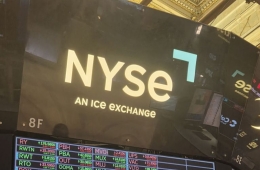
All three major U.S. stock indexes closed lower on the 12th (local time). Shares of AI-related companies, including Nvidia, plunged after CEO Jensen Huang resigned, dragging the indexes down. Investor sentiment was also hurt by the diminished prospects for an end to the war after U.S. President Donald Trump said an agreement with Iran was unnecessary.
The Dow Jones Industrial Average closed at 52,297.09, down 189.40 points (0.36%) from the previous session. The S&P 500, which is weighted toward large-cap stocks, fell 26.98 points (0.35%) to 7,592.40, while the Nasdaq Composite, which is weighted toward technology stocks, dropped 100.09 points (0.39%) to 25,366.09.

The biggest market-moving factor that day was Nvidia's leadership change. Nvidia announced the resignation of CEO Jensen Huang, who was embroiled in an affair scandal involving a woman suspected of being a Chinese spy, and appointed Chief Financial Officer Colette Kress as interim CEO. Huang founded Nvidia and led the company for 33 years, driving growth in the global AI semiconductor market.
Nvidia shares fell 4.3%, hitting a 52-week low. Losses widened to double digits early in the session, but the stock later recovered a substantial portion of its decline as bargain hunters stepped in.
Competitors gained ground as analysts said demand for AI semiconductors itself was unlikely to weaken despite concerns over a leadership vacuum at Nvidia. Shares of AMD and Broadcom rose more than 5.8% and 5.5%, respectively. Alphabet, a major Nvidia customer that is also developing its own AI semiconductors, gained 1.79%.
Jed Ellerbrook, a portfolio manager at Argent Capital Management, told CNBC, "This situation is a tremendous opportunity for Amazon, Google, AMD and Broadcom, as well as for OpenAI and Anthropic, which are building teams to develop their own semiconductors."
"The fate of Nvidia as an individual company and the AI revolution are separate matters," he said. "If AMD's or Google's semiconductors are better, customers will switch to those products. Demand for semiconductors itself is not going away."

Market attention is shifting to Nvidia's earnings report next week. Brett Kenwell, a U.S. investment analyst at eToro, said, "Nvidia's earnings are always important, but this time they will draw far more intense attention. Investors will look for evidence to reaffirm demand for AI semiconductors and restore confidence."
A shift in the Trump Administration's stance on the war with Iran also added to downward pressure. Trump declared that day that an agreement with Iran was unnecessary, dampening hopes for a diplomatic resolution to the conflict in the Middle East.
Trump wrote on his Truth Social account, "We do not need an agreement with Iran. Those days are long gone." He also instructed Vice President JD Vance to focus on corruption and crime in Democrat-led areas of the United States instead of negotiating with Iran.
The remarks clouded the prospects for negotiations to end the war with Iran, pushing international oil prices higher. West Texas Intermediate (WTI) crude for December delivery rose 2.55% from the previous session to settle at $88.74 a barrel on the New York Mercantile Exchange. Brent crude, the international benchmark, for January delivery gained 3.3% to close at $95.82 a barrel on the ICE Futures Exchange.
U.S. Treasury yields also rose, as higher oil prices fueled inflation concerns. The yield on the 10-year Treasury note rose about 12 basis points (1 bp = 0.01 percentage point) from the previous session to 5.102%. The yield on the two-year note, which is sensitive to Federal Reserve (Fed) monetary policy, also climbed about 14 basis points to close at 4.862%.
Hot Picks Today
 "Two Spend 500,000 Won in a Flash, Yet Wait Two Hours?" ... 'Dreamland' Shunned by Kids and Foreign Tourists
- The Era of Getting 200 Million Won After 30 Years Is Over... A Japanese Bank's "Perpetual Department Head" Who Just Clocked In Cries Out
- Spain Hit by Its Worst Tragedy... Lee Kangin, Moreno and Real Madrid Join Soccer World in Mourning
- They Said, “Make It Your Home for Life” - Then Suddenly Kicked 200 Passengers Off... What Happened to the Around-the-World Cruise?
- "130 Rice Bowls Sold Out in a Day"... 'Unfiltered Face' Adds 8 Million Won to Night Market Sales: China's Bungeunwoo
Markets are increasingly concerned that the Fed could accelerate the pace of interest rate hikes if high energy prices prolong inflation.
© The Asia Business Daily. All rights reserved. Unauthorized AI training and use prohibited.