Lee Junseok: "Welcome approval of Mounjaro imports... Allow them for self-treatment"
Mounjaro price gap among South Korea, China and Japan prompts criticism of price-gouging structure
Also draws attention in online communities
Lee Junseok and Professor Jang Hyungwoo both mentioned
Lee Junseok, a Reform Party lawmaker, said on the 12th that people should be allowed to bring obesity drugs into South Korea for personal use if they were legally prescribed and purchased overseas. "We should stop people from bringing in dozens at a time to resell them, but allow imports for self-treatment," he said.
In a social media post that day, Lee said, "Two days ago, during questioning at the Special Committee on Budget and Accounts, I strongly objected to restrictions on actual users and travelers carrying glucagon-like peptide-1 (GLP-1) drugs such as Mounjaro. I called for the Korea Customs Service and the Ministry of Food and Drug Safety to consult quickly." He added, "I appreciate that they gave the matter due consideration."
"I hope the price-gouging structure also changes, so that South Korean consumers do not pay nearly three to four times as much for the same drug as consumers in China and Japan," he said. "This kind of imbalance was unreasonable from the outset."

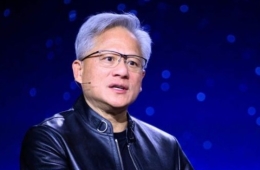
Reform Party lawmaker Lee Junseok asks a question during a parliamentary audit. Photo provided by Yonhap News.
View original imageStarting that day, the Ministry of Food and Drug Safety and the Korea Customs Service allowed individuals to carry into the country medicines for self-treatment that had been properly prescribed and purchased in South Korea or overseas. Online purchases from overseas, psychotropic drugs, and narcotics were excluded.
Until now, the Ministry of Food and Drug Safety had banned direct purchases from overseas, citing difficulties in verifying manufacturing and distribution channels and arranging recalls or compensation. The Korea Customs Service had also applied the ban to travelers' luggage, holding up customs clearance for drugs such as Wegovy and Mounjaro. However, critics said it was excessive to impose a blanket restriction even on medicines for self-treatment that had been lawfully prescribed by a medical institution overseas.
The wide price gap between South Korea and other countries has also fueled controversy, even giving rise to the slang term "Sushizaro" for Mounjaro prescribed and purchased in Japan. A month's supply of 2.5 mg Mounjaro costs around KRW 70,000 to KRW 100,000 at some medical institutions in Japan, while in South Korea it typically costs in the high KRW 200,000s to the KRW 300,000 range.
Lee raised the issue on October 22 during a parliamentary audit by the National Assembly's Finance and Economy Planning Committee. Questioning Korea Customs Service Commissioner Lee Jongwook, he asked, "Wouldn't it be a problem if someone who needs ongoing treatment had their medication immediately confiscated upon arriving in South Korea?"
Then, on November 9, during a plenary policy session of the National Assembly's Special Committee on Budget and Accounts, he again questioned the Ministry of Health and Welfare, the Ministry of Food and Drug Safety, and the Korea Customs Service, asking, "We should stop direct purchases that threaten public health and people bringing in large quantities like resellers, but is it right to seize medicines that were legally prescribed?"
Hot Picks Today
 "Two Spend 500,000 Won in a Flash, Yet Wait Two Hours?" ... 'Dreamland' Shunned by Kids and Foreign Tourists
- The Era of Getting 200 Million Won After 30 Years Is Over... A Japanese Bank's "Perpetual Department Head" Who Just Clocked In Cries Out
- Spain Hit by Its Worst Tragedy... Lee Kangin, Moreno and Real Madrid Join Soccer World in Mourning
- They Said, “Make It Your Home for Life” - Then Suddenly Kicked 200 Passengers Off... What Happened to the Around-the-World Cruise?
- "130 Rice Bowls Sold Out in a Day"... 'Unfiltered Face' Adds 8 Million Won to Night Market Sales: China's Bungeunwoo
The government's move has also drawn interest in related online communities. On communities including DC Inside's Mounjaro Gallery, people have been discussing Lee's questioning in the National Assembly as well as Jang Hyungwoo, a professor of cardiothoracic surgery at Seoul National University Bundang Hospital who has shared his experience using obesity drugs.
© The Asia Business Daily. All rights reserved. Unauthorized AI training and use prohibited.