[Make It or Buy It] Cabbage Is Plentiful, but Kimjang Is Declining... 'Store-Bought Kimchi' at 41%
① Mixed Fortunes of a Bumper Napa Cabbage Crop
Napa Cabbage Wholesale Prices Down 42%; Salted Shrimp and Garlic Prices Rise
Kimjang Costs Down 9%, but Fewer Households Make Kimchi Themselves
Commercial Kimchi Purchases Up 13.6 Percentage Points in Six Years; Convenience and Quality Take Priority
On November 12, at Malbau Market in Buk-gu, Gwangju, vendors at vegetable shops and salted seafood stalls lining the market had mixed feelings ahead of kimjang season. A vegetable seller said that damage from typhoons was limited this year and the harvest was good, bringing down prices for agricultural products, including napa cabbage. The situation was different at salted seafood shops. One vendor said, "Shrimp jeotgal is selling for nearly twice what it did during last year's kimjang season because the catch has declined."

On the morning of the 12th, shoppers moved between stalls selling kimchi-making ingredients and other goods at Malbau Market in Buk-gu, Gwangju. Photo by Song Bohyun.
View original imageIt is a bumper year for napa cabbage, but the kimjang season looks different from years past. Increased production has sent cabbage prices tumbling, while some seasoning ingredients have become more expensive. More households are also buying as much kimchi as they need rather than making it themselves. This is why demand for kimjang has yet to recover despite falling cabbage prices.
Cabbage Prices Plunge, Seasoning Prices Surge... Mixed Trends in Kimjang Costs
According to the Ministry of Agriculture, Food and Rural Affairs, the wholesale price of napa cabbage in early November was 1,900 won per head, down 42% from the same period last year. The retail price was 3,211 won per head, down 14%. The gap between the decreases in wholesale and retail prices was 28 percentage points.
Transportation, labor and other distribution costs are added as produce moves from farms to consumers. The Korea Agro-Fisheries & Food Trade Corporation (aT) found that the distribution cost ratio for fall-harvest napa cabbage in 2024 was 57.8%. This is the share of the consumer price remaining after the farmgate price is subtracted.
Lower cabbage prices have also reduced the cost of making kimchi compared with last year. As of November 9, the cost of making kimchi with 20 heads of napa cabbage, based on aT's survey of traditional markets and large retailers nationwide, was 199,456 won. That was 9% less than the average of 219,071 won in early November 2025.

On the 11th, workers harvest cabbages in a field in Bukpyeong-myeon, Haenam-gun, Jeonnam-Gwangju. Photo by Kim Wanjung.
View original imagePrices varied widely by item. Twenty heads of napa cabbage cost 54,980 won, down 26.5% from last year. Radishes and red pepper powder were also down 5.6% and 1.8%, respectively. By contrast, salted shrimp rose 40.2%, and peeled garlic climbed 21.6%. The mixed price trends reported by vendors at Malbau Market were also reflected in nationwide statistics.
The cost of buying 20 heads of napa cabbage fell by 19,820 won from last year. However, the overall cost of making kimchi declined by just 19,615 won. The combined cost of buying the other ingredients, excluding cabbage, actually increased by 205 won. Some of the savings on cabbage were offset by higher prices for other ingredients.
Discounts offered by the government and retailers were also factored in. The government is allocating 64 billion won this year for discounts on kimchi-making ingredients, and the kimchi-making cost announced by aT includes government support and discounts offered by large retailers.
Plenty of Cabbage, but More Households Are Choosing Store-Bought Kimchi
Increased supply and declining demand have combined to push down cabbage prices.
The Korea Rural Economic Institute forecast that this year's fall napa cabbage production would rise 18.5% from last year to 1.214 million metric tons. Production of winter cabbage is also expected to increase 7% to 265,000 metric tons. Meanwhile, demand for napa cabbage for kimjang is estimated to fall 9.1% from last year to 583,000 metric tons.
One notable change is how households are obtaining kimchi. In a survey of 1,000 households nationwide conducted by the Korea Rural Economic Institute in October, the share of households that made kimchi themselves or obtained it from family or acquaintances fell to 58.6% this year from 64.1% last year. Over the same period, the share buying commercial kimchi rose from 35.9% to 41.4%. Compared with 27.8% in 2020, that was an increase of 13.6 percentage points in six years.

Napa cabbage is being seasoned for kimchi as kimjang season approaches. The Asia Business Daily archive.
View original imageConvenience, rather than price, was the main reason people bought kimchi. Among buyers of commercial kimchi, 43.9% said they liked being able to purchase as much as they needed. Another 34.4% said making kimchi was a hassle. Just 9.0% said they bought it because it was cheaper than making it themselves.
Even among households that make kimchi themselves, practices are changing. A larger share said they use salted napa cabbage (46.6%) than said they use only fresh cabbage (42.8%). The share of people in their 50s who use salted cabbage was particularly high, at 54.8%. Many consumers want to avoid the work of salting and washing cabbage.
That does not mean households that make kimchi themselves are using much less cabbage. Their average expected use per household was almost unchanged, at 28.9 heads this year, compared with 29.0 last year. The more notable shift is in how households obtain kimchi, rather than in the size of the households that make it.
Price was not the only factor in choosing commercial kimchi. Taste and quality were the most important considerations for 57.7% of respondents, while just 9.7% cited price. The survey found that 60% of commercial kimchi buyers use online shopping malls or TV home shopping.
Related Articles
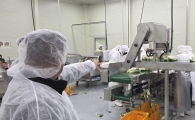 [Make It or Buy It?] "Exactly 800 Boxes a Day"... Premium Haenam Salted Cabbage Makes Its Way to the Table
A representative of a large retailer said, "As the number of one- and two-person households grows, more people are buying small amounts of kimchi whenever they need it. More consumers are also willing to pay somewhat higher prices if the taste and quality are good."
© The Asia Business Daily. All rights reserved. Unauthorized AI training and use prohibited.