Transfer Referral Draft Ready in 20 Seconds... 'AI Expressway' Linking Regional Hospitals
First demonstration at Kangwon National University Hospital and Yeongwol Medical Center
AI analyzes medical records and prepares documents
Network to expand to 72 public hospitals nationwide by 2029
Park Ian, a 3-month-old boy weighing 3.3 kg, was born prematurely at 32 weeks of gestation, weighing 1.25 kg. When the child, who had been living in Yeongwol, Gangwon Province, developed a high fever of 38°C and difficulty breathing, and a suspicious mass was detected in his groin, Yeongwol Medical Center decided to transfer him to Kangwon National University Hospital in Chuncheon. As a doctor at Yeongwol Medical Center was completing the transfer procedure, they clicked the “Generate AI Assessment” button on the electronic medical record (EMR) screen. In less than 20 seconds, AI produced a draft referral letter summarizing the child’s symptoms, test results and medication history.
On Wednesday, November 11, the Ministry of Health and Welfare held a pilot launch ceremony for the “Public Healthcare AI Expressway” at the Children’s Hospital of Kangwon National University Hospital and demonstrated care coordination using the case of Park, a virtual patient. In treatment rooms at Yeongwol Medical Center and Kangwon National University Hospital, connected in real time, AI analyzed medical records and generated various documents. The AI-generated draft appeared on the left side of the screen, while the existing medical records used as its basis appeared on the right, allowing medical staff to compare the contents at a glance.

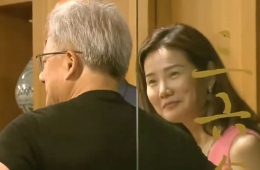
Jo Heeseung, director of the Children's Hospital at Kangwon National University Hospital, demonstrates how to prepare an AI-generated discharge summary based on the medical records of virtual patient Park Ian, alongside Health and Welfare Minister Jeong Eunkyung, at the opening ceremony for the "Public Healthcare AI Expressway" pilot project at Kangwon National University Hospital in Chuncheon, Gangwon Province, on the 11th. Ministry of Health and Welfare
View original imageIn a scenario in which Park was transferred to Kangwon National University Hospital for surgery, AI prepared a pre-anesthesia assessment. Cho Heeseung, director of the Children’s Hospital at Kangwon National University Hospital, reviewed the American Society of Anesthesiologists (ASA) physical status classification generated by AI and signed it. AI also prepared the discharge summary and the referral letter for follow-up care at a local facility. “In the past, we had to go through hundreds of pages of medical records one by one to prepare a discharge summary, and a lot of information was missed,” Cho said. “If AI can serve as a kind of assistant, medical staff can identify and use the important information.”
The Public Healthcare AI Expressway is shared infrastructure designed to make advanced medical AI technologies concentrated in large hospitals in the Seoul metropolitan area available to regional public hospitals as well. Medical AI developed and validated by Seoul National University Hospital and others will be provided to regional medical institutions through national graphics processing units (GPUs), cloud services and a high-speed dedicated network. This will allow hospitals to use advanced technology without having to build their own high-performance AI servers.
Previously, medical AI typically analyzed information in a separate program, after which medical staff had to enter the results into the EMR themselves. The technology unveiled this time, however, analyzes patient information and drafts documents within the clinical interface that staff already use. As a result, the time needed to draft a transfer referral, which previously took more than 10 minutes, can now be reduced to under 1 minute. However, the attending physician remains responsible for the final clinical decision, document revisions and electronic signature.

The process of creating an AI-generated discharge summary using the medical records of virtual patient Park Ian is demonstrated at the pilot opening ceremony for the "Public Healthcare AI Expressway," held at the Children's Hospital of Kangwon National University Hospital in Chuncheon, Gangwon-do, on the 11th. Photo by Lee Seongmin
View original imageThe ultimate goal of the government’s efforts to transform healthcare with AI is to address regional disparities in access to care. The plan is to establish a regionally self-sufficient healthcare system in which patients who cannot be treated at local hospitals are referred to higher-level hospitals and, after treatment, receive follow-up care at medical institutions near their homes. AI will assist with preparing the documents needed to refer and return patients between hospitals, while information will be shared through the existing health information exchange system.
The government plans to expand the network from 8 public hospitals in 2026 to up to 35 in 2027, 52 in 2028 and 72 nationwide in 2029. It also plans to broaden the use of AI to include medical image interpretation support, voice-based medical record creation, verification of the appropriateness of medication prescriptions and prediction of patient deterioration. The government is also pursuing a plan to make solutions developed by private medical AI companies available on a public platform for shared use across multiple hospitals.
Hot Picks Today
 "Two Spend 500,000 Won in a Flash, Yet Wait Two Hours?" ... 'Dreamland' Shunned by Kids and Foreign Tourists
- The Era of Getting 200 Million Won After 30 Years Is Over... A Japanese Bank's "Perpetual Department Head" Who Just Clocked In Cries Out
- Spain Hit by Its Worst Tragedy... Lee Kangin, Moreno and Real Madrid Join Soccer World in Mourning
- They Said, “Make It Your Home for Life” - Then Suddenly Kicked 200 Passengers Off... What Happened to the Around-the-World Cruise?
- "130 Rice Bowls Sold Out in a Day"... 'Unfiltered Face' Adds 8 Million Won to Night Market Sales: China's Bungeunwoo
Health and Welfare Minister Jung Eunkyung said, “This expressway connecting Yeongwol and Chuncheon is the first stretch on the road to a Korea where people can access high-quality healthcare wherever they are. We will help medical staff at regional public hospitals use AI to give patients back the time they used to spend on paperwork and dramatically improve the quality of care.”

Minister of Health and Welfare Jeong Eunkyung watches a demonstration of AI-powered referral letter writing at the pilot launch ceremony for the “Public Healthcare AI Expressway,” held at Kangwon National University Hospital in Chuncheon, Gangwon Province, on the 11th. Ministry of Health and Welfare
View original image© The Asia Business Daily. All rights reserved. Unauthorized AI training and use prohibited.