Mayor Lee Sangil: "Break down departmental barriers and make every effort to secure funding"... 'Yongin 2040' sets sail
Yongin City details 58 projects across five fields under "Yongin Vision 2040"
Phased implementation to begin in 2027... Expanding support for semiconductor research and startups
Plan to expand regional expressway network with eight routes spanning 232.6 km
Mayor Lee Sangil: "Yongin Vision 2040 implementation plan must proceed without disruption"
Yongin Special City in Gyeonggi Province, which is emerging as a global semiconductor hub, has fleshed out a detailed blueprint for “Yongin Vision 2040,” a mid- to long-term development strategy looking 20 years ahead. The city has selected 58 priority projects and will begin full-scale implementation on the ground in 2027.

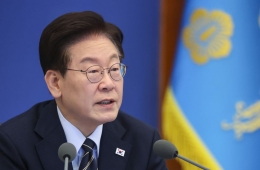
Yongin Mayor Lee Sang-il speaks at a meeting on the implementation plan for the “Future City Development Strategy: Yongin Vision 2040” at City Hall’s video conference room on the 11th. Photo provided by Yongin City.
View original imageYongin City said it held a briefing on the establishment of implementation plans for detailed projects under the “Yongin Vision 2040: Future City Development Strategy” in the video conference room at City Hall on November 11, chaired by Mayor Lee Sangil, and reviewed the final roadmaps for each project. The city is now putting into action as practical administrative projects the broad development vision it established in March.
Mayor Lee Sangil said, “We must break down departmental barriers to ensure each project proceeds as planned, and, given the substantial funding involved, develop thorough plans to secure the necessary budgets. I ask all public officials to familiarize themselves thoroughly with the implementation plans so the projects continue without disruption, even when personnel changes occur.”
“Yongin Vision 2040” comprises five major fields and 21 sectors: urban development and transportation; industry and the economy; culture and tourism; the environment and safety; and administration, welfare, and education. The key projects reviewed that day numbered 58 in total: 24 overseen by the First Deputy Mayor and 34 by the Second Deputy Mayor.
The central pillars are “maintaining a decisive lead in semiconductors” and “fostering new industries.” The city plans to significantly expand its research and development (R&D) infrastructure, increase space for startups and businesses in the materials, parts, and equipment sectors, and actively attract university and corporate research institutes. It aims to provide comprehensive support for basic and applied research by small and venture businesses by linking the new research infrastructure with “Trinity Fab.” Companies moving into the semiconductor cluster will receive integrated support, from investment consultations to assistance with settling in.
A one-stop administrative support system will also be established for companies moving into the cluster. One-stop consulting, from investment advice to assistance with housing and living conditions, will help companies establish themselves in their early stages. The city will also build hubs for new semiconductor-related businesses in each major new town.
The startup ecosystem will be specialized by region. The Yeongdeok Startup Incubation Center will be developed as a hub for “semiconductors and AI,” while the Dongbaek Center will focus on “biotechnology and healthcare.” The main office of the Yongin Industry Promotion Agency will serve as a hub overseeing startup policy, investment, and external cooperation. The city also plans to introduce a wide range of AI-powered, personalized administrative services across its operations.
Transportation links serving the semiconductor industry will also be significantly expanded. The city will accelerate the development of a regional expressway network connecting semiconductor industry hubs, with eight routes spanning a total of 232.6 km. These include the “Semiconductor Expressway,” the Yongin–Chungju, Second Yeongdong Connector, Yongin–Seongnam, Second Yongin–Seoul, and Osan–Yongin expressways, as well as the Gyeongbu and Yeongdong underground expressways.

Yongin Mayor Lee Sang-il holds a briefing on plans to develop detailed initiatives under the Future City Development Strategy, Yongin Vision 2040, in the city hall's video conference room on the 11th. Photo provided by Yongin City.
View original imageInnovation in eco-friendly and educational infrastructure will proceed alongside these efforts. Public buildings will be required to obtain Zero Energy Building (ZEB) certification and achieve higher ratings, and the city will encourage private buildings to participate as well. The existing Agricultural Culture Exhibition Hall will be transformed into a “Future Agriculture Education Center,” while a lifelong-learning governance system bringing together the public, private, and academic sectors will help strengthen the ecosystem for developing future talent.
Hot Picks Today
 "Two Spend 500,000 Won in a Flash, Yet Wait Two Hours?" ... 'Dreamland' Shunned by Kids and Foreign Tourists
- The Era of Getting 200 Million Won After 30 Years Is Over... A Japanese Bank's "Perpetual Department Head" Who Just Clocked In Cries Out
- Spain Hit by Its Worst Tragedy... Lee Kangin, Moreno and Real Madrid Join Soccer World in Mourning
- They Said, “Make It Your Home for Life” - Then Suddenly Kicked 200 Passengers Off... What Happened to the Around-the-World Cruise?
- "130 Rice Bowls Sold Out in a Day"... 'Unfiltered Face' Adds 8 Million Won to Night Market Sales: China's Bungeunwoo
Yongin City plans to finalize the plans for all 58 detailed projects by the end of this year and begin annual implementation in line with the preparation of the 2027 main budget. It will also conduct regular revisions and updates each August to reflect changes in policy and external conditions.
© The Asia Business Daily. All rights reserved. Unauthorized AI training and use prohibited.