Chinese Tourists Came in "Droves" and Bought Everything... Foreign Visitors to Korea Are Spending Differently Now
Duty-Free Shops Lose Ground as Neighborhood Businesses and Medical and Beauty Services Rise
71% of Foreign Visitors' Card Spending Concentrated in Seoul
Spending Patterns Shift... Spreading the Benefits to Regional Economies Is a Challenge
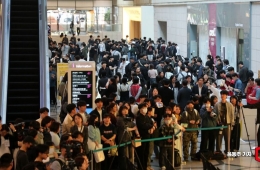
The number of foreign tourists surpassing 20 million marks a new milestone for South Korea's tourism industry. Visitor numbers have doubled in the 14 years since the country entered the era of 10 million visitors in 2012. Along with the increase in tourists, their spending habits are also changing. Spending is expanding beyond duty-free shopping to include general commercial districts, dining, and medical and beauty services. However, tourism revenue remains below its target, and spending is still concentrated in Seoul. Calls are growing for the industry to go beyond attracting tourists and boost actual spending and its spillover effects on regional economies.

Urban shopping districts, dining, and experiential spending in areas such as medical care and beauty are emerging as new growth drivers, attracting independent travelers.
View original imageTourism Revenue Falls Short of Target... Duty-Free Shops Lose Ground as Neighborhood Businesses Rise
In 2012, the government set a target of attracting 20 million foreign tourists and generating $30 billion in tourism revenue. The number of visitors has met the target, but tourism revenue has yet to reach it. Last year, tourism revenue stood at $21.89 billion. This year, however, it has shown a clear recovery. Tourism revenue from January to September reached $21.18 billion, up 31.8% from the same period a year earlier, while tourism revenue per visitor rose 8.5% to $1,238. The tourism deficit narrowed by 70.9% to $2.21 billion.
Tourists' spending habits have also changed. Duty-free shops, which once relied on bulk purchases by Chinese tour groups, have yet to recover their previous performance despite the increase in visitors to South Korea. Instead, urban commercial districts frequented by independent travelers, dining, and experiential spending in areas such as medical care and beauty are emerging as new growth drivers.
According to Yanolja Research, foreign customers' spending at duty-free shops from January to September this year totaled $5.03 billion, down 61.1% from the same period in 2019. The number of users fell from 14.72 million to 10.6 million, while spending per person dropped from $879 to $475. This marks a shift from the past, when an increase in tourists directly translated into higher duty-free sales.

Compared with 2019, the number of foreign tourists visiting Korea rose 32.3% and tourism revenue increased 37.3% from January to September 2026, while sales at duty-free stores to foreign customers fell 61.1%. Of foreign tourists' offline card spending in Korea during the first nine months of this year, 70.9% took place in Seoul. Korea Tourism Organization, Bank of Korea, Yanolja Research
View original imageBy contrast, use of general commercial districts has picked up. The rate of use of airport duty-free shops fell from 33.5% in 2019 to 12.7% last year, while the rate for large shopping malls rose from 16.1% to 39.1%. Among foreign tourists who went shopping last year, 50.9% visited street-level shops. Changes are also evident in sales in major commercial districts. From January to September this year, foreign visitors' card spending in the Myeongdong area totaled KRW 1.7356 trillion, the highest among Seoul's major tourist destinations. In the Seongsu area, it reached KRW 263.8 billion, more than double the figure for the same period a year earlier.
Spending is expanding beyond shopping to include dining and medical and beauty services. The share of foreign tourists participating in culinary tourism rose from 48.4% in 2012 to 81.6% last year. Growth has been particularly pronounced in medical and beauty services. From January to September this year, foreign visitors' spending on medical services totaled KRW 1.8398 trillion, about 6.8 times the amount for the same period in 2019. Last year, the number of foreign patients reached 2,011,822, 12.6 times the figure for 2012, with dermatology and plastic surgery accounting for 74.1%. K-food and K-beauty are reshaping the landscape of tourism spending.
Foreign Visitors' Spending Concentrated in Seoul... Extending Benefits to Regional Economies Is Key

The benefits of increased tourism spending are concentrated in Seoul. From January to September this year, 70.9% of foreign tourists' offline card spending in South Korea took place in Seoul. Spending in the capital totaled KRW 8.8435 trillion, up 57.7% from the same period a year earlier, while spending in neighborhood commercial districts surged 80.5%.
Spending was concentrated in a few areas even within Seoul. Three districts - Gangnam-gu (29.6%), Jung-gu (27.7%), and Mapo-gu (7.1%) - accounted for 64.4% of foreign visitors' total card spending. Regional disparities in medical tourism have also widened. Seoul's share of foreign patients rose from 62.3% in 2012 to 87.2% last year. Over the same period, the number of foreign patients in Daegu fell from 31,183 in 2019 to 19,243 last year.
Another challenge is turning the increase in repeat visitors into a boost for regional tourism. Last year, 56.6% of foreign tourists had visited South Korea before. Among tourists who had visited four or more times, the participation rate in traditional cultural experiences was 4.8%, far below the 24.2% rate for first-time visitors. Analysts say tourism products should be expanded by combining accommodation and experiences with the distinctive history and culture of each region, encouraging repeat visitors to explore new areas rather than focusing on familiar destinations and shopping.
The government has set a new target of attracting 30 million foreign tourists. Some say, however, that there are limits to assessing the tourism industry's performance solely by visitor numbers. In August, the Bank of Korea proposed examining the industry's economic contribution with a focus on tourism exports and domestic value added. The point is that, in addition to tourists' length of stay and spending, it is also important to measure how much that spending translates into revenue and jobs for regional businesses.
Hot Picks Today
 "Two Spend 500,000 Won in a Flash, Yet Wait Two Hours?" ... 'Dreamland' Shunned by Kids and Foreign Tourists
- The Era of Getting 200 Million Won After 30 Years Is Over... A Japanese Bank's "Perpetual Department Head" Who Just Clocked In Cries Out
- Spain Hit by Its Worst Tragedy... Lee Kangin, Moreno and Real Madrid Join Soccer World in Mourning
- They Said, “Make It Your Home for Life” - Then Suddenly Kicked 200 Passengers Off... What Happened to the Around-the-World Cruise?
- "130 Rice Bowls Sold Out in a Day"... 'Unfiltered Face' Adds 8 Million Won to Night Market Sales: China's Bungeunwoo
Shim Chang-seop, a professor in the Department of Tourism Management at Gachon University, said, "Even as the number of tourists and their spending increase, the revenue base of domestic travel companies is actually weakening as independent travel becomes more common and online travel agencies (OTAs) strengthen their intermediary role." He added, "Tourism policy should also be evaluated based not on visitor numbers, but on how much tourism revenue returns to regional economies, including through time spent in local areas, spending, and job creation."
© The Asia Business Daily. All rights reserved. Unauthorized AI training and use prohibited.