Ruling Party Lawmakers from Seoul Metro Area: "Policy Should Focus on Stabilizing Jeonse and Monthly Rents, Not Home Prices"... Proposal to Expand Rental Supply Using Housing Pensions
Lee Eonju: "Jeonse and Monthly-Rent Crisis in Seoul Metropolitan Area More Serious Than Home Prices in Specific Areas"
Hwang Hee: "Massive Reconstruction Relocations Raise Fears of a Jeonse and Monthly-Rent Crisis"
Professor Ma Kangrae: "Housing Pension Could Help Provide 184,000 Rental Units"
On November 11, Democratic Party of Korea lawmakers from the Seoul metropolitan area stressed that the focus of real estate policy should expand beyond stabilizing home prices in specific areas to stabilizing jeonse and monthly rents for people without homes and for low- and middle-income households. A policy alternative proposed at a forum that day was to encourage retired homeowners in the Seoul metropolitan area to move to provincial areas and make their existing homes available as long-term rentals.
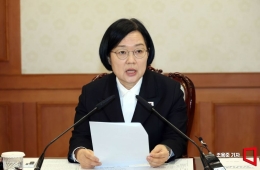
The lawmakers’ group “Real Estate Pragmatism for Jeonse and Housing Stability,” whose members include Assemblyman Lee Eonju, held a policy forum on stabilizing jeonse and monthly rents that day at the National Assembly Members’ Office Building.

In his opening remarks, Lee said, “I believe the jeonse and monthly-rent crisis across the Seoul metropolitan area is more serious than home prices in any particular area,” adding, “We started from the question of whether stabilizing jeonse and monthly rents for people without homes, in particular, should be the focus of real estate policy.”
He continued, “The causes of the jeonse and monthly-rent crisis may include various issues, such as distinctions between owner-occupied and non-owner-occupied homes, taxes, loans for ordinary households, and the land transaction permit system. We want to consider which of these factors are decisive and more serious.”
Demand for people to relocate because of redevelopment and reconstruction projects in the Seoul metropolitan area was also raised as a key issue. Assemblyman Hwang Hee said, “There are around 100 large-scale apartment complex reconstruction projects in the Seoul metropolitan area, each involving 20,000 to 40,000 households,” adding, “If relocation demand arises all at once when there is no alternative housing, a jeonse and monthly-rent crisis is a concern.”
Hwang said, “Housing supply is insufficient, and the government can take responsibility for managing only about 10% of the supply, while relying on the private sector for the rest. On top of that, loan, financial, and tax regulations are compounding the difficulties.”
Presentations included statistics illustrating the growing burden on the jeonse and monthly-rent market. According to presentation materials by Professor Ma Kangrae of Chung-Ang University, the share of monthly rentals in apartment lease contracts in Seoul rose by 7.0 percentage points, from 43.3% in January-July last year to 50.3% in the same period this year. As of July this year, the median jeonse price for apartments in Seoul was 554 million won, 319 million won higher than the nationwide median of 235 million won.
Professor Ma proposed a “regionally shared housing pension” as an alternative. Under the proposal, when baby boomers who own homes in the Seoul metropolitan area move to provincial areas, their existing homes would be used as long-term rentals for young people and newlyweds. Homeowners would receive housing pension payments and rental income without selling their homes, while professional rental management agencies would operate the properties as long-term rentals.
Professor Ma estimated that if 5% of potential relocating households among baby boomers who own homes in the Seoul metropolitan area participated, 184,000 rental housing units could be provided and provincial areas’ gross regional domestic product (GRDP) could increase by 43.2 trillion won over 10 years. This was an estimate based on the assumption that the system would be introduced; it does not represent housing units actually secured.
Professor Choi Byungcheon of Myongji University argued that the government should examine how regulations on multiple-home owners and policies prioritizing owner-occupancy affect the supply of rental housing, in light of rising jeonse and monthly-rent prices. His presentation materials also included an analysis of KB data showing that from November last year to early November this year, jeonse prices rose 18.9% in Gangbuk-gu, Seoul, 18.6% in Seongbuk-gu, and 17.2% in Nowon-gu. Choi proposed making the stabilization of jeonse and monthly-rent prices a top real estate policy goal, rather than focusing on stabilizing home prices in certain areas.
Assemblywoman Lee Sujin pointed out that local governments determine the proportion of rental housing supplied through redevelopment and reconstruction projects. “We need a system that guarantees the proportion of rental housing needed for dual-income couples and young people,” she said.
However, the lawmakers’ group did not finalize any specific policy as a joint demand that day. Assemblyman Lee Eonju said, “Since today marks the beginning of the discussion, I think it is too early to draw conclusions,” adding, “I will consult closely with the party leadership and consider how the party can incorporate these policy directions.”
Hot Picks Today
 "Two Spend 500,000 Won in a Flash, Yet Wait Two Hours?" ... 'Dreamland' Shunned by Kids and Foreign Tourists
- The Era of Getting 200 Million Won After 30 Years Is Over... A Japanese Bank's "Perpetual Department Head" Who Just Clocked In Cries Out
- Spain Hit by Its Worst Tragedy... Lee Kangin, Moreno and Real Madrid Join Soccer World in Mourning
- They Said, “Make It Your Home for Life” - Then Suddenly Kicked 200 Passengers Off... What Happened to the Around-the-World Cruise?
- "130 Rice Bowls Sold Out in a Day"... 'Unfiltered Face' Adds 8 Million Won to Night Market Sales: China's Bungeunwoo
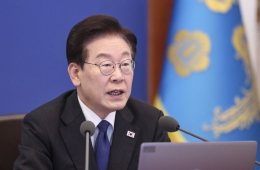
Assemblyman Kim Junhyeok also said, “I believe the basic direction of the Lee Jaemyung administration’s real estate policy is right,” describing the forum as “a venue for deliberation with experts to address shortcomings in the implementation process.” He stressed, “It is completely untrue to interpret this group as opposing the government’s real estate policies.”
© The Asia Business Daily. All rights reserved. Unauthorized AI training and use prohibited.