15 Financial Firms Fined KRW 1.6 Trillion for Treasury Bond Auction "Collusion"... Surpassing Qualcomm Record
Agreed on bid rates via messaging in 150 auctions over three and a half years
Systematic handovers using work manuals as well
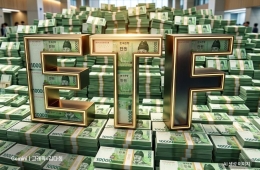
A total of 1.6265 trillion won in fines has been imposed on 15 financial firms that coordinated bid rates and volumes in advance for three and a half years in the government bond issuance market, a key channel for government financing. This sets a record for the largest fine ever imposed by the Fair Trade Commission in a single case.
Competitive Bidding Undermined as Record Fines Are Imposed

On November 11, the Fair Trade Commission said it had decided to issue corrective orders and impose fines totaling 1.626575 trillion won on 15 primary dealers (PDs) that colluded during government bond auctions from January 2020 to June 2023. The fine surpasses the 1.0311 trillion won imposed on Qualcomm in 2017 for abusing its market-dominant position, making it the largest fine in the Commission's history. The Commission also decided to refer seven financial firms to the Serious Crimes Investigation Agency, taking into account the seriousness of the matter: Mirae Asset Securities, NH Investment & Securities, Industrial Bank of Korea, KB Securities, Kiwoom Securities, Korea Development Bank, and Korea Investment & Securities. These firms were involved for longer periods and participated in the collusion more frequently.
The PD system, at the center of this record-breaking enforcement action, grants exclusive rights to participate in government bond auctions to financial institutions designated by the Ministry of Economy and Finance. PDs are required to purchase a certain share of the bonds offered at each auction and to support the secondary market. In return, they enjoy exclusive financial benefits, including the right to make additional purchases at the auction-winning rate and earn trading profits, as well as access to low-interest loans. Because firms must meet strict financial and staffing requirements to qualify, the system operates as a closed oligopolistic market with high barriers to entry. There are currently 20 banks and securities firms designated as PDs, and all 15 firms sanctioned in this case are incumbent PDs.

Financial institutions involved in the government bond auction bid-rigging case exchanged information on bid rates and volumes as a routine practice, without even exchanging greetings. Fair Trade Commission.
View original imageClear Evidence, Including "Five-Second Calls" Without Greetings, Exposed the Collusion
During the Fair Trade Commission's plenary meeting hearings in August and September, commissioners and financial firms engaged in intense legal arguments. The firms appearing before the panel split into two broad groups over whether to admit the allegations. Some securities firms, reportedly having applied for leniency under the voluntary reporting program, admitted to the collusion early and sought leniency. Most of the remaining firms, however, fully denied the allegations, emphasizing that their exchanges were routine one-on-one conversations. They argued that the communications were private rather than in group chats, and that the information exchanged was fragmentary and amounted only to market forecasts, so it had no anticompetitive effect on the actual winning rates.
The Commission, however, concluded that the firms had reached agreements or exchanged information about bid rates and volumes via messenger in 150 auctions, communicating in a calculated manner until just one or two minutes before bidding closed. In 145 of those auctions, it found clear mutual agreement on specific rates and volumes. In one case, the firms agreed on a bid rate in a phone call lasting just five seconds on the auction date, without even exchanging greetings. A key basis for the Commission's conclusion was that government bond auction-winning rates are determined by adding bids in order of the lowest rates until the amount issued is reached, meaning every rate submitted by the dealers could directly affect the winning rate. The Commission also found that the firms had systematically maintained the collusion by handing over competitors' auction contact details and manuals for communicating at different times of day to successors during staff transfers, and by appointing stand-ins to ensure the collusion continued when staff were temporarily absent, such as on business trips. During the period of collusion, the 15 financial firms exercised their noncompetitive purchase rights in 204 of 345 auctions.
Fines Calculated Based on "Winning Bid Amount"; Scale of Government Losses Not Disclosed

Fines imposed on each of the 15 companies involved in government bond bid rigging. Fair Trade Commission.
View original imageThere was also fierce debate over how to calculate sales revenue, the basis for determining fines, as the firms sought to avoid record penalties. The financial firms argued that the full amount of government bonds won at auction was simply money paid to the government to purchase the bonds, and that the sales revenue used to calculate fines should be limited to operating income, such as fees or trading gains. The Commission, however, imposed the fines, maintaining that, given the nature of collusion in a procurement auction, it was appropriate to treat the winning bid amount as sales revenue related to bid-rigging, based on a review of legislation and expert opinions.
As a result, the relevant sales revenue used to calculate the fines was estimated at approximately 54 trillion won, to which a 4.5% base rate was applied, within the 3% to 10.5% range for "serious violations" involving collusion. However, taking into account factors including the scale of unjust gains and market conditions, the Commission reduced the fines by 30% for all 15 firms. The 4.5% base rate was the same as the rate applied when the Commission sanctioned four major commercial banks for colluding through information exchanges in January 2026, imposing fines of 272 billion won. Regarding government losses caused by the financial firms' collusion, the Commission said, "The case review team and the economic analysis office used quantitative analysis to establish that the collusion had a significant impact," but added that "we judged it inappropriate to disclose a specific figure."
Hot Picks Today
 "Two Spend 500,000 Won in a Flash, Yet Wait Two Hours?" ... 'Dreamland' Shunned by Kids and Foreign Tourists
- The Era of Getting 200 Million Won After 30 Years Is Over... A Japanese Bank's "Perpetual Department Head" Who Just Clocked In Cries Out
- Spain Hit by Its Worst Tragedy... Lee Kangin, Moreno and Real Madrid Join Soccer World in Mourning
- They Said, “Make It Your Home for Life” - Then Suddenly Kicked 200 Passengers Off... What Happened to the Around-the-World Cruise?
- "130 Rice Bowls Sold Out in a Day"... 'Unfiltered Face' Adds 8 Million Won to Night Market Sales: China's Bungeunwoo
Government bonds are the most actively traded bonds in Korea. They closely reflect the state of market liquidity and serve as a key benchmark for pricing other financial products. "This case is significant because we uncovered and sanctioned a serious violation of the law that effectively undermined the competitive bidding system and caused losses to the government," said Kim Geun-seong, a standing commissioner of the Fair Trade Commission. "We will enforce the law strictly, without exception, against bid-rigging in the public sector, which leads not only to wasteful government spending but also directly increases the burden on the public."
© The Asia Business Daily. All rights reserved. Unauthorized AI training and use prohibited.