Tomocube Unveils New HT-X1 MAX for 3D Imaging Inside Organoids Without Staining

Tomocube, a company specializing in holotomography, has unveiled a new product that can observe the internal structure of living organoids in 3D without staining. Because it can repeatedly measure changes in the same sample before and after drug treatment, the product is expected to be used by pharmaceutical and biotechnology companies in new drug development and drug response assessment.
Tomocube said on Nov. 11 that it had unveiled its organoid imaging system, the HT-X1 MAX, and begun accepting preorders. Product shipments are scheduled for the first quarter of 2027.
Organoids are research models created by growing cells obtained from patient tissue in 3D. They retain some characteristics of the original tissue and are used to examine drug responses in individual patients and evaluate new drug candidates. However, precise analysis of drug responses requires examining not only changes in an organoid’s appearance but also changes in its internal structure.
Conventional bright-field microscopes are useful for observing the appearance of organoids but have limitations in distinguishing dense internal cell structures. Fluorescence-based analysis requires time and money for reagents and sample preparation, while methods that fix or destroy samples make it difficult to track changes in the same organoid over time. Imaging the interior is also more challenging for larger, thicker organoids.
The HT-X1 MAX uses holotomography technology, which measures differences in the refractive indices of cells and tissues. It produces 3D images of the interiors of living organoids without staining, fixation, or clearing. Because the same sample can be repeatedly imaged while maintaining its culture environment, structural changes before and after drug administration can be compared over time.
Analysis goes beyond measuring the overall size of an organoid. The system can also measure changes in detailed structures, including internal cell layers and lumen volume. Tomocube says users can quantify changes such as a decrease in the internal cell layer and an increase in the lumen, a hollow space, even when the organoid’s external size remains similar after drug treatment. Imaged samples can also be used in subsequent experiments, including staining and genetic analysis.
The system also supports automated imaging of 96-well plates to enable comparisons across multiple drug conditions. When one location in each well is imaged, a plate can be imaged in about 30 minutes; the actual time required varies depending on imaging depth and the number of locations. The system supports an axial imaging range of up to 500 micrometers.
The accompanying analysis software, TomoAnalysis 3.0, uses artificial intelligence (AI) to distinguish organoids and their internal structures and quantify their size, shape, and volume. It can analyze data from multiple wells and time points in batches, compare changes across drug conditions, and compile the results into reports. Fluorescence imaging to identify the locations of specific cells or molecules, as well as integration with external laboratory automation equipment, is also available as an option.
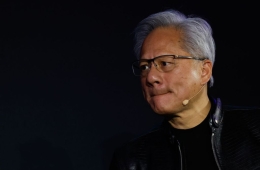
“What pharmaceutical and biotechnology companies need is not just equipment to image organoids, but a way to determine how their responses to drugs change,” said Tomocube CEO Park Yongkeun. “Customers have asked to observe the interiors of larger, more mature organoids in a living state, and we developed the HT-X1 MAX to meet that need.”
“Repeatedly measuring changes inside the same organoid can be used not only to assess drug responses but also to track changes in growth and quality during the culturing process,” said Lee Sumin, managing director of Tomocube’s Life Sciences Business Division. “Through preliminary meetings with client companies, we are working together to explore ways to use the system that suit each sample and experimental objective.”
Hot Picks Today
 "Two Spend 500,000 Won in a Flash, Yet Wait Two Hours?" ... 'Dreamland' Shunned by Kids and Foreign Tourists
- The Era of Getting 200 Million Won After 30 Years Is Over... A Japanese Bank's "Perpetual Department Head" Who Just Clocked In Cries Out
- Spain Hit by Its Worst Tragedy... Lee Kangin, Moreno and Real Madrid Join Soccer World in Mourning
- They Said, “Make It Your Home for Life” - Then Suddenly Kicked 200 Passengers Off... What Happened to the Around-the-World Cruise?
- "130 Rice Bowls Sold Out in a Day"... 'Unfiltered Face' Adds 8 Million Won to Night Market Sales: China's Bungeunwoo
The HT-X1 MAX’s primary customers include pharmaceutical and biotechnology companies conducting organoid-based drug development and screening, as well as contract research organizations (CROs), contract development and manufacturing organizations (CDMOs), and research institutions.
© The Asia Business Daily. All rights reserved. Unauthorized AI training and use prohibited.