"South Korea's U.S. Investment Could Be Delayed as Democrats Take Control of Congress"
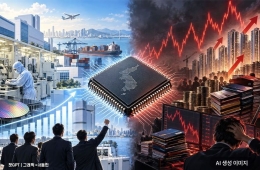
With the Democratic Party winning majorities in both the House and Senate in the midterm elections, questions have arisen over whether implementation of South Korea's pledged $350 billion investment in the United States could be delayed. Analysts say the pace of major investment projects could slow as Democrats step up congressional oversight of The Trump Administration.

At a seminar hosted by the Korea Economic Institute (KEI) in Washington, D.C., on Nov. 10 (local time), Andrew Yeo, the Korea Chair at the Brookings Institution, said President Trump would likely continue pursuing policies on trade and investment, tariffs, and shipbuilding with South Korea, but that "increased congressional oversight could constrain the implementation of some policies."
He said the new House, led by Democrats, could closely scrutinize the process behind the agreement on South Korea's $350 billion investment in the United States, as well as its implementation. The purpose of congressional oversight would not be to halt the investment projects entirely, he said, but the schedule could be delayed as the administration responds to congressional inquiries before moving forward.
Yeo said he saw little chance that the 15% tariff applied to South Korea would be withdrawn. However, with legislation to strengthen Congress's authority to control and oversee the administration's tariff policies under discussion, he said both South Korea and the United States would need to adapt to the changed political environment.
The war with Iran was also cited as a major factor that could affect South Korea-U.S. relations. He said the reopening of the Strait of Hormuz could benefit South Korea's energy security, as Democrats call for an end to the war. On the other hand, if the United States asks South Korea to expand its contribution to military operations in the Middle East as the war draws to a close, the South Korean government could face a difficult choice, he said.

He was skeptical about the possibility of renewed talks between the leaders of North Korea and the United States. Yeo noted that President Trump had repeatedly expressed his willingness to meet with North Korean leader Kim Jong Un, but that North Korea had shown "no interest whatsoever."
He also said that while he might have been open to the possibility of a North Korea-U.S. summit on the sidelines of the Asia-Pacific Economic Cooperation (APEC) summit several months ago, it now seemed unlikely to take place. APEC will be held in Shenzhen, China, on Nov. 18-19.
Hot Picks Today
 "Two Spend 500,000 Won in a Flash, Yet Wait Two Hours?" ... 'Dreamland' Shunned by Kids and Foreign Tourists
- The Era of Getting 200 Million Won After 30 Years Is Over... A Japanese Bank's "Perpetual Department Head" Who Just Clocked In Cries Out
- Spain Hit by Its Worst Tragedy... Lee Kangin, Moreno and Real Madrid Join Soccer World in Mourning
- They Said, “Make It Your Home for Life” - Then Suddenly Kicked 200 Passengers Off... What Happened to the Around-the-World Cruise?
- "130 Rice Bowls Sold Out in a Day"... 'Unfiltered Face' Adds 8 Million Won to Night Market Sales: China's Bungeunwoo
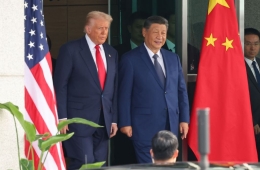
He said there might not be enough diplomatic bandwidth to prepare a separate meeting involving North Korea while a U.S.-China summit is being arranged. He described organizing a North Korea-U.S. summit as extremely difficult in practical terms and said the chances of it taking place were low.
© The Asia Business Daily. All rights reserved. Unauthorized AI training and use prohibited.