Jensen Huang Scandal Puts Republicans at Odds, Puts Brakes on Trump's China Chip Policy
Three Republican House Committee Chairs Request Closed-Door Briefing with Huang
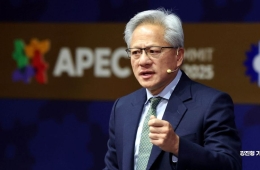
The Jensen Huang scandal has prompted a backlash within the U.S. Republican Party against President Donald Trump’s policy of easing restrictions on semiconductor exports to China. While Trump has defended Nvidia CEO Jensen Huang, who is suspected of being implicated in espionage activities by Chinese intelligence agencies, China hawks in the Republican Party have called for an investigation into Huang and tighter semiconductor export controls.
Republican China Hawks Call for Investigation Into Huang

According to Politico and other outlets on November 10 local time, the Republican chairs of the House Foreign Affairs Committee, the House Intelligence Committee, and the House Select Committee on China have asked Huang to attend a closed-door briefing on November 18. They want to learn how Huang became involved with a woman suspected of having ties to Chinese intelligence agencies, as well as about Nvidia’s security measures.
Separately, House Energy and Commerce Committee Chair Brett Guthrie said an investigation by the appropriate authorities was needed, while Senator John Cornyn also called for a broad investigation into Huang and urged Congress to play a role.
Republican China hawks are using the scandal to bolster calls to restrict exports of advanced AI chips to China. Politico analyzed that these efforts have given Republican China hawks a new opportunity to confront Trump over China policy following the Democrats’ victory in the midterm elections.
Jensen Huang Scandal Puts Approval of H20 Exports Back in the Spotlight

The Jensen Huang scandal has also sparked controversy over the Trump Administration’s semiconductor export policy toward China. A prominent example is the approval of exports of Nvidia’s H20 AI chip, developed for the Chinese market.
The second Trump Administration pursued a policy that would allow semiconductor exports to China under certain conditions. This marked a shift from the previous Biden Administration, which focused on preventing China from accessing advanced AI chips.
Huang is said to have met directly with Trump during this process and repeatedly urged him to allow U.S.-made semiconductors to be exported to China. Huang argued that if U.S. companies withdrew from the Chinese market, it could instead accelerate the development of China’s own semiconductor technology. His reasoning was that supplying U.S.-made AI chips to China and making Chinese companies dependent on U.S. technology would help maintain the United States’ long-term technological advantage.
Huang accompanied Trump on his Middle East tour last year and continued to push for eased semiconductor export restrictions on China, meeting with senior Administration officials in Washington afterward.
The Trump Administration ultimately restricted exports of the H20 to China in April 2025, but announced in July of that year, after repeated appeals from Huang, that it would resume exports.
In August, it emerged that Nvidia had agreed to obtain export licenses on the condition that it pay the U.S. government 15% of its revenue from H20 sales in China. This was seen as a major shift from the existing policy of restricting semiconductor exports on national security grounds.
The scandal has raised the possibility that the background to Huang’s calls for easing restrictions on exports of advanced semiconductors to China, as well as the decision-making process, could become the subject of political controversy.
However, there is no evidence that Huang provided confidential information to Chinese intelligence agencies or that the related allegations influenced semiconductor export policy. Nvidia’s board maintains that, to date, there is no basis to believe that national security or company secrets have been compromised.
U.S. Parties Push to Tighten Semiconductor Export Controls on China

In Congress, efforts to restrict exports of advanced AI chips to China are gaining momentum across party lines. One proposal would add provisions restricting semiconductor exports to China to the annual National Defense Authorization Act (NDAA).
At a press conference on November 10, House Minority Leader Hakeem Jeffries said that the NDAA under discussion in the Senate includes provisions restricting semiconductor supplies to China and that he "strongly supports them." He added that he would work to ensure the relevant provisions are included in the final bill.
One of the key bills is the AI Overwatch Act, which would allow Congress to review export licenses for advanced AI chips destined for countries of concern, including China.
Also under discussion are bills to track the end users of advanced semiconductors exported overseas and prevent smuggling and circumvention of export controls, as well as bills to strengthen restrictions on sales of semiconductor manufacturing equipment to China.
Republican Senator Jim Banks and Democratic Senator Elizabeth Warren have also called for action on the related bills in the wake of the Huang scandal.
Hot Picks Today
 "Two Spend 500,000 Won in a Flash, Yet Wait Two Hours?" ... 'Dreamland' Shunned by Kids and Foreign Tourists
- The Era of Getting 200 Million Won After 30 Years Is Over... A Japanese Bank's "Perpetual Department Head" Who Just Clocked In Cries Out
- Spain Hit by Its Worst Tragedy... Lee Kangin, Moreno and Real Madrid Join Soccer World in Mourning
- They Said, “Make It Your Home for Life” - Then Suddenly Kicked 200 Passengers Off... What Happened to the Around-the-World Cruise?
- "130 Rice Bowls Sold Out in a Day"... 'Unfiltered Face' Adds 8 Million Won to Night Market Sales: China's Bungeunwoo
In a joint statement, they said Huang’s acknowledgment of a relationship with an individual suspected of being a Chinese spy had made national security concerns more urgent. They emphasized that this raised important questions that Nvidia must answer, including the extent to which the activities in question were connected.
© The Asia Business Daily. All rights reserved. Unauthorized AI training and use prohibited.