From Bulguksa to Cheonmachong... Former National Research Institute of Cultural Heritage Director Kim Donghyun Dies
Architecture graduate who served as deputy head of the Cheonmachong excavation
Also took part in investigations of Hwangnamdaechong Tomb and Hwangnyongsa Temple... He was 89.
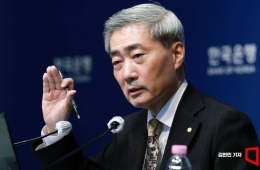
Kim Dong-hyun, former director of the National Research Institute of Cultural Heritage, who witnessed major moments in the preservation of Korean cultural heritage, including the restoration of Bulguksa Temple and the excavation of Cheonmachong Tomb, died on November 10. He was 89.

The late Kim Dong-hyun, former director of the National Research Institute of Cultural Heritage / Gyeongju National Research Institute of Cultural Heritage.
View original imageAfter graduating from Hanyang University’s Department of Architectural Engineering, he formed a connection with cultural heritage in the late 1950s, when he met Im Cheon (1908–1965), an expert in traditional architecture, at the National Museum. At the Office of Cultural Properties (now the Korea Heritage Service), he took part in the dismantling and repair of Palsangjeon Hall at Beopjusa Temple in 1967 and the restoration design for Bulguksa Temple in 1970.
For him, whose work had focused on repairing traditional architecture, the 1973 excavation of Cheonmachong Tomb was entirely different. He served as deputy director under team leader Kim Jeong-gi, but was unfamiliar with tomb excavations, and his only reliable asset was his architectural knowledge. He calculated the amounts of earth and stone used in the burial mound and estimated the labor and construction time required. At the site, he also personally lifted and recovered a gold crown that had been unearthed. After Cheonmachong, he took part in investigations of Hwangnamdaechong Tomb, Hwangnyongsa Temple, and Donggung Palace and Wolji Pond (Anapji).
He served as head of the Conservation Science Research Division at the National Research Institute of Cultural Heritage (now the National Heritage Research Institute) before becoming its director from 1996 to 1998. After retiring, he mentored future scholars as a distinguished professor at Yonsei University, a professor in the Department of Art History at Dongguk University’s Graduate School, and an endowed professor at the Korea National University of Cultural Heritage. He donated to Yonsei University the drawings, photographs, and construction logs he had collected over his lifetime.
Hot Picks Today
 "Two Spend 500,000 Won in a Flash, Yet Wait Two Hours?" ... 'Dreamland' Shunned by Kids and Foreign Tourists
- The Era of Getting 200 Million Won After 30 Years Is Over... A Japanese Bank's "Perpetual Department Head" Who Just Clocked In Cries Out
- Spain Hit by Its Worst Tragedy... Lee Kangin, Moreno and Real Madrid Join Soccer World in Mourning
- They Said, “Make It Your Home for Life” - Then Suddenly Kicked 200 Passengers Off... What Happened to the Around-the-World Cruise?
- "130 Rice Bowls Sold Out in a Day"... 'Unfiltered Face' Adds 8 Million Won to Night Market Sales: China's Bungeunwoo
The funeral altar has been set up in Room 14 of the funeral hall at Samsung Medical Center in Gangnam-gu, Seoul. He is survived by his son, Kim Ilyun, and daughter, Jiyun. The funeral procession will be held on November 12, and he will be laid to rest at Sian Park in Gwangju, Gyeonggi Province.
© The Asia Business Daily. All rights reserved. Unauthorized AI training and use prohibited.