BMW Group Signs Battery Supply Contracts with Samsung SDI and LG Energy Solution, Strengthening Local Sourcing
Securing supply stability and competitiveness through a "local for local" strategy
BMW Group is expanding its cooperation with Korean battery companies.
BMW Group said on November 10 that it had selected Samsung SDI and LG Energy Solution as additional suppliers of high-voltage battery cells and signed supply contracts with them.
Samsung SDI will supply battery cells to BMW Group from Europe, while LG Energy Solution will supply them from its local production facilities in the United States, starting in the second half of the 2020s. The strategy aims to expand cooperation with Korean battery companies while localizing and diversifying the global supply chain.

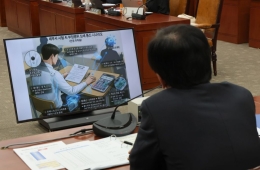
BMW Group said on the 10th that it had selected Samsung SDI and LG Energy Solution as additional suppliers of high-voltage battery cells and signed supply agreements with them. The photo shows a battery assembly process. BMW Group
View original imageThrough the contracts, BMW Group plans to strengthen its battery procurement system by linking it to production hubs in each region. The company aims to reduce transportation distances and improve supply stability by applying the "local for local" principle, under which parts are sourced close to vehicle production facilities.
Nicolai Martin, a member of the Board of Management of BMW Group responsible for Purchasing and Supplier Network, said, "Diversifying our procurement sources is central to BMW Group's purchasing strategy. We are leveraging the potential of the global procurement market to enhance the competitiveness of our products and achieve results in diverse markets, while also pursuing localization across the entire value chain."
BMW Group is applying its localization strategy not only to battery cell supply but also to assembly. It has built high-voltage battery assembly plants near vehicle production facilities in five locations around the world: Irlbach-Strasskirchen in Germany, Debrecen in Hungary, Shenyang in China, Woodruff in the United States, and San Luis Potosi in Mexico. The move is intended to improve supply chain efficiency by shortening logistics distances between battery suppliers, assembly facilities, and vehicle production plants.
BMW Group is also investing in building its battery technology capabilities. It operates three competence centers in the German state of Bavaria responsible for battery cell development, manufacturing, and recycling. The Battery Cell Competence Center (BCCC) in Munich develops next-generation high-voltage battery cell technologies, while the Cell Manufacturing Competence Center (CMCC) in Parsdorf researches mass-production technologies for the cells developed, as well as quality and resource efficiency. The Cell Recycling Competence Center (CRCC) in Salching uses direct recycling technology to recover raw materials and feed them back into the production process.
Hendrik Lang, a member of the Board of Management of BMW Group responsible for High-Voltage Battery Purchasing and Quality, said, "By working with leading battery cell manufacturers around the world, we are ensuring supply stability and competitiveness while responding flexibly to market changes."
Hot Picks Today
 "Two Spend 500,000 Won in a Flash, Yet Wait Two Hours?" ... 'Dreamland' Shunned by Kids and Foreign Tourists
- The Era of Getting 200 Million Won After 30 Years Is Over... A Japanese Bank's "Perpetual Department Head" Who Just Clocked In Cries Out
- Spain Hit by Its Worst Tragedy... Lee Kangin, Moreno and Real Madrid Join Soccer World in Mourning
- They Said, “Make It Your Home for Life” - Then Suddenly Kicked 200 Passengers Off... What Happened to the Around-the-World Cruise?
- "130 Rice Bowls Sold Out in a Day"... 'Unfiltered Face' Adds 8 Million Won to Night Market Sales: China's Bungeunwoo
Meanwhile, BMW Group surpassed 2 million cumulative sales of battery electric vehicles (BEVs) in September. Cumulative sales of electrified models, including plug-in hybrid electric vehicles (PHEVs), stood at approximately 3.5 million as of September 2026.
© The Asia Business Daily. All rights reserved. Unauthorized AI training and use prohibited.