A Common "Korean Meal"... What Now? Hot Water Sends a Cascade of Particles Pouring from Cup Noodles
Analysis of 20 Cup Noodle Products in Four Countries
Microplastics Detected in All Samples
Further Research Needed to Determine Effects on Human Health
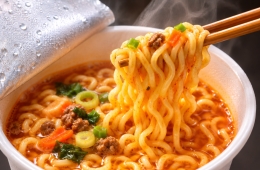
Cup noodles are a convenient everyday meal: just add hot water and you have something to eat. But a study suggesting that cup noodles may be a pathway for microplastics to enter the human body has also raised concerns about their safety. An analysis of 20 cup noodle products sold in four Asian countries, including South Korea, found microscopic particles in every sample, with an average of 318 particles detected per product. However, because the experiment lasted longer than actual cooking conditions and the figures reported in the paper were inconsistent, it is difficult to directly link the findings to harm to human health.

Cup Noodle Containers in Contact with Hot Water...Potential Release of Microscopic Particles
Researchers at the College of Food Science and Nutritional Engineering at China Agricultural University recently published a paper in the international journal Food Chemistry on microplastics released from cup noodle containers and the potential for human exposure.
The researchers collected 20 cup noodle samples from 10 brands sold in four Asian countries—South Korea, China, Japan and Thailand—all produced in 2024, and conducted experiments. They poured 500 ml of hot water at 95 degrees Celsius into the containers, covered them with aluminum foil for 15 minutes, then removed the foil and left them for another 20 minutes, analyzing the microscopic particles dissolved in the water over a total of 35 minutes.
The experiment detected microscopic particles in all 20 samples. The average number detected per cup of noodles, as stated in the paper's abstract, reached 318±94.03. The main materials detected varied and included polyethylene (PE), a polyethylene-polypropylene (PE·PP) composite, polyester and rayon.
The researchers focused on the plastic materials inside the containers. Even paper cup noodle containers are coated on the inside with a thin plastic film, such as PE, to prevent the contents from soaking through. The researchers said that microscopic particles may have detached from this coating after it came into contact with hot water.

Experiment Lasted 35 Minutes, Unlike Actual Cooking Time...Results Require Cautious Interpretation
However, several aspects of the experimental conditions and measurement methods limit how directly these findings can be applied to everyday consumption. In particular, the experiment lasted 30 to 35 minutes, far exceeding the usual cooking time for instant noodles of 3 to 4 minutes. Inconsistencies in the figures reported within the paper were also observed. The abstract and conclusion give an average of 318 particles per cup, while the summary gives 351, and one section of the results estimates 704. The paper also states that the final number of particles, after adjusting for contamination in the control group, was 281.
In addition, 10 particles were detected in a blank control sample containing no test material, so the possibility that fibers entered from the laboratory air cannot be ruled out. Some have also pointed out that rayon, which accounted for a large proportion of the detected particles, is a regenerated cellulose fiber and should be clearly distinguished from conventional synthetic-polymer microplastics.
South Korea Ranks Second Worldwide in Noodle Consumption After Vietnam...Food Safety Investigations to Expand
According to the World Instant Noodles Association (WINA), demand for instant noodles in South Korea totaled about 4.061 billion servings in 2025, ranking ninth worldwide. This figure includes both packet and cup noodles. On a per capita basis, that amounts to about 79 servings a year, or roughly one serving every four to five days, making South Korea the world's second-largest consumer after Vietnam. This high level of consumption inevitably heightens public concern about the accumulation of microplastics in the body.
Animal studies have reported inflammatory responses in the body, increased oxidative stress, changes in sex hormones and impaired reproductive function following exposure to microplastics. However, whether they directly harm humans has not been established.
The U.S. Food and Drug Administration (FDA) maintains that there is currently no direct evidence that microplastics or nanoplastics found in food are harmful to human health.
The European Food Safety Authority (EFSA) has also found evidence that microplastics are released from packaging and other materials, but has noted that actual release levels may be lower than those reported in previous studies because of issues such as contamination during analysis and particles being misidentified. The authority plans to prepare a related scientific opinion by the end of 2027.
Hot Picks Today
 "Two Spend 500,000 Won in a Flash, Yet Wait Two Hours?" ... 'Dreamland' Shunned by Kids and Foreign Tourists
- The Era of Getting 200 Million Won After 30 Years Is Over... A Japanese Bank's "Perpetual Department Head" Who Just Clocked In Cries Out
- Spain Hit by Its Worst Tragedy... Lee Kangin, Moreno and Real Madrid Join Soccer World in Mourning
- They Said, “Make It Your Home for Life” - Then Suddenly Kicked 200 Passengers Off... What Happened to the Around-the-World Cruise?
- "130 Rice Bowls Sold Out in a Day"... 'Unfiltered Face' Adds 8 Million Won to Night Market Sales: China's Bungeunwoo
The South Korean government is also pursuing 300 investigations into microplastics in food utensils, containers and packaging this year, 2026, under its Sixth Basic Plan for Food Safety Management. It will begin a full-scale investigation into food exposure in 2029.
© The Asia Business Daily. All rights reserved. Unauthorized AI training and use prohibited.