Improper Relationships with U.S. Lawmakers and FBI Agents... Jensen Huang Affair Revives Chinese Female Spy Cases
Persistent Allegations of Chinese Women’s Ties to Espionage
Katrina Leung, Christine Fang, and Linda Sun in Focus Again
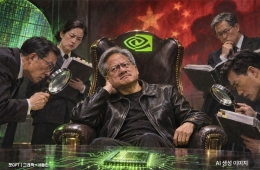
NVIDIA CEO Jensen Huang has acknowledged having an affair with a woman suspected of being a Chinese intelligence agent, bringing renewed attention to China’s so-called “honey trap” operations, a dark chapter that once shook the United States. In particular, espionage operations targeting political circles and intelligence agencies have now extended to technology companies, raising the risk of information leaks through personal relationships as a new national security challenge.

Prominent cases include those involving Chinese American businesswoman Katrina Leung, Chinese national Christine Fang, and Linda Sun, a former senior New York State official. Although they operated at different times and targeted different people, all were implicated in allegations of Chinese influence operations involving U.S. intelligence agencies, political circles, and local governments.
From FBI Informant to the Center of a Classified Information Leak Case
Katrina Leung, who was active from the 1980s onward, is cited as a prominent example of someone who exploited relationships of trust within the FBI. Recruited as an FBI informant in 1982, partly because of her connections with senior Chinese officials, Leung was given a codename and received more than $1.7 million in operational funds over approximately 18 years.
However, Leung was accused of obtaining classified information and passing it to China while maintaining an improper relationship with her FBI handler, James Smith, for approximately 19 years. Although voices within the FBI warned of the possibility of information leaks, critics also said the response was delayed because the agent involved with Leung failed to handle the warnings properly.
Leung was arrested in 2003. The charges of leaking classified documents were dismissed on procedural grounds, but in 2005 she pleaded guilty only to making false statements to the FBI and filing false tax returns. The case remains an example of the vulnerability that arises when a person used by an intelligence agency as an informant can instead gain access to internal information.
Christine Fang Made Inroads into Political Circles... Contact with Lawmakers and Mayors
In the 2010s, revelations that Christine Fang, a Chinese national, had contacted U.S. political figures caused a stir. From 2011 to 2015, Fang was active as a student at California State University and led a campus chapter of an organization that encouraged Asian Americans to participate in politics. Using this as a springboard, she organized political events and campaign fundraising events, building ties with influential politicians.
One prominent person she contacted was former Democratic U.S. Representative Eric Swalwell. Fang reportedly had ties with Swalwell dating back to his time as a city council member in California, and was said to have been involved in fundraising for his campaigns and recommending interns for his congressional office. Reports also said the two had a sexual relationship.
Swalwell was elected to the U.S. House of Representatives in 2012 and later served on the House Intelligence Committee. The FBI informed political figures of its concerns about possible links between Fang and Chinese intelligence agencies, and Fang left the United States and returned to China in 2015. However, Fang was not charged at the time, and Swalwell was not accused of wrongdoing in connection with the case. It has also not been confirmed whether Fang actually removed any classified information.
Concerns Extend to New York State Government and High-Tech Companies
In 2024, Linda Sun, a former senior New York State official, was indicted on charges of acting as an unregistered agent of the Chinese government. Sun worked in state government during former New York Governor Andrew Cuomo’s administration and served as deputy chief of staff after Kathy Hochul took office as governor.
U.S. prosecutors alleged that while in office, Sun acted in the Chinese government’s favor by obstructing meetings between officials from the Taipei Economic and Cultural Representative Office and senior New York State officials, and by removing from the governor’s speeches references to China’s repression of the Uyghurs. She was also accused of receiving financial benefits through her husband’s business in China. Sun denies the charges, and her trial is scheduled to resume next year.
Hot Picks Today
 "Two Spend 500,000 Won in a Flash, Yet Wait Two Hours?" ... 'Dreamland' Shunned by Kids and Foreign Tourists
- The Era of Getting 200 Million Won After 30 Years Is Over... A Japanese Bank's "Perpetual Department Head" Who Just Clocked In Cries Out
- Spain Hit by Its Worst Tragedy... Lee Kangin, Moreno and Real Madrid Join Soccer World in Mourning
- They Said, “Make It Your Home for Life” - Then Suddenly Kicked 200 Passengers Off... What Happened to the Around-the-World Cruise?
- "130 Rice Bowls Sold Out in a Day"... 'Unfiltered Face' Adds 8 Million Won to Night Market Sales: China's Bungeunwoo
Western intelligence agencies have warned that Chinese intelligence services may use sexual relationships or personal vulnerabilities to pressure people or induce them to cooperate. In a 2008 document distributed to businesses and financial institutions, the United Kingdom’s domestic intelligence service, MI5, warned that Chinese intelligence services could exploit personal vulnerabilities to compel cooperation. The UK Parliament’s Intelligence and Security Committee also released intelligence agencies’ testimony on the use of honey traps by Chinese intelligence services in a 2023 report.
© The Asia Business Daily. All rights reserved. Unauthorized AI training and use prohibited.