"We'll Pay You KRW 100,000, So Be Sure to Take 'This Day' Off"... Proposal for a "Right to Suspend Operations" for Self-Employed People Who Work Even When Sick
Three in Four Self-Employed People Are “Solo Business Owners”
Just 190,000 Self-Employed People Hold Second Jobs; Proposals Include Loan Repayment Deferrals
A proposal has been made to legally guarantee business owners a period of closure, much like employees’ leave from work, for “solo self-employed business owners” who find it difficult to shut their shops even when they are ill because they have no staff. As the government pursues a plan to provide KRW 100,000 starting next year to small business owners who take a day off to receive a national health screening, the proposal calls for expanding the measure beyond one-time assistance to include statutory business-closure benefits and deferrals of loan repayments.

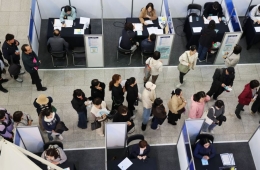
Image for illustrative purposes only; not related to the article's content. Getty Images
View original imageThree in Four Are “Solo Business Owners”... Some Close Their Businesses Due to Health or Family Problems
According to a policy proposal report for small business owners prepared by the office of Jeong Jinwook of the Democratic Party of Korea on November 9, the government's budget proposal for next year includes KRW 205 billion for health-care support. Under the plan, small business owners would receive KRW 100,000 if they close their shops or hire temporary replacements on the day they receive a national health screening.
The proposal also includes a program providing one-person business owners with a monthly childcare allowance of KRW 500,000 for three months, as well as a youth safety-net insurance program worth KRW 30 billion. However, the report said these measures alone would not be enough to adequately strengthen the social safety net for self-employed people. That is because 74.4% of self-employed people in Korea, or approximately 4,303,000 people, run their businesses alone without employees.
Many also close their businesses because of health or family problems. According to the Ministry of SMEs and Startups, 13.7% of small business owners who shut down cited personal reasons, including family matters, while 12.1% cited retirement due to health problems or old age. That amounts to about one in four small business owners.
190,000 Business Owners Hold Second Jobs... Business Income Alone Falls Short of Living Expenses

Hwanghak-dong Kitchen Street looks deserted, with no one searching for a storefront to start a business. Photo by Cho Yongjun of The Asia Business Daily.
View original imageOne reason self-employed people find it difficult to close their shops without worry is the instability of their income. According to microdata from the Ministry of Data and Statistics’ Economically Active Population Survey, as of August, 193,000 of the 5,784,000 self-employed people also held wage-earning jobs in addition to their main businesses.
Of these, 169,000 were “solo business owners” with no employees. Since side jobs such as food delivery, designated driving, and freelance work are not counted as “side jobs” in the statistics when they are non-wage work, the actual number of self-employed people with second jobs may be higher.
Many also struggled to cover household expenses with business income alone. In the first half of this year, self-employed households without employees had average monthly business income of KRW 3,115,000, KRW 642,000 less than their average monthly household expenditure of KRW 3,757,000. Self-employed households with employees also fell short, with average monthly business income of KRW 5,663,000 compared with household expenditure of KRW 5,713,000.
Since sales stop as soon as a shop closes, and some self-employed people take on additional work to make up for insufficient income, calls are growing for a separate safety net to replace lost income when they have to suspend business because of illness, childbirth, or other circumstances.
Introduce Business-Closure Benefits and Defer Loan Repayments

A CT scan is being performed at the Comprehensive Health Screening Center of Daedong Hospital. Yonhap News
View original imageThe report therefore proposed turning the health-screening closure support and childcare allowance that the government plans to introduce next year into statutory benefits, rather than keeping them as one-time budget programs. The aim is to establish business-closure benefits for self-employed people and replace some of their income for a set period when they have to close their shops because of illness, childbirth, or other circumstances.
It also proposed automatically deferring repayments on policy loans and guaranteed loans during periods of business closure. The report called for revising the relevant system so business owners can request a reduction in commercial rent when they suspend operations due to illness or childbirth. It also proposed offsetting landlords’ costs through tax credits for the reduced rent. For one-person shops that struggle to find temporary replacements, the report suggested that local small business support centers operate pools of substitute workers by industry and provide wage support.
Hot Picks Today
 "Two Spend 500,000 Won in a Flash, Yet Wait Two Hours?" ... 'Dreamland' Shunned by Kids and Foreign Tourists
- The Era of Getting 200 Million Won After 30 Years Is Over... A Japanese Bank's "Perpetual Department Head" Who Just Clocked In Cries Out
- Spain Hit by Its Worst Tragedy... Lee Kangin, Moreno and Real Madrid Join Soccer World in Mourning
- They Said, “Make It Your Home for Life” - Then Suddenly Kicked 200 Passengers Off... What Happened to the Around-the-World Cruise?
- "130 Rice Bowls Sold Out in a Day"... 'Unfiltered Face' Adds 8 Million Won to Night Market Sales: China's Bungeunwoo
The report also proposed safeguards to prevent abuse of the system, such as verifying actual business closures using medical certificates, birth registrations, or records showing that credit card sales have stopped. It said support should distinguish between one-person shops and businesses where employees can continue operating while the owner takes time off.
© The Asia Business Daily. All rights reserved. Unauthorized AI training and use prohibited.