Jensen Huang Affair Fallout... Could Korean Stocks Also Feel the Impact? [Click e-Market]
Customer Where Alleged Affair Partner Worked Also Probed Over Suspected Indirect Chip Exports
Memory and Equipment Stocks Diverged After May U.S. Guidance
"We Must Check Which Customers Face Additional Restrictions and How Orders for Domestic Companies Change"
The extramarital affair scandal involving Nvidia CEO Jensen Huang has reignited allegations that AI chips were being exported to China indirectly, drawing attention to the impact U.S. export controls could have on domestic supply chains. Since memory and data center equipment stocks have reacted differently following previous announcements of related regulations, securities analysts say it is important to examine which products are actually subject to the rules and how orders change.
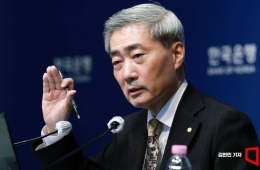
On the 9th, Park Seyeon, a researcher at Hanwha Investment & Securities, said, "No additional export control measures related to this matter have been confirmed yet, but if further restrictions are introduced, we must first check which customers they apply to and how orders for domestic companies change."
Nvidia's AI chips use high-bandwidth memory (HBM) supplied by domestic companies. Restrictions on chip sales could affect memory demand, but the impact will depend on whether orders from other markets make up for the shortfall.

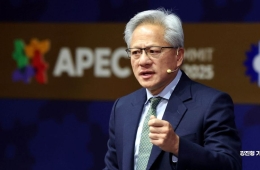
Nvidia CEO Jensen Huang applauds at an investment event in Berlin, Germany, on the 19th of last month (local time). Reuters-Yonhap News
View original imageCustomer Where Alleged Affair Partner Worked Also Probed Over Suspected Indirect Chip Exports
On November 8 (local time), Huang admitted to an affair in a message sent to employees. Nvidia's board has launched an independent investigation into reports that he was targeted in an operation by a foreign intelligence agency. However, it said there was no basis to conclude that national security or company secrets had been compromised.
The link between the controversies is Megaspeed, a Singaporean cloud company. Alice Huang, who was reported to be Jensen Huang's affair partner, worked there as an executive. The company is an Nvidia customer and has been under investigation over allegations that it evaded U.S. export controls on China. Nvidia says it has found no evidence that Megaspeed's chips were smuggled into China.
The United States generally requires a license even for exports of controlled advanced chips to a third country if the purchasing company's headquarters or ultimate parent company is in China or another restricted country. This standard was announced in October 2023, and its enforcement was reaffirmed in May 2026. Data centers that comply with export administration regulations may continue using their existing equipment until they receive separate notice.
Would Domestic Companies All Benefit if Chips Were Barred from Going to China?
Hanwha Investment & Securities analyzed domestic supply chain stocks following six announcements related to export controls. In four cases, the average cumulative return of individual stocks over the 20 trading days after the announcement was 2.8 to 8.2 percentage points higher than the KOSPI. By contrast, following the October 2023 announcement of the headquarters and ultimate parent company standard and its reaffirmed enforcement in May 2026, returns were 3.6 and 13.5 percentage points lower, respectively.
In the 20 trading days after the guidance was announced in May 2026, Samsung Electronics and SK hynix outperformed the KOSPI by 2.9 and 13.6 percentage points, respectively. By contrast, all 11 equipment stocks in the power transmission and distribution, power generation, cooling, and battery sectors underperformed the KOSPI, with an average gap of 17.5 percentage points. However, the number of cases is small, and some of the analysis periods overlapped with the declaration of martial law or a U.S.-China tariff truce, making it difficult to conclude that the regulations are necessarily positive for memory stocks.

Nvidia CEO Jensen Huang speaks to members of the public in front of a Korean barbecue restaurant in Seogyo-dong, Mapo-gu, Seoul, on June 5. Photo by Yoon Dong-ju
It is also necessary to determine whether domestic equipment companies will benefit as demand shifts away from Chinese customers. Among 166 contract disclosures made by 10 supply chain companies since January 2025, none specified a data center in Southeast Asia. Since deliveries may not be disclosed, it is also difficult to assess the scale of their involvement.
Hot Picks Today
 "Two Spend 500,000 Won in a Flash, Yet Wait Two Hours?" ... 'Dreamland' Shunned by Kids and Foreign Tourists
- The Era of Getting 200 Million Won After 30 Years Is Over... A Japanese Bank's "Perpetual Department Head" Who Just Clocked In Cries Out
- Spain Hit by Its Worst Tragedy... Lee Kangin, Moreno and Real Madrid Join Soccer World in Mourning
- They Said, “Make It Your Home for Life” - Then Suddenly Kicked 200 Passengers Off... What Happened to the Around-the-World Cruise?
- "130 Rice Bowls Sold Out in a Day"... 'Unfiltered Face' Adds 8 Million Won to Night Market Sales: China's Bungeunwoo
Park advised, "If similar measures are introduced, earnings and shareholder returns will be the primary factors for memory stocks, while changes in large-scale orders will be the main factor for equipment stocks." She added, "In that case, we should first examine the customer's headquarters and ultimate parent company, the purpose of the contract, and when the revenue will be recognized."
© The Asia Business Daily. All rights reserved. Unauthorized AI training and use prohibited.