'Real Estate Tax Reform' Exposes Ruling-Opposition Divide... Government and Ruling Party Split Over Comprehensive Real Estate Holding Tax
Real Estate Takes Center Stage at Tax Reform Forum on Nov. 9
Ruling Party: "Fair Taxation"; Opposition: "Economic Policy, Not Ideology"
Democratic Party Also Voices Concern Over Different Tax Treatment for Nonresidents Under Comprehensive Real Estat
With the government having submitted next year’s tax law amendments to the National Assembly, the ruling and opposition parties reiterated their differing views on the direction of real estate tax reform. Differences between the government and the ruling party over adjustments to the Comprehensive Real Estate Holding Tax (CREHT) also surfaced again.

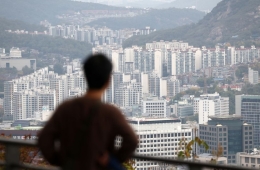
Apartment complexes in Seongbuk-gu, seen from Namsan in Seoul last month. Yonhap News
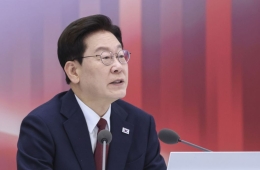
View original imageThe National Assembly Budget Office held a forum on the 2026 tax law amendments at the National Assembly Members’ Office Building on November 9. Attendees included National Assembly Speaker Cho Jung-sik; Cho Seung-rae, chair of the National Assembly’s Finance and Economy Planning Committee; and the committee’s ruling and opposition party floor leaders, Assemblyman Oh Ki-hyung of the Democratic Party of Korea and Assemblyman Bae Jun-young of the People Power Party. Also in attendance were Jo Man-hee, head of the Tax Policy Office at the Ministry of Finance and Economy; Han Seok-hyeon, head of the Budget Office’s Tax Analysis Division; Choi Han-soo, a professor in the School of Economics and Trade at Kyungpook National University; and Kim In-man, head of the Real Estate Economics Research Institute.
In his congratulatory remarks, Speaker Cho said, “As the decline in private consumption in the third quarter shows, the warmth of exports has yet to spread evenly to people’s lives, local communities and the livelihoods of ordinary citizens.” He added, “At times like these, isn’t it the role of tax policy to bridge this gap and restore a virtuous economic cycle?” He stressed, “Above all, the effects of tax reform must help improve people’s lives.”
The forum featured presentations and discussions on the outline and key issues of the government’s proposed tax law amendments for next year. Real estate taxation was a particular focus. Discussions covered the government’s efforts to ensure fair taxation by distinguishing between residents and nonresidents, normalizing capital gains and comprehensive real estate holding taxes on homes owned by nonresidents and on homes above a certain value, raising the fair market value ratio, and switching the basis for assessing the comprehensive real estate holding tax to property value.
Han Seok-hyeon, who gave a presentation, said the government’s real estate tax reforms ultimately shift the basis for deductions from ownership to residency and increase the overall tax burden on home ownership and sales. He said strengthening the tax burden at the ownership stage is consistent with recommendations by the Organisation for Economic Co-operation and Development (OECD), but also noted that “increasing the tax burden at the transaction stage (on capital gains) runs counter to residential mobility.”
The ruling party said at the forum that “real estate taxation should be approached from the perspective of fair taxation.” However, regarding the comprehensive real estate holding tax, which is based on property ownership, Assemblyman Oh Ki-hyung said, “I think there are valid grounds for questioning whether it is appropriate to distinguish between residents and nonresidents.” He also said there was a case for reforming capital gains tax in response to concerns about the “one highly desirable home” phenomenon, stressing that “we need to come up with an answer one way or another.”
The opposition criticized the proposal, saying, “Tax policy is economic policy, not ideological policy.” Assemblyman Bae Jun-young pointed to the rental housing shortage and soaring jeonse and monthly rent prices, saying, “This tax reform has damaged the market and made people unhappy before it has even begun.” He also said the government was overlooking the nature of real estate as an asset, the passing on of real estate taxes to tenants, and the erosion of trust in real estate policy.
Hot Picks Today
 "Two Spend 500,000 Won in a Flash, Yet Wait Two Hours?" ... 'Dreamland' Shunned by Kids and Foreign Tourists
- The Era of Getting 200 Million Won After 30 Years Is Over... A Japanese Bank's "Perpetual Department Head" Who Just Clocked In Cries Out
- Spain Hit by Its Worst Tragedy... Lee Kangin, Moreno and Real Madrid Join Soccer World in Mourning
- They Said, “Make It Your Home for Life” - Then Suddenly Kicked 200 Passengers Off... What Happened to the Around-the-World Cruise?
- "130 Rice Bowls Sold Out in a Day"... 'Unfiltered Face' Adds 8 Million Won to Night Market Sales: China's Bungeunwoo
Committee Chair Cho Seung-rae said, “Tax law amendments are a subject of intense debate between the ruling and opposition parties, but the best policy is one that achieves consensus.” He added, “Although there is a wide gap between the parties in the National Assembly, we will work from the public’s perspective to reach agreement and develop a sound proposal that brings our views together.”
© The Asia Business Daily. All rights reserved. Unauthorized AI training and use prohibited.