Germany on Verge of First Female President... Aigner, a Former Electrical Technician
Bavarian State Parliament President Ilse Aigner
CDU to officially announce her candidacy on November 9
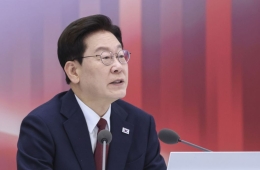
Germany is on the verge of having its first female president. The candidate is Ilse Aigner, president of the Bavarian State Parliament (61, photo), who began her career as an electrical technician without a university degree.

Ilse Aigner, president of the Bavarian State Parliament, takes part in an event during her tenure as minister of food, agriculture and consumer protection. Berlin, Germany (Reuters-Yonhap).
View original imageAccording to the German weekly newspaper Die Zeit on November 8, the ruling Christian Democratic Union (CDU), led by Chancellor Friedrich Merz, has decided to nominate Aigner, a member of its sister party, the Christian Social Union (CSU), as its candidate for the next president. The coalition government and opposition parties have also agreed to support her, making her election all but certain. The CDU plans to officially name Aigner as its candidate on November 9.
If elected as planned, Aigner would become the first woman and the first unmarried president in the history of the Federal Republic of Germany, including the period when it was West Germany. In past interviews, she has criticized the conservative party's internal culture for tolerating divorce and remarriage while harboring prejudice against single women. She would also become the first president with a technical background who does not hold a university degree. Aigner is from Feldkirchen-Westerham in Bavaria. After graduating from a Realschule, a type of secondary school in Germany, she chose vocational training as a radio and television technician rather than going to university. She later built her career working at her parents' electrical installation business.
Aigner entered politics in the mid-1980s and was elected to the Bundestag in 1998. She served as minister of food, agriculture and consumer protection in Angela Merkel's government from 2008 to 2013. She later returned to her home state of Bavaria, where she held posts including state minister, and has served as president of the Bavarian State Parliament since 2018.
Local media have highlighted Aigner's character and broad political experience. German public broadcaster ZDF described her as an approachable politician with strong empathy. ARD said that, despite her friendly image, she has gained extensive political experience as a federal minister and president of the state parliament. She is particularly respected for having built a political career as a woman with a technical background in the strongly conservative state of Bavaria.
Hot Picks Today
 "Two Spend 500,000 Won in a Flash, Yet Wait Two Hours?" ... 'Dreamland' Shunned by Kids and Foreign Tourists
- The Era of Getting 200 Million Won After 30 Years Is Over... A Japanese Bank's "Perpetual Department Head" Who Just Clocked In Cries Out
- Spain Hit by Its Worst Tragedy... Lee Kangin, Moreno and Real Madrid Join Soccer World in Mourning
- They Said, “Make It Your Home for Life” - Then Suddenly Kicked 200 Passengers Off... What Happened to the Around-the-World Cruise?
- "130 Rice Bowls Sold Out in a Day"... 'Unfiltered Face' Adds 8 Million Won to Night Market Sales: China's Bungeunwoo
The German president is more a symbolic head of state than a holder of executive power. The president represents the country abroad and apologizes for its past, while promoting social cohesion at home. Current President Frank-Walter Steinmeier will step down next March after completing two terms.
© The Asia Business Daily. All rights reserved. Unauthorized AI training and use prohibited.