Homeowners Aren't Banks, So Why Lend KRW 2.4 Billion? ... A Strange Trend in Gangnam Apartments
Sellers lend funds directly to buyers amid tighter lending regulations
Seller financing found in 5 of 11 Apgujeong apartment transactions worth over KRW 5 billion
Borrowing billions of won to cover the balance... risk of default too
An analysis has found that so-called “seller financing,” in which homeowners lend money directly to buyers, is spreading in Seoul’s high-end housing market in the Gangnam area as bank lending restrictions tighten.
According to Buiknam TV, a YouTube channel specializing in real estate, its head, Jung Taeik, said on his channel on November 6 that “cases in which homeowners lend funds directly to buyers are increasing in high-end home transactions in the Gangnam area.”
Jung said that in one redevelopment apartment complex in Gaepo-dong, Gangnam-gu, Seoul, a homeowner reportedly lent a buyer KRW 2.4 billion. He said that about 7 of the 10 transactions in the complex involved loans from homeowners. In this arrangement, the homeowner checks the buyer’s financial situation and ability to repay, then sets the loan amount, interest rate and repayment period.
Specifically, if a buyer can secure the funds they lack within six months or a year, they can borrow from the homeowner first and use the money to pay the remaining balance. The homeowner earns interest instead of receiving the full sale price upfront, while the buyer can secure funds beyond the bank loan limit. Jung also described a case in which a homeowner asked a buyer for two years of income records and lent KRW 500 million for six months at an annual interest rate of 5%.

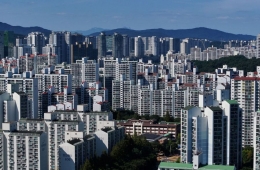
Apartment buildings seen from Namsan in Seoul. The photo is not directly related to this article. Yonhap News.
View original imageSuch transactions are known in the real estate market as “seller financing” or “seller loans.” The seller lends part of the purchase price to the buyer and secures the debt by placing a mortgage lien on the property.
Such transactions have been observed in the Gangnam area. The Herald Business analyzed 11 transactions in which ownership transfers had been completed, out of 26 apartment sales worth at least KRW 5 billion in Apgujeong-dong, Gangnam-gu, Seoul, from August to October this year. It found seller financing in five cases (45%). Five of the remaining transactions were paid for entirely in cash, and one buyer borrowed KRW 200 million from a bank. In one case, a buyer who purchased an apartment in Apgujeong-dong for KRW 9.3 billion was estimated to have borrowed about KRW 4.3 billion from the homeowner.
Stringent lending restrictions are behind this trend. Under the October 15 real estate measures introduced last year, mortgage loan limits in the Seoul metropolitan area and regulated zones vary according to home prices. Buyers of homes priced above KRW 1.5 billion and up to KRW 2.5 billion can borrow a maximum of KRW 400 million, while those buying homes priced above KRW 2.5 billion can borrow no more than KRW 200 million. Buyers seeking apartments worth tens of billions of won are finding it difficult to cover the remaining balance with bank loans alone.
Seller financing can also help sellers complete a transaction. It is believed to be used by homeowners who need to sell quickly, particularly because of tax burdens or redevelopment project schedules. However, there are risks: if the buyer cannot repay the money by the agreed date, the seller may have to pursue legal procedures, such as enforcing the lien. Buyers, too, should carefully check the interest rate, repayment deadline and terms in the event of late payment.
Hot Picks Today
 "Two Spend 500,000 Won in a Flash, Yet Wait Two Hours?" ... 'Dreamland' Shunned by Kids and Foreign Tourists
- The Era of Getting 200 Million Won After 30 Years Is Over... A Japanese Bank's "Perpetual Department Head" Who Just Clocked In Cries Out
- Spain Hit by Its Worst Tragedy... Lee Kangin, Moreno and Real Madrid Join Soccer World in Mourning
- They Said, “Make It Your Home for Life” - Then Suddenly Kicked 200 Passengers Off... What Happened to the Around-the-World Cruise?
- "130 Rice Bowls Sold Out in a Day"... 'Unfiltered Face' Adds 8 Million Won to Night Market Sales: China's Bungeunwoo
Jung argued that this type of transaction is being encouraged by a system that imposes uniform loan limits based on home prices rather than assessing loans according to borrowers’ income and repayment capacity. “As lending restrictions tighten, homeowners are stepping in to perform the credit assessment and lending functions that banks used to handle,” he said.
© The Asia Business Daily. All rights reserved. Unauthorized AI training and use prohibited.