Semiconductor Boom to Lift Local Income Tax Revenue in Hwaseong, Pyeongtaek, Suwon and Yongin by "Up to 12 Times" Next Year
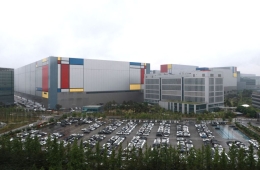
Buoyed by strong earnings at Samsung Electronics and SK hynix, corporate local income tax revenue next year is expected to surge by as much as 12-fold from this year in Gyeonggi Province municipalities that host semiconductor facilities.
According to local governments and other sources on November 7, based on their 2025 earnings, Samsung Electronics paid corporate local income tax this year of KRW 180 billion to Hwaseong, KRW 155 billion to Pyeongtaek, KRW 127 billion to Suwon, and KRW 63.5 billion to Yongin.

Corporate local income tax is calculated by applying tax rates and other provisions under the Local Tax Act to the corporate income tax base. A corporation with business sites in multiple municipalities pays the tax to each municipality in proportion to an allocation ratio, which gives equal weight to the number of employees and the total floor area of buildings at each site as shares of the corporation's total. This year, Samsung Electronics' allocation ratios are 27.8% for Hwaseong, 24.0% for Pyeongtaek, 19.6% for Suwon, and 9.7% for Yongin.
With Samsung Electronics' earnings expected to improve sharply this year, corporate local income tax revenue flowing into these municipalities next year is estimated at KRW 1.8 trillion for Hwaseong, KRW 1.6 trillion for Pyeongtaek, KRW 1.3 trillion for Suwon, and KRW 740 billion for Yongin. These figures are around 10 times the amounts paid this year in all four municipalities, with Yongin's revenue set to surge by about 11.7 times.
Revenue from personal local income tax is also expected to rise sharply as a result of large performance bonus payments. In Hwaseong, where Samsung Electronics' DS (semiconductor) division workforce is concentrated, personal local income tax withheld specially from payroll is expected to increase from about KRW 133 billion a year to approximately KRW 400 billion next year. Icheon, home to SK hynix's headquarters, is also projected to receive KRW 2 trillion in corporate local income tax next year, about three times the KRW 720 billion paid this year.
Local governments enjoying a tax revenue boom plan to invest in essential infrastructure, including roads and railways, whose construction had been delayed due to a lack of funding. Some also plan to set aside part of the revenue in funds to prepare for a possible semiconductor industry downturn in the future.
Hot Picks Today
 "Two Spend 500,000 Won in a Flash, Yet Wait Two Hours?" ... 'Dreamland' Shunned by Kids and Foreign Tourists
- The Era of Getting 200 Million Won After 30 Years Is Over... A Japanese Bank's "Perpetual Department Head" Who Just Clocked In Cries Out
- Spain Hit by Its Worst Tragedy... Lee Kangin, Moreno and Real Madrid Join Soccer World in Mourning
- They Said, “Make It Your Home for Life” - Then Suddenly Kicked 200 Passengers Off... What Happened to the Around-the-World Cruise?
- "130 Rice Bowls Sold Out in a Day"... 'Unfiltered Face' Adds 8 Million Won to Night Market Sales: China's Bungeunwoo
“Just a few years ago, tax revenue plunged because of poor performance in the semiconductor industry, and we even considered a supplementary budget that would cut spending. But next year, we expect tax revenue to reach a record high,” a local government official said. “We will set aside a substantial portion of the excess revenue in funds and other reserves so that we can respond steadily to future fluctuations in the semiconductor industry.”
© The Asia Business Daily. All rights reserved. Unauthorized AI training and use prohibited.