"I Waited More Than 4 Hours Just to Buy It"... What Is This Ramen That Drew a 500-Meter Line? [On-the-Scene Report]
A Look at the Gumi Ramyeon Festival, Held in Collaboration with Nongshim and Gumi City
400,000 Visitors Expected Over Three Days Starting Nov. 6... Festival Grows Every Year
Festival's Signature Product, Gumi Ramyeon Festival Noodles, Draws Crowds
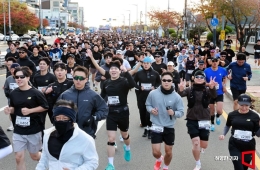
The Gumi Ramen Festival, now in its fifth year and organized in collaboration between Nongshim and Gumi City in North Gyeongsang Province, was held around Gumi Station over three days starting November 6. From the festival’s first day, crowds flocked to buy “Gumi Ramen Festival Noodles,” a locally developed specialty ramen made by Nongshim with wheat grown in Gumi, filling the festival grounds. The festival-exclusive product was developed using 100% Gumi-grown wheat. Word spread that the ramen was made with local agricultural products, and long lines stretched from the festival entrance to the sales booth about 500 meters away. One visitor said, “I waited for more than four hours and finally managed to buy the product.”

Visitors wait in line to use the Shin Ramyun Snack Bar booth at the Gumi Ramyeon Festival, held near Gumi Station from the 6th to the 8th. Photo by Heo Gyeongjun.
View original imageNongshim sells freshly fried ramen at the Gumi Ramen Festival every year. It proved popular last year, with about 480,000 packs sold during the event. The “ramen backpack,” packed full of freshly fried ramen and carried on visitors’ backs, has become a must-have photo prop among festivalgoers. This year, Gumi Ramen Festival Noodles also drew interest as a limited-edition product, with only 200,000 packs available. It features a deep, rich broth inspired by spicy beef soup and is topped with generous portions of ingredients, including shiitake mushrooms, carrots and bok choy, for enhanced savory flavor and texture.
The Gumi Ramen Festival has grown in scale each year, starting with around 10,000 visitors in its inaugural year in 2022, followed by 100,000 in 2023, 170,000 in 2024 and more than 350,000 last year. More than 400,000 visitors are expected this year, exceeding the entire population of Gumi City.
As Gumi Ramen Festival Noodles gained popularity, the quantity available for purchase was limited to one pack per person, prompting complaints. A male visitor in his 40s said, “I waited more than three or four hours, and they also limited the ramen backpacks to two.” He added, “I heard people could buy as many as they wanted in the morning. They should have added more booths or increased production.”

A long line formed to buy Nongshim's freshly fried ramen at the Gumi Ramen Festival, held near Gumi Station from the 6th to the 8th. Photo by Heo Gyeongjun.
View original imageA total of 33 food vendors took part in the festival, including 25 ramen restaurants serving special dishes made with Nongshim products produced that day and eight ramen trucks. Other programs included “Ramen Workshop,” where visitors could create their own ramen by choosing noodles, soup base and toppings; “Gotland,” where they could buy ramen made that day at Nongshim’s Gumi plant; and the “Global Ramen Challenge,” featuring creative recipes inspired by food cultures around the world.
Nongshim also set up a “Shin Ramyun Bunsik at the Gumi Ramen Festival” booth, bringing its “Shin Ramyun Bunsik” pop-up shop, which operates in Seongsu-dong, Seongdong-gu, Seoul, to the festival. The booth received an enthusiastic response from visitors with hands-on activities where they could create their own ramen by choosing toppings, Shin Ramyun Gold tastings and limited-edition merchandise for sale.
Choi Young-gap, head of Nongshim’s Noodle Marketing Office, said, “Gumi, home to a key factory producing Shin Ramyun, wanted to create a unique event to attract tourists, while Nongshim believes it should grow alongside the local community. Our aims aligned.” He added, “We want to grow the festival beyond a leading regional event into a global ramen festival.”

Entrance to the Gumi Ramyeon Festival, held near Gumi Station from the 6th to the 8th. Heo Gyeongjun, reporter.
View original imageGumi City plans to expand the increasingly popular ramen festival and make the city a “holy land of K-ramen.” It aims to encourage tourists to stay longer by expanding programs that go beyond the festival itself, including tours of Nongshim and Samsung Electronics, both of which have factories in Gumi.
The city also plans to expand the Global Ramen Challenge, where contestants compete with ramen dishes made using recipes from around the world, creating a new venue for international tourists to enjoy K-ramen. For this year’s challenge, 1,263 people from 80 countries applied in the online preliminary round. Of those, 13 contestants from 13 countries were selected to compete in the final round.
The ramen festival is also giving a significant boost to the local economy. The festival grounds generated KRW 1 billion in sales last year, while nearby businesses recorded approximately KRW 2.86 billion. Reservations at two hotels in Gumi were also fully booked before the festival began.
Hot Picks Today
 "Two Spend 500,000 Won in a Flash, Yet Wait Two Hours?" ... 'Dreamland' Shunned by Kids and Foreign Tourists
- The Era of Getting 200 Million Won After 30 Years Is Over... A Japanese Bank's "Perpetual Department Head" Who Just Clocked In Cries Out
- Spain Hit by Its Worst Tragedy... Lee Kangin, Moreno and Real Madrid Join Soccer World in Mourning
- They Said, “Make It Your Home for Life” - Then Suddenly Kicked 200 Passengers Off... What Happened to the Around-the-World Cruise?
- "130 Rice Bowls Sold Out in a Day"... 'Unfiltered Face' Adds 8 Million Won to Night Market Sales: China's Bungeunwoo
Gumi Mayor Kim Jang-ho said, “In consultation with Nongshim, we aim to host in Gumi the World Instant Noodles Association’s general meeting, which is held every two years.” He added, “We are also preparing to establish a Gumi Ramen Museum so that tourists will visit Gumi throughout the year, not just during the festival.”
© The Asia Business Daily. All rights reserved. Unauthorized AI training and use prohibited.