As the “Blue Tsunami” Turns Markets Blue, One Stock Is Smiling in the Background
Renewable energy stocks draw attention on hopes for Democratic policy support
Expanded health insurance boosts hopes for pharmaceutical and biotech stocks
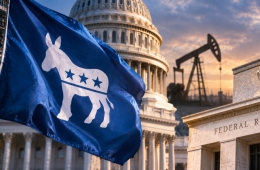
With a “blue tsunami” emerging as Democrats scored a landslide victory in the U.S. midterm elections, stocks related to clean renewable energy, including solar and wind power, are drawing attention as potential beneficiaries.

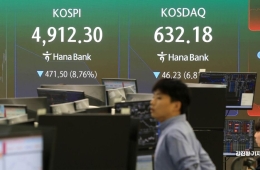
The KOSPI index plunged more than 8% shortly after the market opened, triggering a circuit breaker. The domestic stock market was displayed on an electronic board in the dealing room at Hana Bank's headquarters in Jung-gu, Seoul, on Nov. 6, 2026. Photo by Kang Jinhyung.
View original imageOn Nov. 6, the KOSPI and KOSDAQ opened at 5,263.26 and 654.43, down 2.24% and 3.53%, respectively, from the previous trading day. Losses then widened, with the indexes plunging into the 7% and 6% ranges, respectively. Investor sentiment quickly froze as the growth narrative around artificial intelligence (AI) retreated after the midterm elections.
Against this backdrop, buying is flowing into stocks related to clean renewable energy, including wind and solar power. During the session, Daemyung Energy (3.54%), SY (14.52%), and Kumyang Green Power (1.83%) rose, posting gains for a third consecutive day.
The stocks have been rising amid growing prospects for the restoration of tax credits for wind and solar power following the midterm elections. Ahead of a vote scheduled for Nov. 9 (local time) on the energy permitting reform bill (BAAJA), an increase in the Democrats' negotiating power has also raised hopes that reviews of permits for renewable energy projects will return to normal. As a result, demands related to wind and solar power are expected to be strongly reflected in the bill. “With Democrats overwhelmingly controlling both the House and the Senate, they will be able to increase pressure on Republican policies through investigations, confirmation hearings, and control over budget drafting, giving the green industry room to breathe,” said Han Byeonghwa, an analyst at Eugene Investment & Securities.
Gangwon Energy (7.33%) also rose for a third consecutive day, while the battery industry is seeing potential benefits as well. This is because efforts to counter U.S. President Donald Trump's policies to cut support for eco-friendly vehicles and ease environmental regulations are expected to intensify. In addition, demand for energy storage systems (ESS) to be deployed at renewable energy sites is expected to grow, which could improve investor sentiment toward the battery sector.

“The Democratic victory is likely to lead to divergent performance across sectors,” said Lee Kyungmin, an analyst at Daishin Securities. “Renewable energy and secondary batteries could be relatively well-positioned on expectations of policy support. However, Democratic control of Congress alone does not guarantee a policy shift, so investors should watch the actual direction of legislation and changes in companies' investment plans.”
Hot Picks Today
 "Two Spend 500,000 Won in a Flash, Yet Wait Two Hours?" ... 'Dreamland' Shunned by Kids and Foreign Tourists
- The Era of Getting 200 Million Won After 30 Years Is Over... A Japanese Bank's "Perpetual Department Head" Who Just Clocked In Cries Out
- Spain Hit by Its Worst Tragedy... Lee Kangin, Moreno and Real Madrid Join Soccer World in Mourning
- They Said, “Make It Your Home for Life” - Then Suddenly Kicked 200 Passengers Off... What Happened to the Around-the-World Cruise?
- "130 Rice Bowls Sold Out in a Day"... 'Unfiltered Face' Adds 8 Million Won to Night Market Sales: China's Bungeunwoo
Meanwhile, expectations for expanded U.S. health insurance coverage have grown following the midterm election results, lifting shares of pharmaceutical companies such as Hanmi Pharmaceutical (4.73%). Shares of Samsung Biologics (3.29%) and other companies also rose amid prospects for a recovery in domestic contract manufacturing (CMO) orders. As Congress is expected to step up its scrutiny of tariff policies, global pharmaceutical companies may have greater incentive to reconsider strategies that focused on expanding U.S. production facilities to qualify for tariff exemptions.
© The Asia Business Daily. All rights reserved. Unauthorized AI training and use prohibited.