Despite Election Rout, Trump Sticks to Tariffs: "300% Tariffs if You Don't Build Factories in the U.S."
Trump Raises Tariffs Two Days After Midterms
Claims 3,000 Factories Are Being Built in the U.S.
Democrats to Push for Tariff Rollback in New Congress
Just two days after a crushing defeat in the midterm elections, U.S. President Donald Trump issued a message pressuring foreign companies to invest in the United States, saying, "We could impose tariffs of up to 300% on foreign companies that do not build factories in the United States." He also argued that eliminating tariffs would halt factory construction in the United States and lead to products being imported again from countries such as South Korea, China and Japan.

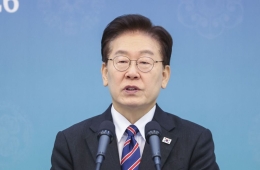
U.S. President Donald Trump speaks at a construction site at the White House on the 4th (local time). AP-Yonhap News
View original imageOn November 5 (local time), Trump spoke with reporters in the Oval Office and was asked how he planned to use executive orders over the next two years. "We're going to do a lot. You'll see a lot in the next one or two weeks," he said, adding, "We have a lot of things we're preparing."
He went on to claim that foreign companies were building more than 3,000 factories and production facilities across the United States. "If we got rid of tariffs now, all of these factories would stop being built," Trump said. "Ninety-nine percent of the reason companies are building factories is that otherwise they would have to pay tariffs of 50%, 100%, 150%, 250%, or even as much as 300%."
"If we got rid of tariffs now, everyone would stop building factories. We'd have half-built factories all over the country, and companies would bring in products from China, Japan, South Korea, the Philippines and elsewhere," he said. He added, "If you build and operate a factory, you don't have to pay tariffs. And prices will come down significantly." He called those who support eliminating tariffs "foolish people."
The remarks came shortly after Republicans lost their majorities in both the House and Senate to the Democrats in the November 3 midterm elections. The cost-of-living burden stemming from tariffs and the war with Iran has been cited as a major factor in the electoral defeat, but Trump reaffirmed his commitment to his existing protectionist trade stance. He did not, however, specify which goods or countries would be subject to tariffs of up to 300%, or when they would take effect.
Democrats plan to push back against Trump's tariff policies when the new Congress convenes in January 2027. Speaking on November 5 at the Center for American Progress (CAP) in Washington, D.C., Senate Democratic Leader Chuck Schumer said the new Congress would pursue legislation to end the war with Iran, roll back tariff policies and ease the cost-of-living burden. He warned, "If President Trump keeps rejecting common-sense bills to lower the cost of living and root out corruption, Republicans will look back on their crushing defeat in 2026 as a good day when the 2028 elections come around."
Wall Street, however, forecast that Trump could intensify trade pressure by raising tariffs even if Democrats take control of Congress. In an analysis sent to clients on November 3, global investment bank Goldman Sachs said it expected Trump to impose additional tariff increases even if Democrats expanded their influence in Congress.
Hot Picks Today
 "Two Spend 500,000 Won in a Flash, Yet Wait Two Hours?" ... 'Dreamland' Shunned by Kids and Foreign Tourists
- The Era of Getting 200 Million Won After 30 Years Is Over... A Japanese Bank's "Perpetual Department Head" Who Just Clocked In Cries Out
- Spain Hit by Its Worst Tragedy... Lee Kangin, Moreno and Real Madrid Join Soccer World in Mourning
- They Said, “Make It Your Home for Life” - Then Suddenly Kicked 200 Passengers Off... What Happened to the Around-the-World Cruise?
- "130 Rice Bowls Sold Out in a Day"... 'Unfiltered Face' Adds 8 Million Won to Night Market Sales: China's Bungeunwoo
Goldman Sachs economists Alec Phillips and Abey Dugirala said, "Democrats will try to roll back some of Trump's tariffs, but the effects will be limited because the efforts will be confined to certain countries, such as Canada, or specific products." They added, "Trump will announce new tariff increases after the election, more than offsetting any tariff cuts by Democrats," and forecast that the effective U.S. tariff rate would rise by nearly 2 percentage points.
© The Asia Business Daily. All rights reserved. Unauthorized AI training and use prohibited.