[Editorial] Stocks, Exchange Rates, and Interest Rates Grow More Volatile... Fasten Your Psychological Seat Belt

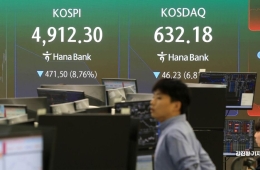
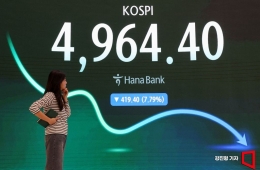
A display showing the status of South Korea's stock market is seen in the dealing room at Hana Bank's headquarters in Jung-gu, Seoul, on the 6th, after the KOSPI plunged more than 8% shortly after opening, triggering a circuit breaker. Photo by Kang Jinhyeong
View original imageFollowing the Democratic Party's landslide victory in the U.S. midterm elections, the possibility of tighter data center regulations has come into focus, sending semiconductor and artificial intelligence (AI)-related stocks sharply lower and triggering a steep correction in both the Korean and U.S. stock markets. The market shock pushed the won-dollar exchange rate back into the 1,350-won range, while government bond yields fell amid expectations that U.S. fiscal expansion would be curbed. Conflicting interpretations of the election results and differing outlooks for future policies are driving repricing across financial markets. With election uncertainty now behind them, markets are facing rising policy uncertainty.
South Korea, where semiconductors account for a large share of exports and the stock market, is inevitably sensitive to changes in U.S. data center policy. Investors should also be mindful that foreign capital flows could heighten volatility in both stock prices and the exchange rate.
However, the possibility of tighter regulations should be distinguished from the adoption of actual policies. Investors should be wary of concluding that the semiconductor industry's outlook has collapsed before the scope and timing of any regulations, and their impact on corporate earnings, are known. They should be cautious both about panic selling and about chasing stocks in hopes of a short-term rebound. Investors should review their borrowing and their asset exposure to particular sectors, and respond in line with their ability to absorb losses.
Putting on a psychological seat belt does not mean holding on no matter what. It means avoiding unverified information and sensational forecasts, and acting according to principles set in advance based on corporate earnings and economic conditions.
Hot Picks Today
 "Two Spend 500,000 Won in a Flash, Yet Wait Two Hours?" ... 'Dreamland' Shunned by Kids and Foreign Tourists
- The Era of Getting 200 Million Won After 30 Years Is Over... A Japanese Bank's "Perpetual Department Head" Who Just Clocked In Cries Out
- Spain Hit by Its Worst Tragedy... Lee Kangin, Moreno and Real Madrid Join Soccer World in Mourning
- They Said, “Make It Your Home for Life” - Then Suddenly Kicked 200 Passengers Off... What Happened to the Around-the-World Cruise?
- "130 Rice Bowls Sold Out in a Day"... 'Unfiltered Face' Adds 8 Million Won to Night Market Sales: China's Bungeunwoo
Companies, too, should review their payment burdens, borrowing costs and foreign-currency liquidity in light of exchange-rate and interest-rate fluctuations. Rather than basing investment and financing decisions on short-term market conditions, they should plan for various scenarios and ensure they have room to respond. The government and financial authorities should closely monitor foreign exchange and funding markets, as well as trends in credit trading, while providing consistent explanations to prevent unnecessary anxiety from spreading. Market volatility cannot be eliminated, but principles can be established to prepare for its impact. What is needed now is not a hasty bet on the market's direction, but preparation to withstand the turbulence.
© The Asia Business Daily. All rights reserved. Unauthorized AI training and use prohibited.