South Korea, Netherlands Expand Joint Research Beyond Semiconductors to Quantum Technology and Synthetic Biology
First Joint Committee on Science and Technology Held; Cooperation on Research Security and AI Safety Discussed
Research Funding Agencies in Both Countries to Issue Calls for New International Joint Research Projects
South Korea and the Netherlands are expanding the cooperation they have built around semiconductors into advanced science and technology fields, including quantum technology and synthetic biology. Research funding agencies in both countries will design joint research programs and issue calls for new research projects.
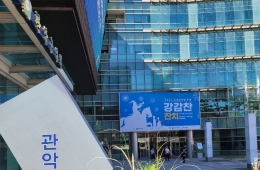
The Ministry of Science and ICT said on November 6 that it had held the first Korea-Netherlands Joint Committee on Science and Technology with the Dutch Ministry of Education, Culture and Science at the Government Complex Sejong. The meeting was the first formal consultative body established under the memorandum of understanding (MOU) on research and science cooperation signed in The Hague, the Netherlands, in March 2024.

Researchers at QuTech, a quantum technology research institute at Delft University of Technology in the Netherlands, inspect a quantum device. South Korea and the Netherlands discussed ways to cooperate on quantum chip development and testing, measurement and standards for quantum technology. Photo provided by QuTech.
View original imageThe meeting was attended by delegations led by Hwang Seonghun, Director General for International Cooperation at the Ministry of Science and ICT, and Susanne Caarls, Director of the European and International Cooperation Department at the Dutch Ministry of Education, Culture and Science. Participants included the National Research Foundation of Korea (NRF), the Korea Research Institute of Bioscience and Biotechnology, the AI Safety Institute (AISI), the Netherlands Organisation for Scientific Research (NWO), and Eindhoven University of Technology, along with other relevant organizations from both countries.
The two countries shared their research and development (R&D) investment priorities and science and technology policies, and discussed key issues including research security, artificial intelligence (AI) safety, and the commercialization of research outcomes.
On research security, they shared policy and institutional responses aimed at protecting critical technologies and research information while promoting international joint research. On AI safety, South Korea's AI Safety Institute introduced its research and policy work to identify, assess, and mitigate AI risks, while the Netherlands Organisation for Scientific Research outlined its policy on using generative AI in research funding applications and evaluations.
On the commercialization of research outcomes, the two sides shared information about South Korea's support system for special R&D zones and cases involving investment attraction and overseas expansion by research institute enterprises. They also reviewed the status of cooperation through Horizon Europe, the European Union's (EU) research and innovation program, and agreed to expand collaboration among research institutions. In particular, the National Research Foundation of Korea and the Netherlands Organisation for Scientific Research plan to design a joint research model focused on areas of mutual interest and issue a call for new international joint research projects.
In quantum technology, the two sides proposed cooperation on quantum chip development, drawing on their semiconductor expertise, as well as on testing, measurement, and standards for quantum technologies. They discussed linking South Korea's quantum clusters with Quantum Delta NL, the Netherlands' national quantum technology innovation ecosystem, and cooperating on export controls for quantum technologies.
In synthetic biology, the Korea Research Institute of Bioscience and Biotechnology introduced South Korea's domestic policies and research infrastructure, including the Synthetic Biology Promotion Act enacted in 2025 and the national biofoundry, and proposed cooperation between the two countries.
Hot Picks Today
 "Two Spend 500,000 Won in a Flash, Yet Wait Two Hours?" ... 'Dreamland' Shunned by Kids and Foreign Tourists
- The Era of Getting 200 Million Won After 30 Years Is Over... A Japanese Bank's "Perpetual Department Head" Who Just Clocked In Cries Out
- Spain Hit by Its Worst Tragedy... Lee Kangin, Moreno and Real Madrid Join Soccer World in Mourning
- They Said, “Make It Your Home for Life” - Then Suddenly Kicked 200 Passengers Off... What Happened to the Around-the-World Cruise?
- "130 Rice Bowls Sold Out in a Day"... 'Unfiltered Face' Adds 8 Million Won to Night Market Sales: China's Bungeunwoo
Hwang Seonghun, Director General for International Cooperation at the Ministry of Science and ICT, said, "Building on the foundation of cooperation the two countries have developed around semiconductors, we are now broadening our collaboration across advanced science and technology, including quantum technology and synthetic biology. We will actively support efforts to foster practical research cooperation between the two countries."
© The Asia Business Daily. All rights reserved. Unauthorized AI training and use prohibited.