"Why Haven't You Sent the Money?" Dispute Leaves Tourists in South Korea Stranded... "Where Did My Travel Money Go?"
[South Korea Travel Sold at Bargain-Basement Prices] ⑤ What It Takes for K-Tourism to Receive Its Fair Value
Unfair practices persist in low-cost Chinese tours
Unpaid ground handling fees fuel reliance on shopping commissions
Settlement disputes are harming tourists, too
Questions remain over the effectiveness of commission regulations
Regulating shopping commissions alone is not enough
Tighten oversight of actual operators and contract management
Evaluate profitability, not just tourist-attraction figures
To ensure South Korea’s tourism industry receives fair value, attracting more tourists is not enough. The industry must first change a business structure in which overseas tour operators fail to properly pay domestic travel agencies for operating costs, while domestic companies make up the shortfall through shopping commissions. Even if tourist numbers and tourism revenue grow, it is difficult to expect the industry to become more competitive if local businesses providing accommodation, transportation, guiding and other services do not earn a fair return. This is why calls are growing to shift the focus of tourism policy from attraction figures to establishing fair business practices and improving profitability.

Chinese tourists arrive at the Incheon Port International Passenger Terminal in Yeonsu-gu, Incheon, on Sept. 29 to spend the holiday in Korea ahead of China's National Day holiday. Yonhap News Agency
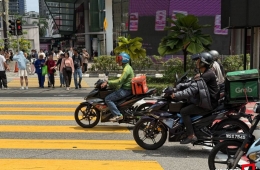
View original imageAn analysis of additional travel agency settlement statements and recordings of interviews with domestic tour operators obtained by The Asia Business Daily on Nov. 9 found that the direct cause of the bus service suspension involving Chinese tourists in Seoul’s Dongdaemun on Oct. 14 was delayed payments between travel agencies, rather than losses on the tour package itself. At the time, more than 60 Chinese tourists were stranded for over three hours after a domestic operator suspended bus services to collect overdue operating fees.
The operating costs for the tour group were estimated at about 9 million won, including accommodation, transportation and meals. The total revenue came to about 9.2 million won, including the 3.5 million won paid in advance by the Chinese tour operator, an additional 27,500 yuan (about 5.5 million won) remitted after the dispute, and 200,000 won in shopping commissions. The domestic operator initially claimed losses of 8.5 million to 9 million won, but with the additional payment included, the tour was around break-even. A settlement dispute between companies had thus spilled over and harmed tourists who had already paid for their trip.
The government plans to regulate excessive shopping commissions when the revised Tourism Promotion Act takes effect on Dec. 3. However, if the business structure that leaves companies dependent on commissions remains unchanged, there will be limits to addressing the problems caused by low-cost tours. Calls are growing to correct practices around ground handling fee payments, strengthen oversight of the companies that actually operate tours, and evaluate tourism policy not only by the number of tourists attracted but also by profitability and added value.

A reconstruction of the operating costs and revenue for a Dongdaemun tour itinerary for around 60 Chinese tourists, based on settlement statements, remittance records and interviews with the tour operator, estimated expenses at about 9 million won and revenue at about 9.2 million won. The findings shed light on why an additional 27,500 yuan (about 5.5 million won) was remitted after bus services were suspended.
View original imageLimits to Regulating Shopping Commissions Alone...Proper Payment of Ground Handling Fees Is the Starting Point
The revenue structure of ultra-low-cost group tours for Chinese tourists is determined even before they arrive in South Korea. If Chinese outbound tour operators do not pay domestic travel agencies enough to cover ground handling fees—the essential costs of accommodation, vehicles and meals—or demand separate referral fees, domestic companies end up relying on shopping and optional tours for revenue. This is known as a "negative tour fee" structure.
The Korea Association of Travel Agents (KATA) cited unpaid ground handling fees and excessive referral fees as factors hindering qualitative growth in South Korea’s inbound tourism industry. While agreeing on the need to regulate shopping commissions, it urged the government to also develop measures to encourage Chinese outbound tour operators to pay ground handling fees properly and protect domestic travel agencies.
The Ministry of Culture, Sports and Tourism is preparing subordinate legislation setting out shopping commission rates and administrative penalty standards ahead of the revised Tourism Promotion Act taking effect on Dec. 3. It plans to release the proposed regulations on Nov. 12 and hold a public hearing at the Seoul Garden Hotel on Nov. 13. The revised act prohibits collecting shopping commissions above the prescribed limit, forcing tourists to make purchases, and requiring tourism workers’ costs to be covered by shopping commissions.
The key question is who will bear the costs resulting from the regulations. If Chinese outbound tour operators do not pay additional ground handling fees, the burden of lower shopping revenue could fall on domestic travel agencies and guides. The possibility that commission-based transactions will continue under different labels cannot be ruled out, either. Jung Jiyeon, a professor in Hanyang University’s Division of Tourism, proposed that "contracts between outbound tour operators and domestic travel agencies should specify the scope of services, payment amounts and deadlines, and responsibility for disputes, and that advance payments, payment guarantees and escrow arrangements should be considered."
Hong Kong requires written contracts between outbound tour operators and local travel agencies under rules set by the Travel Industry Authority (TIA), and requires the terms of payment to be specified. It also restricts recruiting tourists and hosting tour groups at prices below cost, as well as passing costs on to guides. If an outbound tour operator misses the payment deadline, a local travel agency may terminate the contract after giving written notice at least 24 hours before the tour group’s arrival. However, if the contract stipulates that payment will be made after the tourists enter Hong Kong, the agency must provide the scheduled travel services even if payment has not been received.
In South Korea, too, there are calls for common industry-wide oversight standards, as relying solely on the bargaining power of individual travel agencies makes it difficult to prevent competition to win contracts at low prices. The view is that payment terms for ground handling fees and responsibility for providing services to tourists should be set as common industry standards and monitored from the outset of transactions.

According to the Ministry of Culture, Sports and Tourism’s 2026 announcement on the renewal evaluation of travel agencies specializing in China, the evaluation criteria include performance in attracting Chinese group tourists, performance in regional tourism and high-value-added products, records of legal violations, and financial soundness. There is no separate criterion for whether actual ground handling fees have been paid.
View original imageDesignated Travel Agencies Lending Only Their Names...Oversight Must Extend to the Actual Operators
To confirm whether ground handling fees are being paid properly, authorities must first identify the companies that actually operate tour groups. When the agency listed on paper as attracting tourists is different from the company that handles accommodation, vehicles and guides, it is difficult to trace payments, and responsibility is unclear when problems arise.
In an earlier report, The Asia Business Daily found a case in which a government-designated travel agency specializing in Chinese tourists received 2,000 won per tourist in exchange for lending its name to another company. The Ministry of Culture, Sports and Tourism is cross-checking settlement records and investigating suspected violations as part of its renewal evaluations for designated travel agencies. There have been cases in which agencies lost their designation after name lending was discovered, but obtaining financial transaction records remains difficult. "We have no authority to compel a company to submit account records if it refuses," a ministry official said.
Other countries have adopted systems that bring the actual operators under regulatory oversight. Japan requires travel service arrangers that book accommodation, transportation and other services to register separately, and prohibits name lending and subcontracting to unregistered businesses. Hong Kong likewise prohibits entrusting the operation of tour groups to unlicensed businesses. For tour groups from mainland China, information about the actual operator, guides, accommodation, meals and shopping facilities must generally be reported at least 12 hours before arrival. Contracts with outbound tour operators must also be submitted if required.
Hong Kong also conducts on-site inspections and coordinates with authorities in mainland China. Since September 2022, the Travel Industry Authority has inspected shopping facilities more than 10,000 times and taken action in eight suspected forced-shopping cases. During this process, it revoked the licenses of three travel agencies and four guides and suspended the registration of one shopping facility. This year, it reported more than 15 advertisements for unusually low-cost tour packages and 31 suspected violations to mainland Chinese authorities.
Song Haiyan, a professor at the Hong Kong Polytechnic University, said, "A business structure in which costs cannot be covered may persist even with a cap on shopping commissions," adding that "disclosure of the actual operators must be accompanied by accountability for unregistered operations."
South Korea, too, needs to strengthen the legal basis for data-submission requirements and oversight powers so authorities can identify in advance the operators of each tour group, subcontracting relationships and payment terms. Establishing a system for information sharing between the tourism authorities of the two countries is also being considered as a way to identify and respond to unfair business practices by Chinese outbound tour operators.

Comparison of travel agency management and oversight systems for Chinese group tourists in South Korea, Japan, and Hong Kong. South Korea manages travel agencies specializing in Chinese tourists through designation and renewal evaluations, while Japan requires businesses that arrange travel services to register. Hong Kong regulates contractual payment terms for mainland Chinese tour groups and the provision of tourism services.
Source: Ministry of Culture, Sports and Tourism; Japan’s Travel Agency Act; Hong Kong Travel Industry Authority (TIA)
What Matters Is How Much Money Stays in South Korea, Not Tourist Numbers...Policy Evaluation Criteria Must Change
Breaking the vicious cycle of low-cost tourism also requires changing how the performance of tourism policy is assessed. The idea is to look beyond the number of arrivals and total tourism revenue, and also examine the profitability of domestic businesses and the added value tourism spending generates for local economies.
The government does have ways to determine the costs of tourism products. The application form for this year’s designation of new travel agencies specializing in Chinese tourists, issued by the Ministry of Culture, Sports and Tourism, requires applicants to itemize round-trip transportation costs, distribution fees and ground handling fees, as well as costs for accommodation, meals, transportation and guides, and projected shopping commissions.
However, evaluation mechanisms for confirming whether the amounts listed in contracts were actually paid are inadequate. This year’s renewal evaluation for designated travel agencies is made up of 30 points for performance in attracting tourists, 35 points for performance in regional tourism and high-value-added products, 15 points for records of legal violations, and 20 points for financial soundness. There is no separate score for verifying whether agencies received ground handling fees properly from Chinese outbound tour operators.
Even a travel agency with strong tourist-attraction results may not have received the payments due under its contracts or passed them on to the actual operator. One proposal is to compare records of ground handling fee payments for each tour group and proof of payments for accommodation, vehicles and guides against the contracts as part of the designation and renewal process for specialized travel agencies. However, a separate legal basis would be needed to make submission of such records mandatory and impose penalties for refusing to provide them.
The Korea Tourism Organization also checks the local sale prices of supported tour products, the number of visits to shopping facilities and guide qualifications, and conducts undercover monitoring when necessary. If violations are confirmed, it can restrict support or bar a business from participating in the program. However, the main criteria for evaluating program performance, as described to The Asia Business Daily, were the number of tourists attracted and product sales. No specific procedure was provided for verifying whether domestic travel agencies actually received ground handling fees.
This means that how the results of tourism support programs are measured is just as important as expanding support for attracting tourists. Kang Jisu, a research fellow at the Korea Culture and Tourism Institute, said, "An increase in tourism revenue does not necessarily mean an increase in the profits of individual tourism businesses," emphasizing that businesses’ added value and profitability should also be evaluated. Namikawa Keiichiro, a researcher at the Japan Travel and Tourism Research Institute, proposed assessing tourism spending’s contribution to the local economy by considering the local procurement rate, in addition to tourist numbers and average spending.
The key to ensuring K-tourism receives fair value is not simply raising the prices of tourism products. The priority is to establish fair business practices under which the costs of travel are paid as agreed and the resulting revenue flows to domestic businesses on the ground. For the revised Tourism Promotion Act, which takes effect on Dec. 3, to effectively regulate shopping commissions, institutional improvements must also follow to oversee this cost structure and responsibility for operating tours.
Hot Picks Today
 "Two Spend 500,000 Won in a Flash, Yet Wait Two Hours?" ... 'Dreamland' Shunned by Kids and Foreign Tourists
- The Era of Getting 200 Million Won After 30 Years Is Over... A Japanese Bank's "Perpetual Department Head" Who Just Clocked In Cries Out
- Spain Hit by Its Worst Tragedy... Lee Kangin, Moreno and Real Madrid Join Soccer World in Mourning
- They Said, “Make It Your Home for Life” - Then Suddenly Kicked 200 Passengers Off... What Happened to the Around-the-World Cruise?
- "130 Rice Bowls Sold Out in a Day"... 'Unfiltered Face' Adds 8 Million Won to Night Market Sales: China's Bungeunwoo
The bus that stopped in Dongdaemun on Oct. 14 started moving again only after the overdue 27,500 yuan was remitted. The travel agency had delayed payment, but the harm fell on tourists who had already paid for their trips. If settlement problems hidden behind tourist-attraction figures are left unaddressed, similar incidents could happen again. South Korea’s tourism competitiveness depends not only on how many tourists it attracts, but also on how much of the money they spend remains in the domestic industry as fair compensation and added value.
© The Asia Business Daily. All rights reserved. Unauthorized AI training and use prohibited.