[Weekend Money] South Korean Data Center Expansion Prospects Rise... "Telecom Big Three in Focus"
Mirae Asset Securities: "Likelihood of domestic data center expansions could rise"
"North American investment will be dispersed... and reflected in telecom companies' valuations"
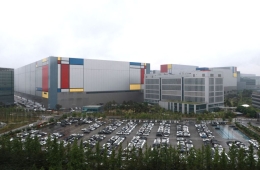
As demand for artificial intelligence (AI) and cloud services grows, the possibility of expanding data center capacity in South Korea is increasing. A securities firm has forecast benefits for the country’s three major telecom companies: SK Telecom, KT, and LG Uplus.
On November 7, Choi Yujin, a researcher at Mirae Asset Securities, said in a report titled “Growing Demand for K-Data Centers” that the firm was “watching for the possibility that global hyperscalers’ new investment demand will be distributed across Asia.” Choi added, “If demand is further dispersed due to supply constraints in North America, on top of growing AI and cloud demand within Asia, the likelihood that South Korean data centers will attract customers and undergo subsequent expansions could be higher than previously expected.”
One reason South Korean data centers are expected to attract attention is that South Korea is one of the few countries in Asia able to secure power and sites. “It will be difficult for existing major hubs to meet all the additional demand in Asia,” Choi said. “Because places such as Singapore, Tokyo, and Hong Kong face constraints on securing large amounts of power and land, global hyperscaler investment will be dispersed from existing hubs to new areas where power can be secured.”
South Korea is also well positioned not only to build new data centers but to expand large-scale AI data centers and international networks together. Global companies need high-capacity networks to deploy computing resources in South Korea, and South Korean telecom operators have networks capable of handling international data traffic, including through submarine cables. If North American computing demand is dispersed, the competitiveness of operators with both data centers and international networks is expected to improve further.
In addition, competition in AI data centers is shifting away from simply expanding capacity toward ensuring services are available when needed. South Korea’s three major telecom companies have experience operating data centers and can combine customer-based optical backbone networks with international networks. This can reduce customers’ costs by allowing them to avoid procuring data center space, power, and domestic and international connectivity separately.

“In particular, operators that own both data centers and submarine cables can provide integrated services connecting domestic computing hubs with overseas customer locations,” Choi said. “This will help them attract new customers and encourage existing customers to expand their facilities and sign long-term contracts.”
For these reasons, Mirae Asset Securities emphasized a basket strategy for the three telecom companies, in which stocks in a particular sector are invested in together. Investment is being dispersed across Asia due to supply constraints on data centers in North America, and the corporate values of South Korea’s three major telecom companies are also expected to be reassessed in light of this shift.
Hot Picks Today
 "Two Spend 500,000 Won in a Flash, Yet Wait Two Hours?" ... 'Dreamland' Shunned by Kids and Foreign Tourists
- The Era of Getting 200 Million Won After 30 Years Is Over... A Japanese Bank's "Perpetual Department Head" Who Just Clocked In Cries Out
- Spain Hit by Its Worst Tragedy... Lee Kangin, Moreno and Real Madrid Join Soccer World in Mourning
- They Said, “Make It Your Home for Life” - Then Suddenly Kicked 200 Passengers Off... What Happened to the Around-the-World Cruise?
- "130 Rice Bowls Sold Out in a Day"... 'Unfiltered Face' Adds 8 Million Won to Night Market Sales: China's Bungeunwoo
SK Telecom was named the top pick in the sector. The report highlighted the company’s plans to expand both colocation and GPU as a Service (GPUaaS), as well as its ability to combine data centers with international networks and submarine cables. However, it said the other two companies also merit attention, given differences in their contracts and start-of-operation schedules. “KT’s new data center campus and existing customer base, and the phased opening of LG Uplus’s Paju AI data center, are key growth drivers,” Choi said.
© The Asia Business Daily. All rights reserved. Unauthorized AI training and use prohibited.