Got the Winner Right, but Missed the Landslide... Why U.S. Polls Were Off [U.S. Blue Tsunami]
Got the broad direction of a "Democratic victory" right
But missed the actual vote share and margin
Trump was also underestimated in past elections
With the Democrats scoring a sweeping victory in the U.S. midterm elections and reclaiming majorities in both the House and Senate, an analysis found that polling errors were larger than those in the 2016 and 2024 presidential elections. Polling firms had expected a Democratic victory but failed to accurately capture the actual margin in the popular vote.

Axios, a U.S. political news outlet, reported on the 4th (local time), citing an early analysis by Raksha Jain of the political analysis outlet The Argument, that the Democrats were projected to lead the Republicans by about 13 percentage points in the national popular vote for the House election. The final average margin in polls compiled by Silver Bulletin just before the election was 8.9 percentage points, amounting to an error of about 4 percentage points.
This was comparable to the 2020 presidential election, when polls underestimated support for the Republicans, and was larger than the average party-level errors in the 2016 and 2024 presidential elections. The outlet added, however, that there are limits to directly comparing presidential and midterm elections.
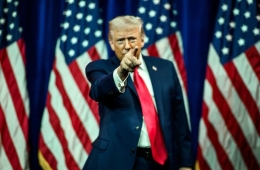
There is also speculation that polling firms may have overcorrected for past errors. U.S. pollsters repeatedly underestimated support for then-candidate Donald Trump in the 2016, 2020 and 2024 presidential elections. To address this, they increasingly adjusted their weighting methods based on respondents' party affiliation or past voting history. According to the Pew Research Center, about 70% of national polls in 2024 applied this type of political weighting.
However, by adjusting their results to reflect the composition of the electorate in the 2024 presidential election, pollsters may not have adequately accounted for the decline in turnout among Trump supporters in this midterm election. The Washington Post (WP) warned in October that this approach could underestimate support for the Democrats.
Some polling firms that had forecast a Democratic landslide came close to the actual result. AtlasIntel's final poll showed the Democrats leading by 14.1 percentage points, just 0.3 percentage points off the final vote margin of 13.8 percentage points that the firm had projected. AtlasIntel said it ranked first in its own poll-accuracy rankings.
Polling experts also acknowledged that they had underestimated support for the Democrats. Democratic pollster Chris Anderson told Fox News, "Polls significantly underestimated support for the Democrats overall," adding, "Elections that shake up the political landscape like this one are difficult to capture with predictive models." Republican pollster Darren Shaw also said, "The polls got the direction right, but underestimated the Democratic vote share by a few percentage points."
Hot Picks Today
 "Two Spend 500,000 Won in a Flash, Yet Wait Two Hours?" ... 'Dreamland' Shunned by Kids and Foreign Tourists
- The Era of Getting 200 Million Won After 30 Years Is Over... A Japanese Bank's "Perpetual Department Head" Who Just Clocked In Cries Out
- Spain Hit by Its Worst Tragedy... Lee Kangin, Moreno and Real Madrid Join Soccer World in Mourning
- They Said, “Make It Your Home for Life” - Then Suddenly Kicked 200 Passengers Off... What Happened to the Around-the-World Cruise?
- "130 Rice Bowls Sold Out in a Day"... 'Unfiltered Face' Adds 8 Million Won to Night Market Sales: China's Bungeunwoo
Some analysts, however, said that polling had not failed across the board. Roll Call, a U.S. congressional news outlet, said, "The polls pointed in the right direction," and concluded that pollsters had accurately captured the broad trend of a Democratic advantage in this election. It noted that some unexpected results likely stemmed from a lack of polling data in certain areas. It also pointed to low response rates as a reason to revise polling methods.
© The Asia Business Daily. All rights reserved. Unauthorized AI training and use prohibited.