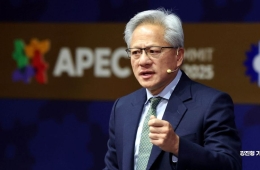
Governance Forum: "No Time to Pop Champagne Over Korea's 5th-Place Governance Ranking"
"This is no time to pop champagne over an improved governance ranking."
The Korea Corporate Governance Forum warned that it is too early to celebrate Korea's rise to fifth place among 12 Asia-Pacific economies in corporate governance rankings. It said the country's ranking could slip again depending on how it handles pressing issues, including the mandatory tender offer system, which has already drawn strong opposition from shareholders.
In a commentary on November 5, the forum said, "If pressing issues such as the mandatory tender offer system and the March shareholders' meetings are mishandled, the ranking is likely to fall again." In the country rankings in the "CG Watch 2026" report released the previous day by the Asian Corporate Governance Association (ACGA), Korea ranked joint fifth among 12 Asia-Pacific economies. This was a three-place rise from eighth in the previous assessment.
The rise was expected. In an interview with The Asia Business Daily in June 2026, ACGA Secretary General Amar Gill praised Korea's capital market reforms, including revisions to the Commercial Act, and predicted that the country's ranking would improve this year. ACGA, whose members include BlackRock, Vanguard and the National Pension Service, is an international organization that conducts research and provides advisory services to improve corporate governance and environmental, social and governance (ESG) practices across Asia.
"As expected, Korea's ranking jumped," the forum said, adding that "the biggest factor behind the improvement was stronger investor protection resulting from the first, second and third rounds of Commercial Act revisions led by the National Assembly."
The forum noted, however, that Korea's score of 62.8 was lower than Malaysia's 63.2, despite the latter's relatively lower level of economic development. Malaysia was also tied for fifth place. "Foreign investors appear to believe that investor protection policies passed by the National Assembly since July 2025 have yet to take root," the forum said.
"Neighboring Japan has secured second place on the strength of strong confidence from international investors, while shareholder-friendly Singapore and Taiwan remain in the top three," the forum said. "The international financial community deeply distrusts Korean boards, whose independence is extremely weak. It is also skeptical of the stock-exchange-led value-up policy, which has been ineffective."
The forum also noted that foreign investors had net-sold more than KRW 220 trillion worth of domestic stocks this year. "If the surge in selling in the first half was profit-taking in semiconductor stocks that had risen sharply, sales in the second half reflected concerns about a possible U-turn in investor protection policies that had been progressing smoothly," it said, adding, "Those concerns have been borne out since July."
The forum also expressed concern that numerous foreign investors voiced these concerns in Taiwan, where this year's ACGA annual conference was held. "All of the many foreign investors expressed strong opposition to introducing a mandatory tender offer system that runs counter to directors' duty of loyalty," the forum said. "The current amendment does not align with global standards at all and creates a disproportionate system without even providing for pro rata purchases."
The mandatory tender offer bill approved by the National Assembly's Political Affairs Committee, which is considered likely to pass the plenary session, is centered on limiting the amount to be purchased to "50% plus one share" to avoid constricting the mergers and acquisitions (M&A) market. It also allows controlling shareholders' stakes to be purchased in advance, prompting concerns about various schemes to circumvent the rules. In that case, the system would inevitably run counter to its original purpose of protecting ordinary shareholders.
The introduction of the mandatory tender offer system is not the only factor expected to affect the next ACGA assessment. The forum also highlighted the March 2027 shareholders' meetings as a key test of whether the revised Commercial Act takes hold. It said the key questions are whether each company appoints one or two genuinely independent directors and whether its shareholders' meeting is conducted fairly and transparently.
The forum also said it was important to address discounts on low price-to-book ratios (PBRs) through legislation introducing a bear hug mechanism, restart the value-up policy with binding requirements, and establish the revised stewardship code.
"If Korea fails to address pending issues, including a mandatory tender offer system based on the principle of equal treatment of shareholders, fair March shareholders' meetings, the introduction of a bear hug mechanism, and restarting the value-up policy with binding requirements, its ranking could fall again," the forum said. "Let us aim to enter the top three alongside Australia and Japan in the next assessment." Australia ranked first in this year's report with 75 points, followed by Japan with 69.8 points, Singapore with 67.8 points (tied for third) and Taiwan with 67.4 points (tied for third).
© The Asia Business Daily. All rights reserved. Unauthorized AI training and use prohibited.