[U.S. Blue Tsunami] Nuclear Subs, Nuclear Talks Also Face "U.S. Congress" Factor
Congressional Scrutiny of Follow-Up Agreements Expected
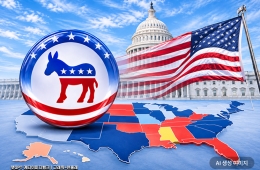
With the U.S. Democratic Party taking control of both the House and the Senate in the midterm elections held on November 3, 2026, congressional factors have taken on greater importance in South Korea-U.S. security issues, including nuclear-powered submarines, revisions to the nuclear cooperation agreement, and the transfer of wartime operational control. Observers say congressional diplomacy by South Korea has become more important, as Congress is expected to scrutinize any follow-up agreements even if President Trump finds a way to boost his approval ratings through dialogue with North Korea.
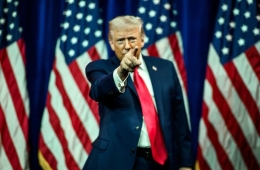
There are also many variables affecting the South Korea-U.S. alliance. One is the nuclear-powered submarine construction project. Trump approved the project in October 2025, but it has made no progress. The supply of nuclear fuel and cooperation on nuclear technology are likely to be delayed. Fuel imports require an agreement under Section 91 of the U.S. Atomic Energy Act, while uranium enrichment and spent fuel reprocessing require revisions to the nuclear cooperation agreement under Section 123. Both are subject to congressional review. In a letter sent to President Trump in January 2026, four Democratic lawmakers, including Senator Ed Markey, called for the application of the "Gold Standard," which bars uranium enrichment and spent fuel reprocessing.
The "MASGA" project, a South Korea-U.S. shipbuilding cooperation initiative, also remains to be seen. Its goal is to build U.S. warships at South Korean shipyards, but Congress could block it. Even if Trump grants a national security exemption to the law banning the construction of warships overseas, debate is expected.
The transfer of wartime operational control also appears unlikely to be straightforward. After the two countries postponed the Security Consultative Meeting (SCM) from October 28, 2026, to early 2027, pushing it past the end of the year for the first time in 28 years, the selection of a target year has also been delayed until after the new Congress convenes. Oversight by the House Armed Services Committee and Senate confirmation of generals are potential variables.
However, Congress is expected to act as a shield on the issue of U.S. Forces Korea. The current National Defense Authorization Act (NDAA) bars the use of funds to reduce U.S. Forces Korea to fewer than 28,500 troops. However, the restriction is lifted 60 days after the U.S. secretary of defense certifies that the required conditions have been met. This provision is likely to become a point of contention in the fiscal year 2028 NDAA.
Some analysts say that Democratic control of Congress does not necessarily mean blanket opposition to security consultations. "There will be lawmakers who oppose it, but quite a few will support it as well," said Min Jeonghun, an associate professor in the Department of American Studies at the Korea National Diplomatic Academy. "What the U.S. Congress wants is for us to explain things to them." He added, "We need to prepare thoroughly in areas where a Democratic-controlled Congress is likely to scrutinize matters more closely."
Diplomacy with the United States also faces the challenge of managing security and economic issues together. South Korea needs to respond to changes in tariffs and export controls on China while explaining to Congress that cooperation with South Korea in areas such as energy, shipbuilding, and semiconductors also benefits U.S. industries and employment. "All these projects create jobs," said Kang Jun-young, a professor at the Graduate School of International and Area Studies at Hankuk University of Foreign Studies. "We need to keep persuading Democrats, too, that South Korea is contributing to the South Korea-U.S. alliance."
Winning support in Congress is also a challenge for North Korea policy. Even if President Trump pursues and succeeds in holding dialogue with North Korea, it may be difficult to secure the approval of a Democratic-led Congress during implementation, depending on the content of follow-up agreements, such as sanctions relief. Given the expected congressional scrutiny, South Korea needs to explain its position and its principle of denuclearization to Congress, in addition to consulting with the administration.
Professor Kang said, "There is a risk that President Trump, under pressure, may become overly eager to pursue a diplomatic initiative," but predicted that "even if dialogue with North Korea takes place, reaching an agreement will be extremely difficult." He explained, "North Korea's demand that the United States abandon its hostile policy means lifting sanctions. The sanctions were imposed because North Korea has nuclear weapons. Ultimately, the overarching framework of denuclearization must not be undermined." He added, "I think room for progress may emerge if we continue not only communicating and cooperating with the Trump Administration, but also making a concerted effort to fully explain our circumstances and position to the U.S. Congress."
Hot Picks Today
 "Two Spend 500,000 Won in a Flash, Yet Wait Two Hours?" ... 'Dreamland' Shunned by Kids and Foreign Tourists
- The Era of Getting 200 Million Won After 30 Years Is Over... A Japanese Bank's "Perpetual Department Head" Who Just Clocked In Cries Out
- Spain Hit by Its Worst Tragedy... Lee Kangin, Moreno and Real Madrid Join Soccer World in Mourning
- They Said, “Make It Your Home for Life” - Then Suddenly Kicked 200 Passengers Off... What Happened to the Around-the-World Cruise?
- "130 Rice Bowls Sold Out in a Day"... 'Unfiltered Face' Adds 8 Million Won to Night Market Sales: China's Bungeunwoo
Professor Min said that even if Democrats raise issues concerning sanctions on North Korea and human rights, the president has considerable authority to pursue a summit. "A meeting between leaders is a decision for the president to make," he said, adding that "the likelihood of a summit increases if President Trump focuses on playing the role of peacemaker to achieve political gains."
© The Asia Business Daily. All rights reserved. Unauthorized AI training and use prohibited.