Could Virtual Asset Tax Be Deferred for Another Two Years? Experts: "Need a Roadmap, Not Just to Buy Time"
The taxation of virtual asset income, which was scheduled to take effect next January, is increasingly likely to be postponed once again. This follows Democratic Party of Korea leader Kim Min-seok's formal proposal to the government on the 4th to defer the tax. Under discussions between the ruling party and the government, a plan to push the tax start date back by another two years, to January 2029, and address gaps in the system is expected to be a leading option.

Leader Kim: "Set the framework with the Digital Asset Act first... Complete priority tasks during the deferral period"
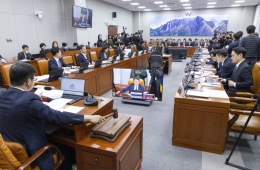
At a Supreme Council meeting held at the National Assembly that day, Kim said, "After careful consideration, including discussions centered on the National Assembly's Finance and Economy Committee and meetings between the ruling party, the government and virtual asset service providers, we concluded that it would be advisable to first enact the Digital Asset Act to establish an overall framework and give companies and investors time to adapt, taking into comprehensive consideration tax principles, conditions for the domestic industry and fairness among users."
He added, "We have also taken into account the fact that taxation of virtual asset income has been postponed in the past. This time, we will set a clear deferral period and thoroughly prepare priority tasks, including the use of overseas transaction information, electronic verification and tax payment guidance." He also said, "We will accelerate the revision of relevant laws and tax systems to lay the groundwork for companies to actively invest in new services and for users to trade with confidence."
Government, which had stood by its principles, shifts course after parliamentary audits and forums
Taxation of virtual assets was originally scheduled to take effect in 2022, but has already been postponed three times due to market conditions and inadequate infrastructure. Under current law, starting January 1 next year, income from the transfer or lending of virtual assets exceeding the basic deduction of 2.5 million won will be taxed at a rate of 22%, including local income tax. Citing the consistency and credibility of tax policy, the government had excluded a deferral from this year's tax reform plan and maintained that the tax should take effect as scheduled.
However, the mood shifted after lawmakers focused on institutional shortcomings during last month's parliamentary audit, including the lack of measures to prevent tax evasion through overseas exchanges and the absence of loss carryforwards. At the time, Lee Hyeong-il, Deputy Prime Minister and Minister of Finance and Economy, stepped back, saying, "We will carefully consider the opinions raised in the National Assembly."

At a policy forum on virtual asset taxation held at the National Assembly on November 2, Moon Kyung-ho, director of the Income Tax Division at the Ministry of Finance and Economy, said, "Opinions have been raised that we should reflect changes in market conditions since the legislation was enacted in late 2020 and take the global policy environment into account, including fairness with users of overseas exchanges. We are carefully considering a reasonable approach that the public can accept and that can be implemented stably in practice, and will reach a conclusion in consultation with the National Assembly." With the ruling party leader now directly calling for an official deferral, the government has also been left with little choice but to retreat from its previous stance of adhering to its principles and accept parliamentary discussions.
Fairness in overseas trading and lack of loss deductions... "Need an alternative tax framework, not just another delay"
Behind the growing support for a deferral is the structural limitation that the current tax system cannot ensure fair and reliable tax enforcement. The biggest issue is tax fairness between domestic and overseas exchanges. Kim Jae-jin, standing vice chairman of the Digital Asset eXchange Alliance (DAXA), warned, "If we clamp down only on domestic exchanges while leaving blind spots such as overseas derivatives and stablecoins unaddressed, users and capital will move offshore."
Ahn Sung-hee, a professor at the Catholic University of Korea who delivered the main presentation, also pointed out that the law fails to cover evolving forms of transactions such as airdrops and staking. She said that, given the time lag before the OECD's Crypto-Asset Reporting Framework (CARF) for the automatic exchange of information on crypto-assets is introduced, measures such as raising the basic deduction must come first to prevent domestic investors from being treated unfairly. The inability to carry forward losses from one year and deduct them from profits in the following year was also cited as a problem.
Hot Picks Today
 "Two Spend 500,000 Won in a Flash, Yet Wait Two Hours?" ... 'Dreamland' Shunned by Kids and Foreign Tourists
- The Era of Getting 200 Million Won After 30 Years Is Over... A Japanese Bank's "Perpetual Department Head" Who Just Clocked In Cries Out
- Spain Hit by Its Worst Tragedy... Lee Kangin, Moreno and Real Madrid Join Soccer World in Mourning
- They Said, “Make It Your Home for Life” - Then Suddenly Kicked 200 Passengers Off... What Happened to the Around-the-World Cruise?
- "130 Rice Bowls Sold Out in a Day"... 'Unfiltered Face' Adds 8 Million Won to Night Market Sales: China's Bungeunwoo
If taxation is postponed again following consultations between the ruling party and the government, January 2029 is the most likely start date. However, some warn that a fourth delay should not amount to merely "buying time." Kim Woo-cheol, a professor in the Department of Taxation at the University of Seoul who participated in the discussion, called for a "conditional, temporary deferral" rather than a simple postponement. Kim criticized the policy, saying, "The Financial Investment Income Tax has been abolished, allowing investors who make large profits from stock sales to enjoy tax-free benefits. Singling out virtual assets for taxation violates horizontal equity. If the government unilaterally grants a deferral simply in response to public opinion, it will only undermine trust in the tax system." He proposed, "The government should present a clear roadmap for when and how it will reintroduce an alternative tax framework covering financial investment income as a whole within the next one to two years, and integrate virtual asset taxation into that framework."
© The Asia Business Daily. All rights reserved. Unauthorized AI training and use prohibited.