Kim Minseok Apologizes Over Shincheonji Allegations, Says Warning Was Necessary; Jeong-Aligned Faction Pushes Back (Roundup)
Kim Apologizes, Saying “There Is No Evidence of a Secret Three-Way Alliance”
Says Warning of Shincheonji’s Possible Primary Interference Was Necessary
Pro-Jeong Lawmakers Demand Public Apology... Choi Minhee Absent
Democratic Party of Korea leader Kim Min-seok reportedly said that, while apologizing for the allegations he raised during the party convention of a “secret three-way alliance among anti-Lee, divisive faction members, and Shincheonji” on the grounds that there was no verified evidence, it had nevertheless been necessary to warn of the possibility of Shincheonji interfering in the party primary. Conflict within the party continues, as lawmakers aligned with former leader Chung Cheong-rae, known as the pro-Chung faction, have repeatedly demanded a public apology and accountability.
At a Supreme Council meeting held at the National Assembly on November 4, Kim said, “The party will pursue self-corrective efforts and institutional reforms so that concerns about religious interference in politics within the party disappear,” adding, “We will focus on party unity and people’s livelihoods.” However, he did not mention the public apology demanded by former leader Chung and Supreme Council members Lee Seong-yoon and Han Min-soo.

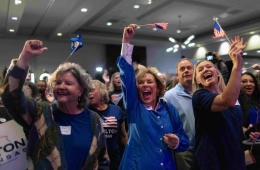
Han Byeong-do, floor leader of the Democratic Party of Korea, delivers opening remarks at a Supreme Council meeting at the National Assembly on the 4th. Choi Min-hee, a Supreme Council member who called on party leader Kim Min-seok to apologize to party members over allegations that Shincheonji members joined the party, was absent from the meeting. 2026.11.04 Photo by Yoon Dong-ju
View original imageKim reportedly explained at a closed-door lawmakers’ meeting the previous day, November 3, that raising the possibility of Shincheonji interfering in the party primary was a matter of principle, not a political judgment. His point was that there had been concerns that Shincheonji had a presence within the party and was trying to interfere in the party convention primary, and that he had no choice but to issue repeated, strong warnings to prevent this.
However, he reportedly acknowledged that the party’s internal investigation had found no verified evidence of a secret three-way alliance. He also reportedly explained that the party had obtained indications that Shincheonji had tried to act and related testimony, but that the information had not been verified through an investigation or other means.
Kim reportedly apologized to those who had suffered harm because the allegations he raised at the time did not reflect the facts. He also reportedly said that he did not believe anyone within the party had knowingly led Shincheonji’s activities.
He reportedly also explained why he had proposed replacing the planned report on the investigation’s findings by Supreme Council member Park Seon-won with confidential access to the findings. His point was that testimony gathered during the investigation included the names of specific individuals, and that disclosing it before it had been verified could cause further harm. Kim reportedly said that after lawmakers had reviewed the materials, if they requested full disclosure and met certain requirements, he would follow the opinion of the party’s parliamentary caucus.
However, the pro-Chung faction maintains that an apology at a closed-door lawmakers’ meeting is not enough. The previous day, former leader Chung called for accountability in a post on his social media account, saying, “Rather than hiding away at a closed-door lawmakers’ meeting and saying you’re sorry, please come out publicly and apologize to party members in public.”
At the Supreme Council meeting on November 4, Supreme Council member Lee Seong-yoon said, “Is this something that can be wrapped up with a few words at a closed-door lawmakers’ meeting, saying, ‘I’m sorry to those who were unintentionally hurt’?” He called on Kim to “offer a sincere public apology to party members and former leader Chung Cheong-rae and show a responsible attitude.” Lee also argued that the party should investigate whether Kim’s allegations violated Article 52 of the Political Parties Act.
Supreme Council member Han Min-soo also demanded a public apology and accountability, saying, “Although some of the sense of injustice felt by Assemblyman Chung, Choi Min-hee, Supreme Council member Lee Seong-yoon, and me has eased after we were subjected to all kinds of public vilification as anti-Lee divisive faction members and Shincheonji supporters during the last party convention, will the wounds of party members heal with just one apology?”
Supreme Council member Choi Min-hee was absent from the meeting on November 4. In a post on social media, Choi said, “At a closed-door Supreme Council meeting, I was pressured by leader Kim not to make ‘remarks related to Shincheonji,’” adding, “I decided that it would not be respectful to party members and supporters for both sides to appear heated at an open Supreme Council meeting.” She added, “The person who caused this must resolve it.”
By contrast, Supreme Council members Jeon Yong-gi and Park Seon-won stressed that the party should focus on people’s livelihoods. “The success of the Lee Jae-myung administration is the success of the Democratic Party,” Jeon said. “That success will not be determined by who wins an internal party dispute.” Park also said, “Politicians’ own interests cannot take precedence over people’s livelihoods.”
Hot Picks Today
 "Two Spend 500,000 Won in a Flash, Yet Wait Two Hours?" ... 'Dreamland' Shunned by Kids and Foreign Tourists
- The Era of Getting 200 Million Won After 30 Years Is Over... A Japanese Bank's "Perpetual Department Head" Who Just Clocked In Cries Out
- Spain Hit by Its Worst Tragedy... Lee Kangin, Moreno and Real Madrid Join Soccer World in Mourning
- They Said, “Make It Your Home for Life” - Then Suddenly Kicked 200 Passengers Off... What Happened to the Around-the-World Cruise?
- "130 Rice Bowls Sold Out in a Day"... 'Unfiltered Face' Adds 8 Million Won to Night Market Sales: China's Bungeunwoo
Meanwhile, Democratic Party Secretary-General Han Jeong-ae said on the party’s official YouTube channel, “Minty07,” on November 4 that she would check whether lawmakers wished to review the findings of the investigation into the Shincheonji allegations individually. She also said institutional reforms under the Political Parties Act were needed to address political interference through mass party membership.
© The Asia Business Daily. All rights reserved. Unauthorized AI training and use prohibited.