New Medical Schools Confirmed... Sunchon National University (60) and Gyeongkuk National University (40) Selected as Final Picks
Ministry of Education and Ministry of Health and Welfare quantitatively assess 13 indicators across four areas
Mokpo National University’s exclusion sparks "uproar"; easing regional tensions remains a challenge
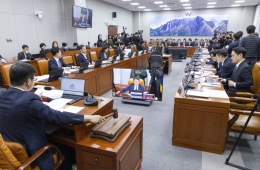
The government has selected Sunchon National University in Jeonnam-Gwangju Integrated Special City (60 seats) and Gyeongkuk National University in Gyeongsangbuk-do (40 seats) to establish new medical schools as part of its efforts to strengthen essential and public healthcare in regional areas.
On the 4th, the Ministry of Education and the Ministry of Health and Welfare announced the results of their selection of regions and universities for the new regional medical schools. The government first selected Jeonnam-Gwangju Integrated Special City and Gyeongsangbuk-do as candidate regions after quantitatively assessing 13 indicators across four areas—access to medical care, shortages in medical supply, vulnerability, and policy effectiveness—for a total of 100 points.

The biggest point of contention was the selection of a candidate university in Jeonnam-Gwangju Integrated Special City. Initially, from the perspective of improving healthcare conditions across the region, the government determined that establishing a joint medical school through the merger of Mokpo National University and Sunchon National University would be preferable, on the premise that a new medical school would be established. However, when the two universities ultimately failed to reach a merger agreement, the local government asked the central government for an opportunity to recommend a single candidate national university under its own jurisdiction, citing the difficulty of reaching an agreement between the universities.
Accordingly, Jeonnam-Gwangju Integrated Special City conducted the recommendation review process through the Jeonnam Research Institute and recommended Sunchon National University as its final candidate on August 30. During this process, Mokpo National University, one of the parties to the merger discussions, was excluded, prompting various questions about the recommendation review process as a whole.
In and outside the local community, controversy arose over the objectivity and appropriateness of the process, which shifted from discussions premised on a merger of the two universities to a local-government-led recommendation of a single university.
Mindful of the ensuing backlash and concerns, the government conducted an in-depth review, examining explanatory materials several times, hearing directly from the officials in charge of the recommendation review at planning committee meetings, and seeking external legal advice. The government concluded that "there were no deficiencies serious enough to warrant rejecting the local government's recommendation," thereby affirming the procedural legitimacy of the process and finalizing the selection of Sunchon National University.
The allocated medical school quotas are 60 students for Sunchon National University and 40 for Gyeongkuk National University. The quotas were allocated differentially in consideration of regional conditions, within the annual total of 100 seats set by the Health Policy Deliberation Committee. For Jeonnam-Gwangju Integrated Special City, the government took into account that the new medical school would have difficulty operating at its full capacity of 100 students in its early years. For Gyeongsangbuk-do, it considered that Dongguk University's medical school, with a quota of 55 students, is already located in the southern part of the province.
When conducting its 2029 forecast of physician supply and demand, the government plans to discuss how to allocate additional quotas for 2032-2036, taking into comprehensive consideration each university's level of preparation and its accreditation status with the Korea Institute of Medical Education and Evaluation. It also plans to establish a "City/Province-University Regional Medical School Establishment Task Force" and a joint "Regional Medical School Establishment Support Team" under the two ministries to monitor and support the establishment process.
Vice Minister of Education Choi Eunok said, "Today's announcement has put the establishment of regional medical schools, a government policy priority, on the path to full-scale implementation. We will provide all possible support so that admissions can begin in 2030 and the new medical schools can train outstanding medical professionals."
Hot Picks Today
 "Two Spend 500,000 Won in a Flash, Yet Wait Two Hours?" ... 'Dreamland' Shunned by Kids and Foreign Tourists
- The Era of Getting 200 Million Won After 30 Years Is Over... A Japanese Bank's "Perpetual Department Head" Who Just Clocked In Cries Out
- Spain Hit by Its Worst Tragedy... Lee Kangin, Moreno and Real Madrid Join Soccer World in Mourning
- They Said, “Make It Your Home for Life” - Then Suddenly Kicked 200 Passengers Off... What Happened to the Around-the-World Cruise?
- "130 Rice Bowls Sold Out in a Day"... 'Unfiltered Face' Adds 8 Million Won to Night Market Sales: China's Bungeunwoo
However, in Jeonnam, Sunchon National University was selected through a recommendation made solely by the local government after the planned merger agreement with Mokpo National University fell through, and the controversy surrounding the recommendation process is expected to continue for some time.
© The Asia Business Daily. All rights reserved. Unauthorized AI training and use prohibited.