Seo Wangjin to Introduce "Better Super-Regional Special Zones Act" as Party Policy, Limit Labor and Environmental Exemptions
Bill to Support Corporate Investment and Streamline Permitting Procedures
Excludes Exceptions to the 52-Hour Workweek and Allowing For-Profit Hospitals
The Rebuilding Korea Party will introduce a bill, as its official party position, to establish special zones for strategic industries across multiple regions, combining support for corporate investment with measures to benefit local communities. The bill would ease regulations and provide financial support for businesses, while excluding special provisions in labor and healthcare, such as exemptions from the 52-hour workweek and permission for for-profit hospitals. It would also impose sunset clauses on regulatory exemptions.

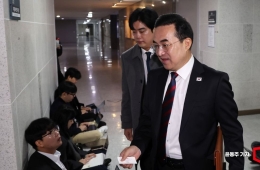
Rep. Seo Wangjin of the Rebuilding Korea Party said at a press conference at the National Assembly Communication Center on the morning of November 4 that he would sponsor the "Special Act on the Designation and Operation of Special Zones for Strategic Industries Across Multiple Regions to Promote Locally Led Growth and Benefit Local Communities." The bill is being pursued as the official position of the Rebuilding Korea Party. The press conference was attended by Rep. Seo and lawmakers Kim Junhyeong, Cha Gyugeun, Jung Chunsaeng, Kim Hyeongyeon, Kim Seonmin and Paik Seonhee.
To support corporate investment in the special zones spanning multiple regions, the bill provides for expedited regulatory reviews, regulatory sandbox exemptions, temporary permits, deemed approvals and expedited processing. It also calls for special subsidies, policy financing and tax support, as well as workforce training and improvements to living conditions. The bill would also establish a basis for national infrastructure support to ensure a stable energy supply for strategic industries.
The bill also includes measures to ensure that the benefits of the special zones are returned to local communities. It would establish a mutual-benefit council bringing together businesses, workers, residents and civil society, and require special-zone plans to take into account local employment, the sharing of benefits, and demand for healthcare and care services. For renewable energy projects, it would guarantee residents, cooperatives and others the opportunity to invest at least 4% of total project costs as a priority.
The bill excludes special provisions on labor, finance and healthcare that were included in a special-zone bill pursued by the Democratic Party of Korea. These include exemptions from the 52-hour workweek, an extension of the settlement period for the selective work-hour system, an extension of the employment period for fixed-term workers, and expanded provisions for unpaid holidays and worker dispatch at foreign-invested companies. It also excludes easing equity requirements for jointly funded companies set up by subsidiaries, an exception to the separation of banking and commerce for financial leasing businesses, and permission for foreign medical institutions and pharmacies exclusively for foreign nationals.
State-owned and public property would be leased rather than sold, and reductions in the Electric Power Industry Base Fund and environmental charges would also be excluded. Healthcare support would focus on essential services, including emergency care, childbirth and pediatric care.
The bill also establishes safeguards to prevent the unchecked expansion of special provisions. Standards under current laws on working hours, employment stability, life and safety, environmental impact assessments, public consultation and healthcare could not be relaxed through regulatory sandbox exemptions or regulatory moratoriums requested by businesses. Regulatory exemptions would be subject to a five-year sunset clause, while the law itself would be in effect for 10 years. Subsidies would be subject to support limits and clawback provisions, and the results of performance evaluations would be made public and reported to the National Assembly.
Hot Picks Today
 "Two Spend 500,000 Won in a Flash, Yet Wait Two Hours?" ... 'Dreamland' Shunned by Kids and Foreign Tourists
- The Era of Getting 200 Million Won After 30 Years Is Over... A Japanese Bank's "Perpetual Department Head" Who Just Clocked In Cries Out
- Spain Hit by Its Worst Tragedy... Lee Kangin, Moreno and Real Madrid Join Soccer World in Mourning
- They Said, “Make It Your Home for Life” - Then Suddenly Kicked 200 Passengers Off... What Happened to the Around-the-World Cruise?
- "130 Rice Bowls Sold Out in a Day"... 'Unfiltered Face' Adds 8 Million Won to Night Market Sales: China's Bungeunwoo
"We must provide firm support for businesses while setting in law the lines that must not be crossed," Rep. Seo said. "Giving businesses unlimited special treatment will not, by itself, revitalize local communities." The Rebuilding Korea Party plans to secure provisions during the National Assembly's review process for resident participation and benefit sharing, support for power infrastructure, and limits on special provisions in labor, safety, environmental and healthcare matters.
© The Asia Business Daily. All rights reserved. Unauthorized AI training and use prohibited.