NEC Special Prosecutor Still Probing Leadership's Role Nearly Two Months After 'Launch'
On-site inspection of ballots completed
Investigators now examining how the shortage occurred
Probe into irregularities in election supply contracts
Investigation continues without arrest warrants or charges being filed
The special prosecutor team led by Lee Taehan, investigating the shortage of ballots during the June 3 local elections and other matters, has yet to determine whether senior officials at the National Election Commission (NEC) were involved, nearly two months after the team was launched. However, it has successively uncovered evidence of misconduct involving the falsification of voting statistics and the contracting and budget execution processes, and is speeding up its investigation to determine whether related orders were issued or approved.
According to legal sources on November 4, the special prosecutor team, launched on September 7, is investigating 12 allegations, including the ballot shortage, manipulation of voting statistics, and irregularities in contracts for election supplies. The team confirmed that election commissions in 36 cities, counties and districts nationwide had falsely entered the number of voters by time period. In some areas, it also found evidence that incorrectly entered figures were later corrected or figures for subsequent time periods were adjusted. The team plans to investigate how the false entries were made, as well as how instructions were drafted and relayed and how reports were submitted and approved.

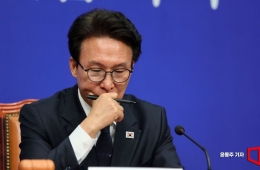
Lee Taehan, special prosecutor for the National Election Commission. Yonhap News
View original imageThe ballot shortage that prompted the launch of the special prosecutor’s investigation has moved past on-site verification, and investigators are now examining how it occurred. On October 28 and 29, the team conducted a public inspection of approximately 2.47 million ballots from the Songpa area and secured more than 700 ballots that had been challenged for further analysis. The remaining tasks are to determine why the quantity of ballots printed was set at 50% of the number of eligible voters and how NEC leadership responded when the shortage occurred. On October 21, the team also searched the home of former NEC Chairman Roh Tae-ak, who was booked on suspicion of dereliction of duty and other charges. However, the search was related to allegations of an excessively lavish overseas trip.
Investigators have successively uncovered evidence that certain companies received preferential treatment in contracts and supplies. Last month, the team investigated a 5 billion won contract for polling-place supply kits and allegations involving the delivery of election equipment worth more than 14 billion won. More recently, it also found evidence that a project plan for manufacturing advance-voting ballot printers was leaked to a particular company before the bidding process. The NEC allegedly tolerated the company’s unauthorized modifications to the printers and even changed its consumables procurement guidelines, enabling the company to become the exclusive supplier. The printer manufacturing costs and the value of consumables supplied amounted to 32.1 billion won and 13.8 billion won, respectively. Since the morning of November 4, the team has been searching the NEC’s offices and the company’s offices and factory to secure relevant materials.
The investigation into allegations involving payments of activity expenses for promoting fair elections has recently gathered pace. The team found evidence that the NEC stated in its budget materials that there were no relevant issues, despite criticism from the Board of Audit and Inspection and the National Assembly, and that it continued paying the expenses from other budget sources even after the budget was cut. On November 2 and 3, the team targeted 18 departments, including the chairman’s office and the secretary-general’s office, in searches to secure materials. It plans to examine how approximately 900 million won in activity expenses were budgeted and paid, and determine whether senior officials were involved or conspired in the matter.
Hot Picks Today
 "Two Spend 500,000 Won in a Flash, Yet Wait Two Hours?" ... 'Dreamland' Shunned by Kids and Foreign Tourists
- The Era of Getting 200 Million Won After 30 Years Is Over... A Japanese Bank's "Perpetual Department Head" Who Just Clocked In Cries Out
- Spain Hit by Its Worst Tragedy... Lee Kangin, Moreno and Real Madrid Join Soccer World in Mourning
- They Said, “Make It Your Home for Life” - Then Suddenly Kicked 200 Passengers Off... What Happened to the Around-the-World Cruise?
- "130 Rice Bowls Sold Out in a Day"... 'Unfiltered Face' Adds 8 Million Won to Night Market Sales: China's Bungeunwoo
The special prosecutor team has continued its investigation without seeking arrest warrants or bringing charges so far. It has also yet to question key figures, including former Chairman Roh. Responding earlier to criticism that the investigation had produced no visible results, Special Prosecutor Lee Taehan said, “The focus of the special prosecutor’s investigation is to establish the facts behind issues such as ballot shortages and voter turnout manipulation during the election process,” adding, “We will avoid investigations that set the number of people arrested as a goal.” The special prosecutor’s investigation is authorized to run for 90 days, with two possible 30-day extensions allowing it to continue for up to 150 days.
© The Asia Business Daily. All rights reserved. Unauthorized AI training and use prohibited.