"Poor Conditions in School Cafeterias... Don't Blame the Budget; Protect Workers' 'Right to Health'"
Kim Jinnam Raises Sharp Concerns During Administrative Audit
"Combine Gwangju's Speed with Jeonnam's Comprehensive Approach; Redraw Five-Year Plan"
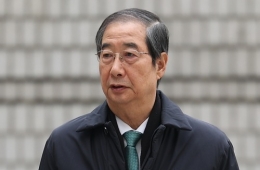
Kim Jinnam, a member of the Jeonnam-Gwangju Integrated Special City Council from Suncheon and the Democratic Party of Korea, called for a “hybrid school cafeteria environment improvement policy” that combines the strengths of both regions to protect the health rights of school meal workers during an administrative audit of the Jeonnam-Gwangju Integrated Special City Office of Education held on November 3.
According to Kim, as of the end of September this year, ventilation systems had been upgraded in 58% of school cafeterias under the Gwangju Office of Education and 32% under the Jeonnam Office of Education, a gap of about 25 percentage points between the two regions. Kim noted the different local conditions and approaches, saying, “This is not an issue that should be judged simply by the numbers to determine which region has done better or worse.”

Gwangju has moved quickly by focusing on replacing ventilation systems independently, with a dedicated department in charge. In contrast, Jeonnam has many small, aging schools and has carried out ventilation upgrades alongside comprehensive cafeteria modernization projects, which has slowed progress, according to the analysis.
Kim stressed, “With genuine integration scheduled for 2028, we need a new standard that combines the strengths of Gwangju’s rapid, stand-alone replacement approach and Jeonnam’s comprehensive modernization approach, rather than simply maintaining the two methods as they are.”
Pointing to tight budget conditions, Kim added, “Protecting the health rights of school meal preparation staff must be our top priority. We should reset priorities based on the level of facility risk and clearly distinguish between sites for short-term replacements and those for comprehensive modernization to prevent duplicate spending and construction delays.” Kim said the needs of workers facing the worst conditions in schools must come first.
Hot Picks Today
 "Two Spend 500,000 Won in a Flash, Yet Wait Two Hours?" ... 'Dreamland' Shunned by Kids and Foreign Tourists
- The Era of Getting 200 Million Won After 30 Years Is Over... A Japanese Bank's "Perpetual Department Head" Who Just Clocked In Cries Out
- Spain Hit by Its Worst Tragedy... Lee Kangin, Moreno and Real Madrid Join Soccer World in Mourning
- They Said, “Make It Your Home for Life” - Then Suddenly Kicked 200 Passengers Off... What Happened to the Around-the-World Cruise?
- "130 Rice Bowls Sold Out in a Day"... 'Unfiltered Face' Adds 8 Million Won to Night Market Sales: China's Bungeunwoo
Gu Yonghyeok, head of the Physical Education and Health Division, said in response, “To improve facilities effectively, we are conducting a new needs assessment by classifying projects as short-term (stand-alone ventilation improvements), medium-term (ventilation improvements plus partial modernization), and long-term (comprehensive upgrades), and are drawing up a five-year plan.” He added, “We will communicate closely with Gwangju and actively pursue policies suited to the Integrated Special City Office of Education.”
© The Asia Business Daily. All rights reserved. Unauthorized AI training and use prohibited.