Eight Jeonnam-Gwangju Areas, Including the Integrated Special City, Selected as Education Innovation Leading Regions
Ministry of Education Names 43 Education Innovation Leading Regions for 2027
Jeonnam-Gwangju Integrated Special City Selected as Metropolitan-Level Region
Up to Five Years of Support to Build a "Virtuous-Cycle Education Ecosystem"
Eight areas in Jeonnam and Gwangju, including the Jeonnam-Gwangju Integrated Special City and Goheung and Gokseong, have been selected in large numbers as leading regions for the government's education reform efforts. The move is expected to launch a full-scale effort to overcome the threat of regional decline and build a virtuous-cycle education ecosystem in which students receive quality education where they were born and raised and contribute to regional development.
On November 3, the Ministry of Education announced the results of the designation of Education Innovation Leading Regions for 2027 at the Government Seoul Complex. A total of 130 areas applied for the competition, which ran from July through September. After written and in-person evaluations, 43 areas were selected: 32 in Type 1 and 11 in Type 2.

Education Innovation Leading Region Designation Results. Provided by the Ministry of Education.
View original imageThe most notable aspect of this announcement is the strong showing by the Jeonnam and Gwangju region. The Jeonnam-Gwangju Integrated Special City was selected as a metropolitan-level Type 2 area, a category for non-capital-region basic and metropolitan local governments, while Gwangyang City was selected at the basic local-government level.
These Type 2 areas will carry out mandatory tasks to narrow educational disparities within their regions and strengthen education linked to universities and industries in connection with region-specific industries. To support these efforts, metropolitan local governments will receive up to KRW 4 billion per year (approximately KRW 3.7 billion based on 2027 figures), while basic local governments will receive up to KRW 2 billion per year.
Six areas in Jeonnam and Gwangju—Goheung County, Gokseong County, Yeonggwang County, Yeongam County, Wando County and Jindo County—were also selected for Type 1, which is for areas experiencing or at risk of population decline.
These areas will receive up to KRW 2 billion per year to pursue the core task of building a local education ecosystem through innovation at small schools. The evaluation committee highly rated the selected Type 1 areas for recognizing declining school-age populations and regional decline as shared challenges, and for creating policy momentum to discuss small-school innovation at the regional level, an issue that had been difficult to advance until now.
The designated Education Innovation Leading Regions will receive financial support for up to five years: an initial three years, followed by a stage evaluation and the possibility of an additional two years of support.
The Ministry of Education plans to finalize the designations after an objection period in November. The selected areas will refine and develop their operating plans with guidance from an expert advisory group by December 2026, and are scheduled to begin their projects in earnest in January 2027.
Hot Picks Today
 "Two Spend 500,000 Won in a Flash, Yet Wait Two Hours?" ... 'Dreamland' Shunned by Kids and Foreign Tourists
- The Era of Getting 200 Million Won After 30 Years Is Over... A Japanese Bank's "Perpetual Department Head" Who Just Clocked In Cries Out
- Spain Hit by Its Worst Tragedy... Lee Kangin, Moreno and Real Madrid Join Soccer World in Mourning
- They Said, “Make It Your Home for Life” - Then Suddenly Kicked 200 Passengers Off... What Happened to the Around-the-World Cruise?
- "130 Rice Bowls Sold Out in a Day"... 'Unfiltered Face' Adds 8 Million Won to Night Market Sales: China's Bungeunwoo
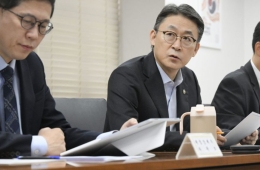
Minister Choi Kyojin said, "Through the Education Innovation Leading Regions program, we will shift the framework of local education policy toward an ecosystem-based approach so that quality education continues from elementary through high school." He added, "We will closely link locally tailored K-12 education innovation models with university talent-development policies to build a virtuous cycle in which children born and raised in a region develop their abilities at local universities and drive regional development."
© The Asia Business Daily. All rights reserved. Unauthorized AI training and use prohibited.