Education Ministry Designates 43 Education Innovation Leading Regions, Focusing on Small-School Innovation and Reducing Educational Disparities
Announced “Education Innovation Leading Regions” on the 3rd
43 of 130 applicant regions selected
“Small-school innovation” in areas experiencing population decline;
“reducing educational disparities” in non-capital regions as core tasks
The government will launch the Education Innovation Leading Regions initiative, which aims to build educational ecosystems through “small-school innovation” in areas experiencing population decline, and to “reduce educational disparities within regions” in non-capital regions and border areas of the capital region.
The initiative aims to promote “regional education innovation” by fostering high-quality educational ecosystems through cooperation among education offices, local governments, and local communities. It will get underway in January next year, and selected regions will receive annual support of KRW 2 billion to KRW 4 billion to carry out required government projects.
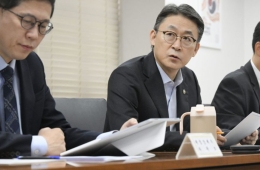
On the 3rd, Education Minister Choi Gyojin announced the results of the designation of Education Innovation Leading Regions for 2027 at the Government Complex Seoul.

Education Minister Choi Kyojin announces the results of the designation of leading regions for education innovation at the Government Complex Seoul in Jongno-gu, Seoul, on Nov. 3, 2026. Photo by Jo Yongjun
View original imageIn response to a call for applications held by the Ministry of Education from July to September, 130 of the 141 eligible regions applied, and 43 were ultimately selected.
The initiative is based on the “Basic Plan for Education Innovation Leading Regions” announced by the Ministry of Education in June.
The Education Innovation Leading Regions initiative builds on the achievements of education special zones, which the Ministry of Education has operated on a trial basis since 2024, while addressing their limitations. A key feature is that participating regions must carry out required projects tailored to their local characteristics. At the time, the ministry said it had selected 49 pilot regions for its “Education Development Special Zone” initiative to promote educational innovation and regional development.
The new initiative carries forward the aims and character of the education special zone initiative, but differs in that it sets out a clearer framework and more clearly defined core tasks. A Ministry of Education official said, “What sets this initiative apart from the previous one is that we want education offices to take the lead in addressing the population decline crisis, while local governments develop projects suited to their circumstances in a genuine manner.” The official added, “A distinctive feature is that it includes required tasks, such as making small-school innovation a requirement for areas experiencing population decline.” The ministry will conduct a comprehensive review of the previous education special zone initiative after it ends at the end of this year. It said it would assess successful cases so they can be expanded in the future.
The Education Innovation Leading Regions initiative is divided into “Type 1,” for areas experiencing population decline or at risk of it, and “Type 2,” for basic and metropolitan local governments outside the non-capital regions’ areas experiencing or at risk of population decline.
Type 1 requires regions to build high-quality educational ecosystems through “small-school innovation.” Type 2 requires them to “reduce educational disparities within regions” and “strengthen education linked to universities and industry.”
The evaluation committee that selected the Education Innovation Leading Regions reviewed the operational plans submitted by 130 regions through written and in-person assessments. Specifically, it focused on plans for operating the initiative, including vision, required and voluntary tasks, and resource acquisition; the formation and operation of cooperation frameworks (governance), including regional education innovation councils and cooperation between education offices and local governments; budget acquisition and execution; and performance management plans.
For Type 1, the committee focused on whether education offices and local governments recognized declining school-age populations and the risk of regional decline as shared challenges, and whether they had used education as a means to redesign their regions’ futures. It gave high marks to efforts to build policy momentum for openly discussing small-school innovation at the regional level, a task that has been difficult to advance, and to connect concerns about regional education with specific projects. According to the Ministry of Education, regions that focused solely on the number of small schools to be merged or closed received relatively low scores. For Type 2, the committee focused on efforts to improve educational outcomes in old downtown areas and areas with high concentrations of students from migrant backgrounds, as well as the creation of workforce development systems linked to regionally specialized industries.
The Ministry of Education will finalize the designation results this month after allowing regions to appeal the evaluation results. By December this year, the designated regions will receive advice from an expert advisory (consulting) panel, submit more detailed and advanced operational plans, and begin implementing the initiative in earnest in January next year.
The Ministry of Education plans to draw up a separate plan to allow additional regions to be designated in the future, beyond those selected this time.
Hot Picks Today
 "Two Spend 500,000 Won in a Flash, Yet Wait Two Hours?" ... 'Dreamland' Shunned by Kids and Foreign Tourists
- The Era of Getting 200 Million Won After 30 Years Is Over... A Japanese Bank's "Perpetual Department Head" Who Just Clocked In Cries Out
- Spain Hit by Its Worst Tragedy... Lee Kangin, Moreno and Real Madrid Join Soccer World in Mourning
- They Said, “Make It Your Home for Life” - Then Suddenly Kicked 200 Passengers Off... What Happened to the Around-the-World Cruise?
- "130 Rice Bowls Sold Out in a Day"... 'Unfiltered Face' Adds 8 Million Won to Night Market Sales: China's Bungeunwoo
Minister Choi Gyojin said, “Through the Education Innovation Leading Regions initiative, we will shift the framework of regional education policy toward an educational ecosystem approach, so that high-quality education continues from elementary through high school within each region.”
© The Asia Business Daily. All rights reserved. Unauthorized AI training and use prohibited.