Future Response Fund Sparks Clash Between Parties... Ruling Party: "Fiscal Stabilization Measure"; Opposition: "Threat to Local Finances"
Ruling party: "Proactive investment in future industries is needed"... stresses parliamentary review
Opposition: "Local share tax revenue to fall by 31 trillion won; parliamentary oversight to weaken"
Governors Association: "Actually available funding to fall by 37 trillion won"
The ruling and opposition parties clashed over the need for fiscal stabilization and concerns that the creation of a 162.3 trillion won Future Response Fund could reduce local government finances.
On Nov. 3, the National Assembly’s Finance and Economy Planning Committee held a public hearing on a bill to establish and operate the Future Response Fund, discussing how to raise and manage the fund.

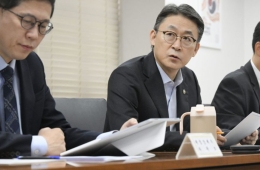
(Seoul=Yonhap News) Reporter Lee Donghae = Witnesses are sharing their views at a public hearing on the enactment of the “Bill on the Establishment and Operation of the Future Response Fund,” held during a plenary meeting of the National Assembly’s Finance and Economy Planning Committee on the 3rd. The hearing was attended by Kim Junghoon, president of the Institute for Fiscal Policy; Song Heonjae, professor at the University of Seoul; Kim Hyuna, director at the Korea Institute of Public Finance; Yoo Minbong, secretary-general of the Governors Association of Korea; and Seoul Metropolitan Office of Education Superintendent Jung Keunsik. 2026.11.3
eastsea@yna.co.kr (End)
Rep. Ahn Dogul of the Democratic Party of Korea stressed the need to set aside temporary additional tax revenue generated by factors such as the semiconductor boom to prepare for future declines in tax revenue. Referring to proactive investment in future industries such as artificial intelligence (AI), Ahn said, "This is the golden hour," adding, "We must not miss this opportunity."
Rep. Oh Gihyeong, also of the Democratic Party, likewise emphasized the need for a fiscal stabilization mechanism and said detailed issues concerning the fund’s operation should be discussed during the bill review process. "We should continue reviewing the bill, even if that means spending a full day on it once a week," Oh said, adding that opinions raised at the public hearing would be reflected in future subcommittee reviews.
By contrast, Rep. Kang Minguk of the People Power Party pointed out that setting aside money for the fund could reduce local share tax revenue by about 31 trillion won. He expressed concern that this would undermine local governments’ fiscal autonomy, as funds they had been able to spend at their discretion could be converted into earmarked funds whose use is determined by the central government.
Yu Minbong, secretary-general of the Governors Association, who attended the public hearing, estimated that local share tax revenue would reach 100.2 trillion won next year if the current calculation method were maintained, but would fall by 30.5 trillion won if the fund were introduced. He explained that, after also accounting for an additional 6.8 trillion won in local government expenses for nationally funded projects, the amount of funding actually available for use would fall to 62.9 trillion won.
Experts were also divided. Kim Jeonghun, president of the Institute for Fiscal Policy, and Kim Hyeona, a department head at the Korea Institute of Public Finance, stressed the need for a fund to prepare for fluctuations in tax revenue. By contrast, Song Heonjae, a professor at the University of Seoul, questioned the approach of building up large reserves while issuing government bonds, arguing that repaying national debt and ensuring prior parliamentary oversight should take priority.
Hot Picks Today
 "Two Spend 500,000 Won in a Flash, Yet Wait Two Hours?" ... 'Dreamland' Shunned by Kids and Foreign Tourists
- The Era of Getting 200 Million Won After 30 Years Is Over... A Japanese Bank's "Perpetual Department Head" Who Just Clocked In Cries Out
- Spain Hit by Its Worst Tragedy... Lee Kangin, Moreno and Real Madrid Join Soccer World in Mourning
- They Said, “Make It Your Home for Life” - Then Suddenly Kicked 200 Passengers Off... What Happened to the Around-the-World Cruise?
- "130 Rice Bowls Sold Out in a Day"... 'Unfiltered Face' Adds 8 Million Won to Night Market Sales: China's Bungeunwoo
In separate remarks that day, Jeong Geunsik, Seoul superintendent of education, criticized the government’s proposed overhaul of local education finance grants, saying it did not sufficiently reflect essential funding needs in the education sector. Jeong called for measures to stabilize education funding, saying at least 88.4 trillion won in grants would be needed next year.
© The Asia Business Daily. All rights reserved. Unauthorized AI training and use prohibited.