Kim Yong-hyun's Defense Seeks Acquittal in Appeals Trial: "No Aim to Undermine Constitutional Order, No Riot"
30-year prison sentence in first trial... Special counsel sought life imprisonment
"Blockade meant controlling access... It did not obstruct the vote"

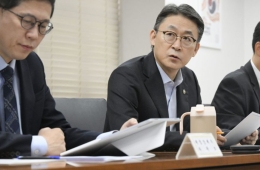
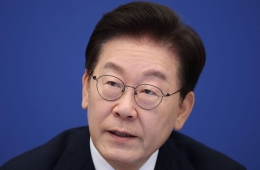
The defense team for former Defense Minister Kim Yong-hyun, who was indicted on charges of performing an important role in an insurrection over the Dec. 3 emergency martial law, called for his acquittal in its closing argument at the appeals trial. It argued that there was no purpose to disrupt the constitutional order, no riot, and no evidence to support either allegation.
The 12-1 Criminal Division of the Seoul High Court, comprising Presiding Judge Lee Seung-cheol and Judges Jo Jin-gu and Kim Min-a, held the second hearing for closing arguments on the charges, including ringleading an insurrection, against former President Yoon Suk Yeol and former Minister Kim on Nov. 3. Kim's defense team asked the court to overturn the first-trial ruling and either dismiss the indictment or acquit him, while rejecting the special counsel's appeal.
According to the defense, the first trial found that even if the National Assembly's vote had been obstructed, it would be difficult to recognize a purpose to disrupt the constitutional order absent special circumstances if the aim was only to do so once, rather than to paralyze its functions for an extended period. The defense stressed that the martial law was intended as a message to sound a brief alarm and that its lifting had been planned from the outset. It cited Yoon's statement on Dec. 1, 2024, that martial law could be lifted immediately if the National Assembly called for it.
The defense argued that "blockade" of the National Assembly was merely a military operational term for controlling access, not an order to halt the Assembly's functions. It said that no lawmakers who entered the main building were stopped from voting on the motion to demand the lifting of martial law.
The defense denied that the actions met the requirements for a riot, citing the Supreme Court's ruling in the insurrection cases involving former President Chun Doo-hwan and others. It argued that, unlike that case, in which armed martial law troops were deployed nationwide on a large scale and many people were killed or injured, no live ammunition was issued and no one was injured this time, and the National Assembly called for martial law to be lifted about two and a half hours after it was declared. The defense also criticized the first trial for skipping an examination of whether there had been a riot, saying it treated the failure of arrest teams to enter the National Assembly grounds and the absence of arrests of National Election Commission employees or removal of servers only as factors in sentencing.
The defense also argued that judicial review of a martial law declaration should be extremely limited. It said the judiciary could intervene only when a violation of the Constitution or law was obvious to anyone, and that the case was not clear-cut, given that even the Constitutional Court took 111 days to reach a decision after the impeachment motion was filed. "If martial law that is unconstitutional or unlawful automatically constitutes an insurrection, the state’s emergency powers could become a crime at any time, depending on a later assessment," the defense said.
Responding to the special counsel's claim that a drone operation over Pyongyang showed evidence of intent, the defense said it was psychological warfare intended to deter North Korea's provocations involving trash-filled balloons. It said the operation was conceived by the commander of the Drone Operations Command before Kim took office and reported to the minister at the time, and that consideration of martial law began only after the operation ended on Nov. 22, 2024, so the two were unrelated. The defense said the declaration's phrase "eradicate anti-state forces" referred to an ideological response, not physical removal.
The defense also alleged procedural violations. It said that having one prosecutor handle the investigation, indictment, maintenance of the prosecution and sentencing recommendation violated a former provision of the Prosecutors' Office Act that barred prosecutors from indicting cases they had investigated. It also asked the court to examine whether seconded prosecutors retained their status after the launch of the Prosecution Service and whether the emergency arrest carried out without a warrant was lawful.
Hot Picks Today
 "Two Spend 500,000 Won in a Flash, Yet Wait Two Hours?" ... 'Dreamland' Shunned by Kids and Foreign Tourists
- The Era of Getting 200 Million Won After 30 Years Is Over... A Japanese Bank's "Perpetual Department Head" Who Just Clocked In Cries Out
- Spain Hit by Its Worst Tragedy... Lee Kangin, Moreno and Real Madrid Join Soccer World in Mourning
- They Said, “Make It Your Home for Life” - Then Suddenly Kicked 200 Passengers Off... What Happened to the Around-the-World Cruise?
- "130 Rice Bowls Sold Out in a Day"... 'Unfiltered Face' Adds 8 Million Won to Night Market Sales: China's Bungeunwoo
Earlier, on Oct. 29, the special counsel sought the death penalty for former President Yoon and life imprisonment for former Minister Kim. In the first trial, Yoon was sentenced to life imprisonment and Kim to 30 years in prison.
© The Asia Business Daily. All rights reserved. Unauthorized AI training and use prohibited.