Jang Dong-hyuk: "Stop Lee Administration's Budget Rampage"... Seeks KRW 11.6 Trillion Increase in Livelihood Spending
Half Tuition at Private Universities, Better Working Conditions for Firefighters, and More
People Power Party Unveils Five Key Livelihood Budget Priorities
Seeks KRW 27 Trillion in Cuts to Government's "Pork-Barrel Spending"
Calls for KRW 104 Tri
Jang Donghyuk, leader of the People Power Party, announced the party’s approach to reviewing the 2027 budget proposed by the Lee Jae Myung government: cut populist and wasteful spending and increase funding for five key livelihood areas by KRW 11.6 trillion.
The People Power Party said it would propose five key budget priorities, including half-price tuition at private universities, expanded rent support for young people, and improved working conditions for firefighters. It also stressed that it would call for KRW 104 trillion in surplus funds from the Future Response Fund to be used to repay government bonds.
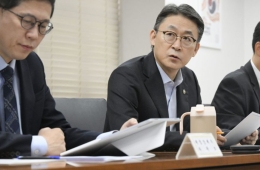
On Nov. 3, Jang held a press conference at the People Power Party headquarters titled “A Budget to Solve People’s Livelihood Problems” and said, “We will stop the Lee Jae Myung administration’s runaway spending and squandering of taxpayers’ money, which are driving the Republic of Korea into a mountain of debt.”

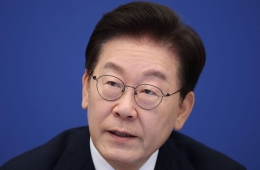
People Power Party leader Jang Donghyuk explains the party's approach to reviewing the 2027 budget bill at its headquarters in Yeouido, Seoul, on Nov. 3, 2026. Photo by Yoon Dongju.
View original imageTo that end, the People Power Party proposed increases in five key areas, with the goal of “solving people’s livelihood problems.” The total proposed increase is KRW 11.5924 trillion: KRW 3.4287 trillion for youth support, KRW 2.91 trillion for safety, KRW 2.8306 trillion for livelihoods, KRW 1.225 trillion for jobs, and KRW 1.1981 trillion to address everyday insecurity.
“This is not about dazzling slogans; it is a budget that will tangibly address problems in people’s lives,” Jang said. “It is a very small amount compared with the government’s KRW 820 trillion budget, but these are carefully targeted expenditures whose benefits will be worth several times their cost.”
The youth sector, which would receive the largest increase, includes a plan to introduce half-price tuition at private universities. The party intends to invest KRW 2.7337 trillion to bring tuition at private universities and colleges nationwide down to the average level at public universities, which is around KRW 4 million. To help young people secure housing, it proposed increasing monthly rent support for young people without homes and newlywed households to as much as KRW 500,000, and providing emergency rent assistance of up to KRW 3 million to young people facing hardship due to job loss or unpaid wages.
For public safety, the party plans to raise firefighters’ hazardous-duty allowance by KRW 500,000 per month and invest KRW 2 trillion in replacing outdated firefighting equipment and in safety measures. To support people’s livelihoods, it will launch a project to increase small business owners’ real incomes and expand credit support for vulnerable borrowers and refinancing loans.
To ease the financial burden on farmers and fishers, the party plans to increase the budget for purchasing farmland for public rental and raise the government’s subsidy rate for agricultural disaster insurance from 50% to 60%. For jobs, it also proposed establishing 40 locally led companies through joint investment by local governments and the private sector, with capital totaling KRW 50 billion.
Alongside these increases in livelihood-related spending, the People Power Party will also seek substantial cuts to the budget submitted by the government. Jang said the party had identified 100 problematic projects in the government’s budget proposal and had already proposed expenditure cuts totaling KRW 27 trillion. In particular, it plans to use all KRW 104.4 trillion in surplus funds from the KRW 162 trillion Future Response Fund to repay government bonds, saving KRW 3 trillion in bond interest costs.
Criticizing the Future Response Fund, Jang said, “Although the word ‘future’ appears in its name, it is difficult to find projects that actually benefit future generations.” He called it “a personal slush fund that President Lee Jae Myung can effectively spend as he pleases,” adding, “It is not a Future Response Fund but a Youth Plunder Fund that steals young people’s future.”
Hot Picks Today
 "Two Spend 500,000 Won in a Flash, Yet Wait Two Hours?" ... 'Dreamland' Shunned by Kids and Foreign Tourists
- The Era of Getting 200 Million Won After 30 Years Is Over... A Japanese Bank's "Perpetual Department Head" Who Just Clocked In Cries Out
- Spain Hit by Its Worst Tragedy... Lee Kangin, Moreno and Real Madrid Join Soccer World in Mourning
- They Said, “Make It Your Home for Life” - Then Suddenly Kicked 200 Passengers Off... What Happened to the Around-the-World Cruise?
- "130 Rice Bowls Sold Out in a Day"... 'Unfiltered Face' Adds 8 Million Won to Night Market Sales: China's Bungeunwoo
Jang also issued sharp criticism of the Lee Jae Myung government’s approach to drawing up the budget. Pointing out that national debt is set to increase by around KRW 107 trillion next year, he said, “President Lee’s statement in his policy speech yesterday that ‘there is almost no net increase in government bond issuance’ is an outright lie. He openly deceived the public.”
© The Asia Business Daily. All rights reserved. Unauthorized AI training and use prohibited.