Lee: "Fairness and reasonableness must also be considered in supporting the vulnerable"... Orders review of public service support criteria
"Benefits Without a Reasonable Basis Undermine Community Trust"
"Unreasonable Systems Could Give Others an Excuse to Incite Hatred Against the Disadvantaged"
Lee Reiterates Support Principles Amid Controversy Over Preferential Treatment for Multicul
President Lee Jaemyung said on Nov. 3, "The national community has a duty to look after the difficulties faced by socially and economically disadvantaged people and carefully devise measures to support them." He also emphasized that "the principles of fairness and reasonableness must always be considered in the process." His remarks reflected the view that protecting and supporting socially disadvantaged people is a basic duty of the state, but that the validity of individual support programs must also be continually reviewed.

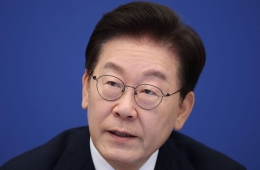
President Lee Jaemyung speaks at a Cabinet meeting held at Cheong Wa Dae on Nov. 3, 2026. Yonhap News
View original imageIn his opening remarks at the 47th Cabinet meeting that day, President Lee said, "Even a benefit that seems small and insignificant can undermine the community's trust in a system if it continues without a reasonable basis."
He cautioned that unreasonable support programs could instead become a pretext for spreading negative perceptions of socially disadvantaged people. "This not only weakens the sustainable foundations of policy but can also give those who incite hatred against disadvantaged people an excuse to do so," President Lee said. He added, "We must not overlook even a single broken window if we are to prevent greater distrust and conflict," emphasizing that "this will also enable us to provide more substantial protection to disadvantaged people."
The reasoning is that ensuring fairness in support programs does not conflict with protecting socially disadvantaged people. Rather, it strengthens public trust in policy and supports the sustainability of that assistance.
President Lee also called on relevant ministries to take specific follow-up measures. "I ask the government to carefully review once again the eligibility criteria and implementation of support for public services closely related to people's daily lives," he said. "If there are unreasonable or unfair aspects that are difficult for the public to understand, they should be promptly addressed."
He added, "I ask you to work together to establish fair and reasonable governance that takes differing circumstances into account while remaining acceptable to the majority of the community." His remarks can be interpreted to mean that support should take into account the circumstances and needs of each group rather than treating everyone identically, while ensuring that the criteria can be explained on reasonable grounds.
The remarks came amid continuing controversy over eligibility criteria that give multicultural families priority access to public postpartum care centers. Since raising questions on Oct. 28 about the policy granting mothers from multicultural families priority access to public postpartum care centers, President Lee has repeatedly stressed the importance of fairness and reasonableness in support policies. The debate over the need to improve the system has also prompted concerns that it could fuel prejudice or discrimination against multicultural families.
On Oct. 29, Cheong Wa Dae said the aim was not to reduce support for multicultural families and announced that it would review the criteria for priority access to public postpartum care centers under the Enforcement Decree of the Mother and Child Health Act, established in 2016. It also said it would respect the autonomy of local governments and ensure there were no gaps in support for multicultural families.
Hot Picks Today
 "Two Spend 500,000 Won in a Flash, Yet Wait Two Hours?" ... 'Dreamland' Shunned by Kids and Foreign Tourists
- The Era of Getting 200 Million Won After 30 Years Is Over... A Japanese Bank's "Perpetual Department Head" Who Just Clocked In Cries Out
- Spain Hit by Its Worst Tragedy... Lee Kangin, Moreno and Real Madrid Join Soccer World in Mourning
- They Said, “Make It Your Home for Life” - Then Suddenly Kicked 200 Passengers Off... What Happened to the Around-the-World Cruise?
- "130 Rice Bowls Sold Out in a Day"... 'Unfiltered Face' Adds 8 Million Won to Night Market Sales: China's Bungeunwoo
On Nov. 1, President Lee also emphasized that correcting problems in support policies for multicultural families does not mean exclusion or discrimination, and that caring for socially disadvantaged people is a duty of the community. However, whether the current priority access criteria for public postpartum care centers have in fact caused unfair disadvantages to other mothers is a separate matter that requires verification.
© The Asia Business Daily. All rights reserved. Unauthorized AI training and use prohibited.