"40 Minutes Just to Set a Default Option"... FSS to Teach Proper Use of Retirement Pensions
More Subscribers Switch to DC Plans as Concentration in Risky Assets Deepens
Guidebook Published for Subscribers Unsure Where to Start, Even When Interested
The Financial Supervisory Service (FSS) will publish a guidebook for retirement pension subscribers and work to foster a culture of long-term investment by educating subscribers and checking how their plans are managed.

On the afternoon of November 3, the FSS held a launch ceremony for a campaign to establish a culture of long-term and diversified investment at FKI Tower in Yeouido, Seoul, with the Korean Federation of Banks, the Korea Financial Investment Association, the Korea Life Insurance Association, the General Insurance Association, and retirement pension providers.
The campaign is intended to help retirement pension subscribers understand their investment options and learn the knowledge and practices essential to long-term and diversified investing. As demand for self-directed investment has risen rapidly amid a stock market boom, the number of subscribers switching to defined-contribution (DC) plans from January through July surged 118.1% from the same period a year earlier. This has been accompanied by investment behaviors such as concentrating holdings in particular assets, including risky products that may not protect the principal, and excessive short-term trading.
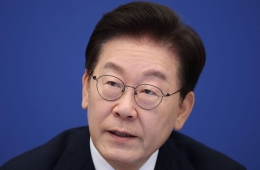
“It is important to invest in a diversified manner with a long-term perspective,” said FSS Governor Lee Chanjin. “However, in practice, we are also seeing behaviors that are somewhat at odds with long-term and diversified investing, such as excessive short-term trading and a concentration in particular asset classes.” He added, “The reality is that even when people take an interest, they often do not know where or how to start. Practical guidance and education on retirement pensions must be provided to help subscribers overcome these difficulties and put asset-allocation investing into practice with a long-term perspective.”
Lee stressed that the FSS would put this into practice by publishing life-stage-specific guidebooks and running a campaign to review how retirement pensions are managed. “We will use the life-stage-specific guidebooks to inform and educate subscribers, and provide educational programs across the country,” he said. “To encourage people to review their pension accounts over the long term, we will designate November and December each year, the year-end tax settlement period, as ‘Pension Top-Up Week’ and run a review campaign.”
As part of the long-term investment campaign, the FSS also plans to improve its Integrated Pension Portal. By the end of this year, it will enhance the portal’s comparison and search functions for pension products, including adding rankings of returns by target-date fund (TDF) vintage, to make the service more convenient. Next year, it plans to support users in building retirement assets by transitioning to a heatmap-based comparative disclosure system and introducing charting tools to visualize pension statistics.
Hot Picks Today
 "Two Spend 500,000 Won in a Flash, Yet Wait Two Hours?" ... 'Dreamland' Shunned by Kids and Foreign Tourists
- The Era of Getting 200 Million Won After 30 Years Is Over... A Japanese Bank's "Perpetual Department Head" Who Just Clocked In Cries Out
- Spain Hit by Its Worst Tragedy... Lee Kangin, Moreno and Real Madrid Join Soccer World in Mourning
- They Said, “Make It Your Home for Life” - Then Suddenly Kicked 200 Passengers Off... What Happened to the Around-the-World Cruise?
- "130 Rice Bowls Sold Out in a Day"... 'Unfiltered Face' Adds 8 Million Won to Night Market Sales: China's Bungeunwoo
At the first session of the campaign launch ceremony, the FSS’s Pension Supervision Office will explain the “Background and Key Strategies of the Campaign.” At the second session, Professor Park Heejin of Pusan National University will present on “The Importance of Long-Term Asset-Allocation Investing,” sharing insights based on the current state of retirement pension management and examples from advanced markets overseas.
© The Asia Business Daily. All rights reserved. Unauthorized AI training and use prohibited.