[Reporter's Notebook] President Who Called for Policy Debate ... Is His Goal to Critique Counterarguments?

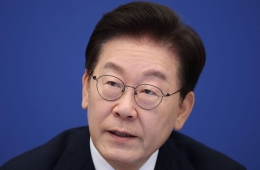
After President Lee Jae-myung raised the economic contributions of foreign workers on October 27, he questioned the next day the criteria giving multicultural families priority access to public postpartum care centers. As criticism mounted, Lee called on the media to correct its reports and apologize. Regarding the controversy over multicultural families, he invoked the “hypocrisy” and “double standards” of political correctness (PC).
Both issues are worth examining. It is possible to assess whether priority access criteria for multicultural families are fair and verify how much foreign workers contribute to the domestic economy. However, questions remain about whether the president had sufficient discussions with his aides before raising the issues and whether his remarks were based on clear empirical evidence.
As of the end of September, around 10 of the 361 users of Seoul’s Safe Postpartum Care Centers were mothers from multicultural families, according to a Facebook post by Yoon Sang-hyun, a People Power Party lawmaker. This figure alone does not prove that there was no reverse discrimination. Conversely, the mere existence of priority access rules does not establish that reverse discrimination occurred. The first step is to determine whether other mothers’ access was actually and seriously restricted, and what policy rationale justified the need for separate preferential treatment.
The remarks about foreign workers also need to be weighed against the statistics. President Lee said that they “send all” of their wages back home and therefore “do not help the national economy much,” but later explained that he had been comparing them with Korean workers.
It is also worth examining Lee’s linking of counterarguments about multicultural families to “PC ideology,” “hypocrisy,” “double standards,” and Chun Doo-hwan’s slogan of “Building a Just Society.” Unreasonable policies should not be defended simply in the name of protecting minorities. But the validity of a counterargument and the record of the person making it are separate matters. If the president denounces critics as hypocrites and accuses them of double standards without examining why their arguments are flawed, policy scrutiny will be drowned out by partisan disputes. Did the president not say that he expected “deeper and more extensive discussions”?
In his essay “Politics as a Vocation,” German sociologist Max Weber emphasized not only conviction but also an ethic of responsibility that accepts the consequences of one’s actions. A president’s words carry a different weight from an individual’s opinion. They can influence policy and risk reinforcing social prejudice.
Hot Picks Today
 "Two Spend 500,000 Won in a Flash, Yet Wait Two Hours?" ... 'Dreamland' Shunned by Kids and Foreign Tourists
- The Era of Getting 200 Million Won After 30 Years Is Over... A Japanese Bank's "Perpetual Department Head" Who Just Clocked In Cries Out
- Spain Hit by Its Worst Tragedy... Lee Kangin, Moreno and Real Madrid Join Soccer World in Mourning
- They Said, “Make It Your Home for Life” - Then Suddenly Kicked 200 Passengers Off... What Happened to the Around-the-World Cruise?
- "130 Rice Bowls Sold Out in a Day"... 'Unfiltered Face' Adds 8 Million Won to Night Market Sales: China's Bungeunwoo
Direct communication is one of President Lee’s strengths. But there are moments when restraint is needed: speaking only after thoroughly checking the facts, and holding back even when one could respond. What matters for a president may not be winning an argument, but taking responsibility for the consequences of his words.
© The Asia Business Daily. All rights reserved. Unauthorized AI training and use prohibited.